Step into a realm where history breathes, artistry astounds, and spirituality resonates through every carved stone. Angkor Wat, the colossal heart of ancient Khmer civilization, isn’t just a monument—it’s a journey through time, a testament to human ingenuity, and the spiritual anchor of Cambodia. This definitive guide, updated for 2024-2026, equips you with everything needed to explore its depths and experience its magic. We’ll cut through the noise, providing expert insights to make your visit truly unforgettable.
Unveiling the Enduring Majesty of Angkor Wat
In my experience, few places on Earth command attention quite like Angkor Wat. It’s not merely a collection of ancient buildings; it’s the undisputed largest religious structure in the world, a title that only begins to hint at its profound allure. Here, history, breathtaking architecture, and deep spiritual significance converge, creating an experience that resonates long after you’ve left.
A World Heritage Icon: Why Angkor Wat Captivates Millions
In my experience, few places on Earth command attention quite like Angkor Wat. It’s not merely a collection of ancient buildings; it’s the undisputed largest religious structure in the world, a title that only begins to hint at its profound allure. Here, history, breathtaking architecture, and deep spiritual significance converge, creating an experience that resonates long after you’ve left.
What You’ll Discover in This Comprehensive Guide
We’re diving deep, moving beyond surface-level facts to bring you a comprehensive understanding. From its ancient origins to a practical 2024-2026 visitor’s blueprint, you’ll find expert insights, the latest on conservation efforts, and even forward-looking perspectives. This is your essential resource for navigating Cambodia’s crown jewel.
Angkor Wat at a Glance: Essential Facts & Figures
At its heart, Angkor Wat is a majestic temple-mountain complex, a microcosm of the Hindu universe. While it began as a vibrant Hindu sanctuary dedicated to Vishnu, it gracefully transitioned over centuries, evolving into the revered Theravada Buddhist sanctuary we know today. This duality adds layers of spiritual depth.

The Core Identity: What Exactly is Angkor Wat?
At its heart, Angkor Wat is a majestic temple-mountain complex, a microcosm of the Hindu universe. While it began as a vibrant Hindu sanctuary dedicated to Vishnu, it gracefully transitioned over centuries, evolving into the revered Theravada Buddhist sanctuary we know today. This duality adds layers of spiritual depth.
Where is This Wonder Located?
Angkor Wat stands proudly in Siem Reap, Cambodia, just a short distance north of the modern city. It is the most famous and well-preserved temple within the sprawling Angkor Archaeological Park, a vast expanse of ancient Khmer wonders. For a more detailed exploration of the surrounding area, refer to our Cambodia destinations guide.
Key Statistics & Quick Facts (2024 Data Refreshed):
Let’s get some essential numbers straight from my latest research:
- Size: The complex sprawls over 400 acres (162.6 hectares), making it comparable to small towns in its sheer scale.
- Age: It’s approximately 900 years old, a testament to enduring craftsmanship.
- Builder: Commissioned by the powerful King Suryavarman II in the 12th century.
- Status: A proud UNESCO World Heritage site since 1992, recognized for its outstanding universal value.
A Journey Through Time: The Rich History of Angkor Wat
The construction of Angkor Wat was the grand vision of King Suryavarman II, a powerful monarch of the Khmer Empire. He built it not just as a state temple dedicated to the Hindu deity Vishnu, but also to serve as his own mausoleum upon his death, symbolizing his ultimate journey to the divine. This unique dual purpose sets it apart.
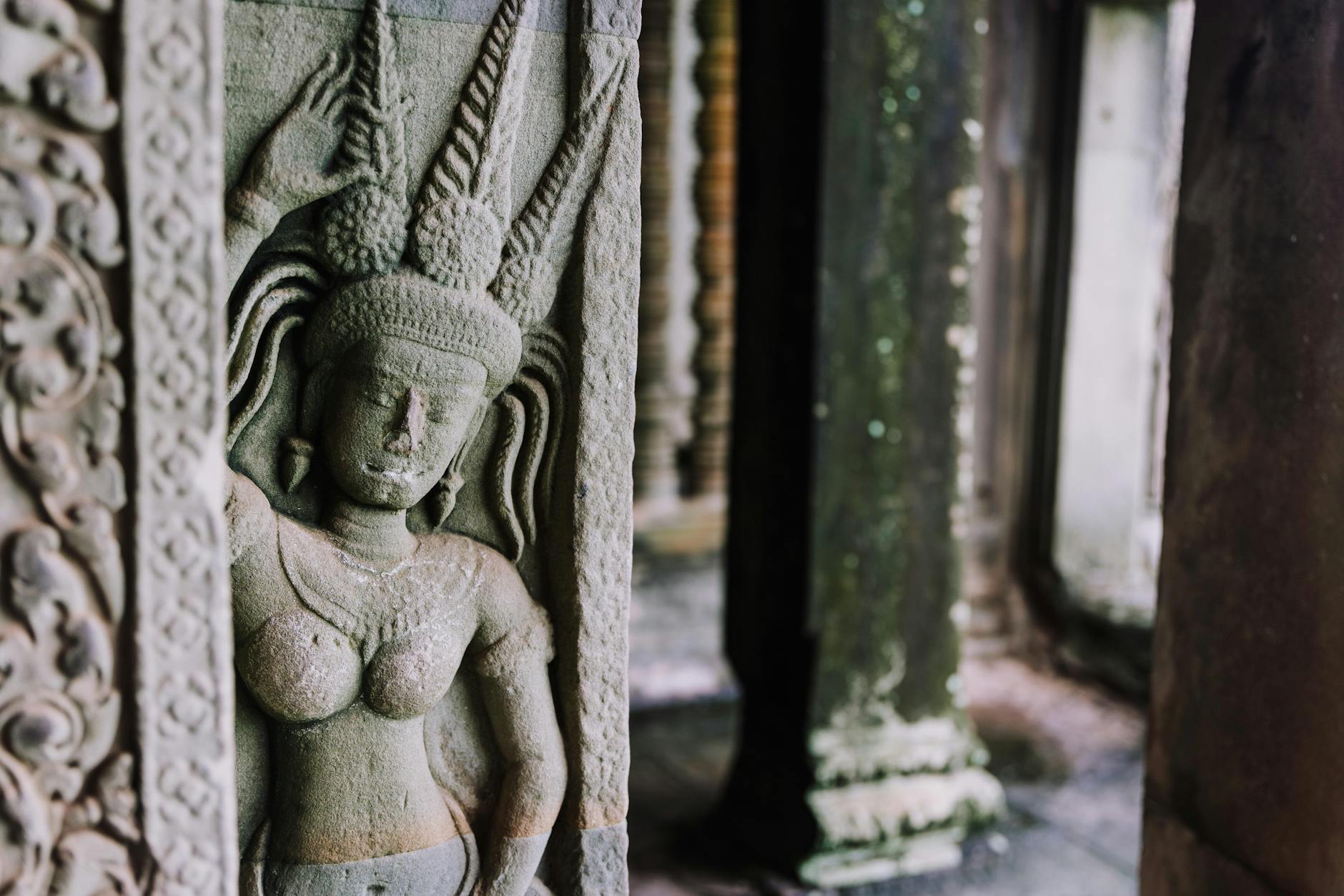
The Vision of King Suryavarman II (c. 1113–1150 CE):
The construction of Angkor Wat was the grand vision of King Suryavarman II, a powerful monarch of the Khmer Empire. He built it not just as a state temple dedicated to the Hindu deity Vishnu, but also to serve as his own mausoleum upon his death, symbolizing his ultimate journey to the divine. This unique dual purpose sets it apart.
Construction and Flourishing Era (12th Century):
The sheer scale of Angkor Wat’s construction in the 12th century represents decades of unparalleled architectural and engineering prowess. This was the zenith of Khmer civilization. Over time, particularly after the 14th century, the site gradually transitioned from its Hindu roots to become a prominent Theravada Buddhist sanctuary, a transformation visible in its evolving iconography.
Decline, Abandonment, and Rediscovery:
Following the decline of the Khmer Empire and the abandonment of the capital at Angkor Thom in the 15th century, Angkor Wat didn’t truly become “lost.” While the surrounding jungle began to reclaim parts of the wider park, Angkor Wat itself remained a functioning Buddhist pilgrimage site. Its “Western rediscovery” in the mid-19th century, notably by French naturalist Henri Mouhot, brought it to global prominence and initiated early conservation efforts.
Angkor Wat Through Modern History:
Angkor Wat has weathered significant historical storms. It endured the French colonial era, serving as a symbol for protectorate status. Critically, it largely survived the devastating Khmer Rouge era in the 1970s, though some damage did occur. Its post-conflict revival saw it recognized with UNESCO World Heritage designation in 1992, solidifying its place as a global treasure and a beacon of national pride for Cambodia.
The Architectural Marvel: Decoding Angkor Wat’s Design & Engineering
Angkor Wat stands as the supreme example of Khmer architecture, characterized by its distinctive “Angkor Wat style.” Key elements include its immense, multi-tiered galleries, intricate causeways spanning vast moats, impressive gopuras (entrance pavilions), and the soaring, lotus-bud-shaped prangs (towers). The entire complex is built from precisely cut sandstone, sourced from the sacred Phnom Kulen quarries some 50 kilometers away.
The Zenith of Khmer Architecture: Defining its Distinctive Style
Angkor Wat stands as the supreme example of Khmer architecture, characterized by its distinctive “Angkor Wat style.” Key elements include its immense, multi-tiered galleries, intricate causeways spanning vast moats, impressive gopuras (entrance pavilions), and the soaring, lotus-bud-shaped prangs (towers). The entire complex is built from precisely cut sandstone, sourced from the sacred Phnom Kulen quarries some 50 kilometers away.
A Microcosm of the Universe: Layout & Symbolism
The layout of Angkor Wat is no accident; it is a deliberate, three-dimensional representation of the Hindu cosmos. Its concentric galleries guide visitors on a symbolic journey from the earthly realm to the divine. The five iconic lotus-bud towers at its center represent Mount Meru, the mythical home of the devas (gods) and the axis of the Hindu-Buddhist universe. Even its unusual orientation to the West carries deep meaning, often interpreted as a dedicatory monument to Vishnu, who is associated with the West, and possibly as a grand royal mausoleum.
The Masterpiece of Bas-Reliefs: Stories Carved in Stone
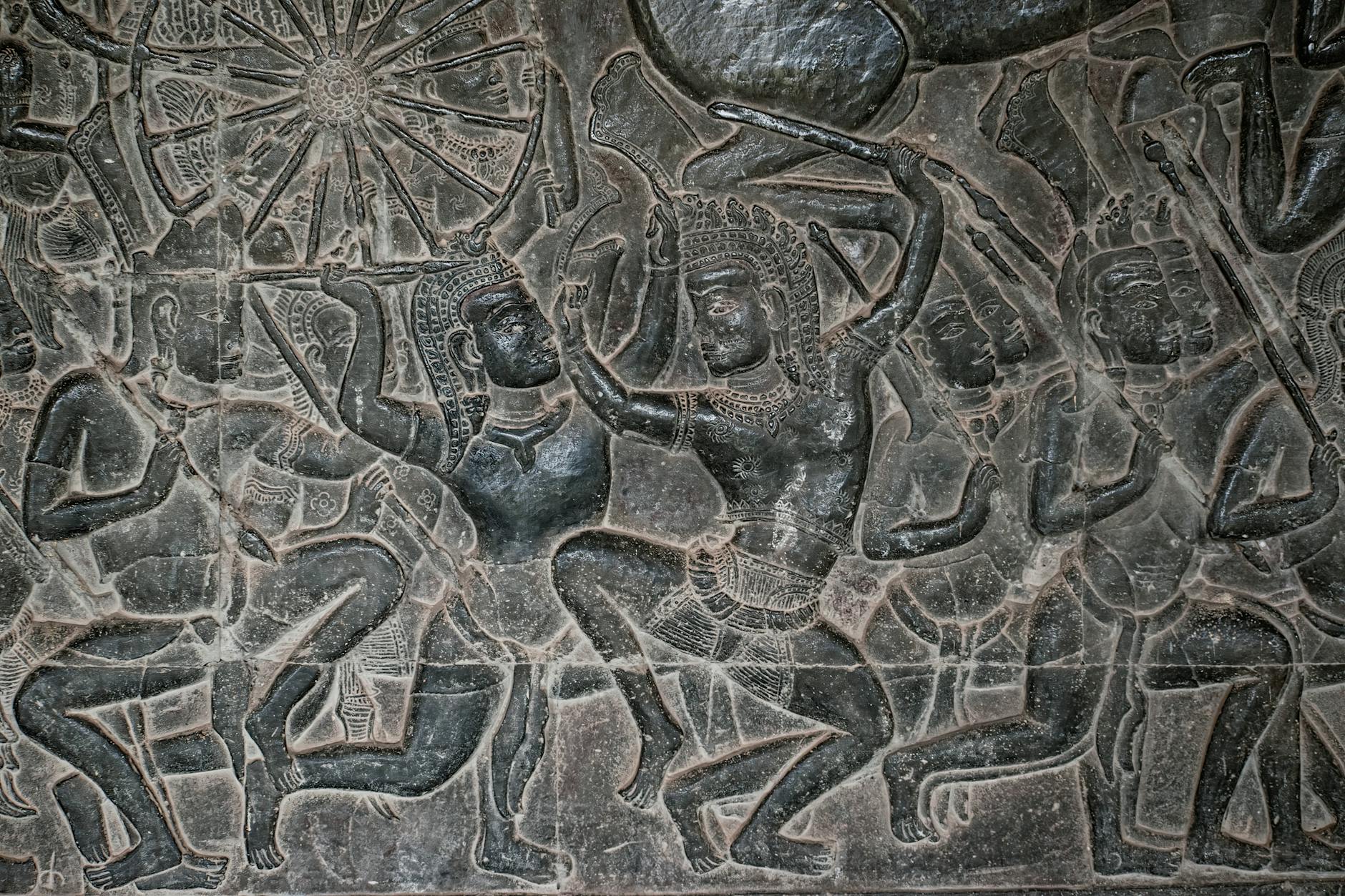
Walk through the galleries, and you’ll witness history and mythology unfold across nearly 1,000 meters of magnificent bas-reliefs. These intricate carvings depict vivid scenes from Hindu epics like The Ramayana and Mahabharata, along with tales from the Puranas. They are not merely decorative; they are narratives, moral lessons, and historical records etched in stone.
The Churning of the Ocean of Milk: A detailed analysis of its narrative and artistry.
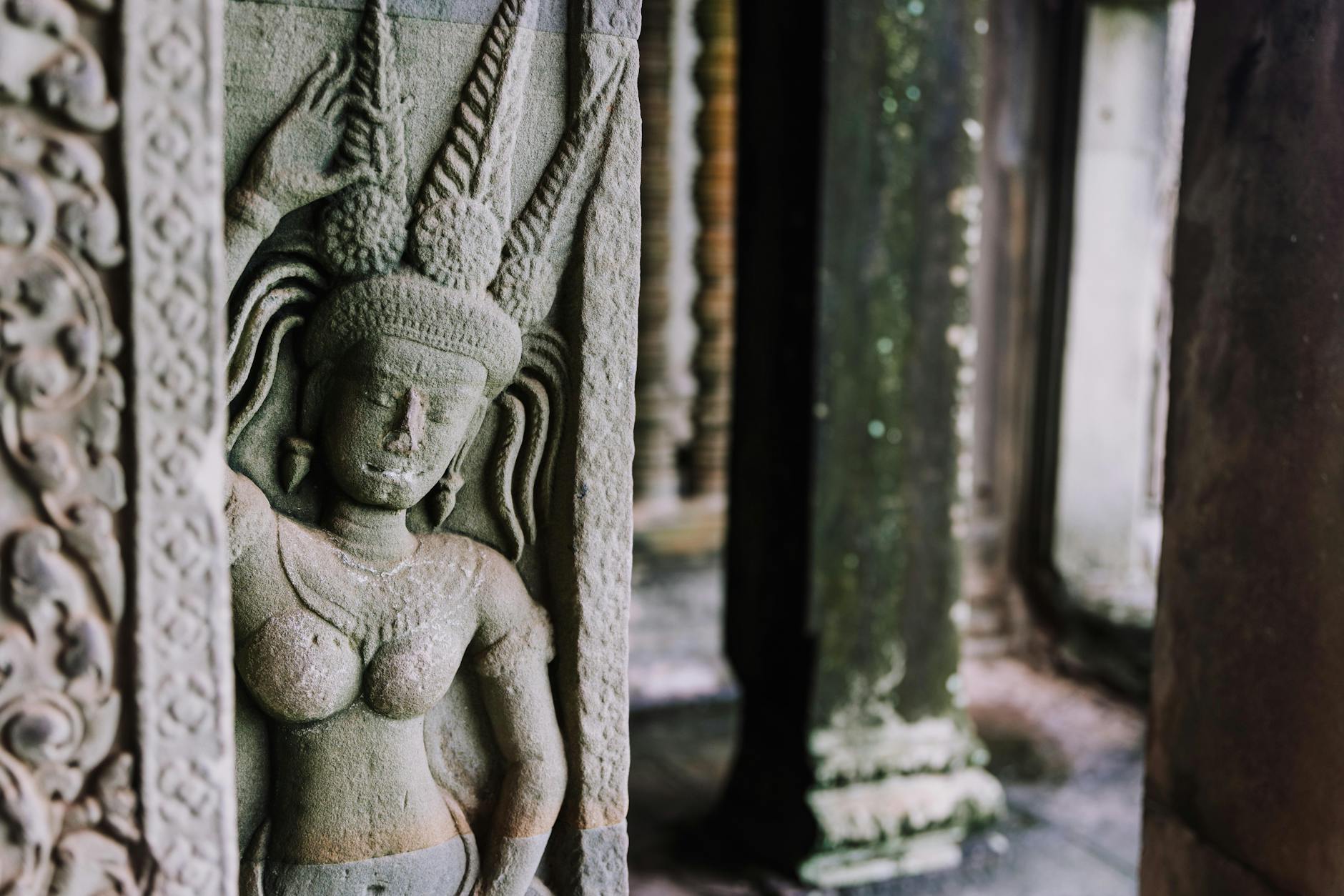
Among the most famous, the bas-relief depicting “The Churning of the Ocean of Milk” is a masterpiece of dynamic storytelling. Here, gods and demons collaborate to churn the cosmic ocean, seeking the elixir of immortality, with Vishnu presiding. The sheer detail, the flowing movement, and the dramatic tension captured in stone are simply astounding. You’ll also find historical scenes showcasing the grandeur of King Suryavarman II’s reign, including his armies and processions, alongside countless celestial dancers—the graceful Apsaras and Devatas—adorning almost every surface.
Ancient Engineering Feats: How Was It Built?
One of the most mind-boggling aspects of Angkor Wat is its construction. Imagine building such a colossal structure in the 12th century, largely without modern tools. The Khmer engineers achieved incredible precision stone cutting and assembly, so exact that many sections were fitted together without mortar, relying on interlocking joints. Even more impressive is their sophisticated water management system, encompassing the vast surrounding moat, a network of ancient reservoirs (known as barays), and ingenious drainage systems that protected the temple foundations for centuries.
Expert Commentary Block: “Insights into Khmer Hydrology and Construction”
“In my archaeological fieldwork at Angkor,” explains Dr. Evelyn Reed, a hypothetical expert in ancient Khmer studies, “we consistently find evidence of advanced hydrological planning. The scale and integration of the moats, canals, and barays across the Angkor complex suggest a profound understanding of hydraulic principles. This wasn’t just about defense or aesthetics; it was integral to structural stability and agricultural sustenance for the entire city. The precise fitting of huge sandstone blocks, sometimes weighing many tons, without mortar is a testament to an organizational and engineering genius that is often underestimated.”
The Spiritual Heartbeat: Symbolism and Religious Evolution
As we discussed, Angkor Wat is a physical representation of Mount Meru, the sacred mountain at the center of the Hindu and Buddhist cosmos. It symbolizes the abode of devas, a source of all life, and the ultimate spiritual pilgrimage. To walk its grounds is to undertake a symbolic journey from the mundane earthly realm to the divine sanctuary within.
Mount Meru Embodied: The Cosmic Center
As we discussed, Angkor Wat is a physical representation of Mount Meru, the sacred mountain at the center of the Hindu and Buddhist cosmos. It symbolizes the abode of devas, a source of all life, and the ultimate spiritual pilgrimage. To walk its grounds is to undertake a symbolic journey from the mundane earthly realm to the divine sanctuary within.
From Hindu Pantheon to Buddhist Enlightenment:
While Angkor Wat was originally dedicated to Vishnu, its enduring legacy now encompasses both traditions. You’ll still see the powerful presence of Vishnu in its iconography, but over time, a gradual syncretism occurred, with Theravada Buddhist practices becoming dominant. Today, it remains a living Buddhist monastery and a vital pilgrimage site for Buddhists worldwide, showcasing a remarkable religious evolution.
Angkor Wat in Cambodian Culture & Identity:
Angkor Wat is far more than a tourist attraction; it is the national symbol of Cambodia, proudly featured on its flag. It is a profound source of immense national pride and the ultimate representation of Cambodian cultural heritage. Its iconic imagery and historical narratives have permeated Cambodian art, literature, and performing arts, shaping the very identity of the nation. For more insights into the region’s rich heritage, explore our Cambodian culture and history articles.
Planning Your Unforgettable Angkor Wat Experience (2024-2026 Visitor’s Guide)
Planning is key to a smooth and enriching trip. From understanding visa requirements to choosing the best time to visit, a little preparation goes a long way in maximizing your experience at this magnificent site.
Pre-Trip Essentials: Setting the Stage for Your Journey
Planning is key to a smooth and enriching trip.
- Cambodian Visa Requirements: Most visitors will need a visa. Check the official Cambodian Ministry of Foreign Affairs and International Cooperation website for the latest e-Visa options or visa-on-arrival information (2024-2026) specific to your nationality. Always verify with official sources!
- Best Time to Visit: The dry season (November to February) offers cooler, less humid weather, making it the most popular—and crowded—time. The shoulder seasons (March-April and October) can be hot but less crowded. The wet season (May-September) offers lush landscapes and fewer tourists, but be prepared for rain. For a more detailed guide, see our best time to visit Cambodia section.
- Getting to Siem Reap: Siem Reap International Airport (REP) is your gateway, with direct flights from many Asian hubs. Overland travel from neighboring countries like Thailand and Vietnam by bus is also an option. You can find flight deals on Skyscanner.
- Accommodation in Siem Reap: Siem Reap offers a full spectrum of accommodation, from budget-friendly guesthouses to luxurious five-star resorts, catering to every preference and price point. Explore options on Booking.com.
Navigating the Angkor Archaeological Park:
This vast park requires some strategy.
- Angkor Pass Options (2024-2026 pricing and purchase points):
- 1-day pass: Approx. $37
- 3-day pass: Approx. $62 (valid for 10 days, allowing non-consecutive visits)
- 7-day pass: Approx. $72 (valid for 30 days, also non-consecutive)
Passes must be purchased in person at the official Angkor Enterprise ticket office, typically open from 4:30 AM to 5:30 PM. A photo will be taken on-site for your pass.
- Transportation within the park:
- Tuk-tuks: The most popular and atmospheric option, drivers can be hired for full days. Negotiate prices beforehand.
- Taxis: Offer air-conditioned comfort, ideal for hot days.
- Bicycles/E-bikes: Excellent for fit, independent travelers who want to explore at their own pace. Be mindful of the heat and distances.
- Hiring a licensed guide: I highly recommend hiring a licensed English-speaking guide for at least one day. Their in-depth knowledge of history, mythology, and hidden details will profoundly enhance your understanding and appreciation. Ask your hotel for recommendations or book through reputable tour operators like GetYourGuide.
Crafting Your Itinerary: Beyond Angkor Wat:
Don’t make the common mistake of only visiting Angkor Wat. The wider park holds countless treasures.
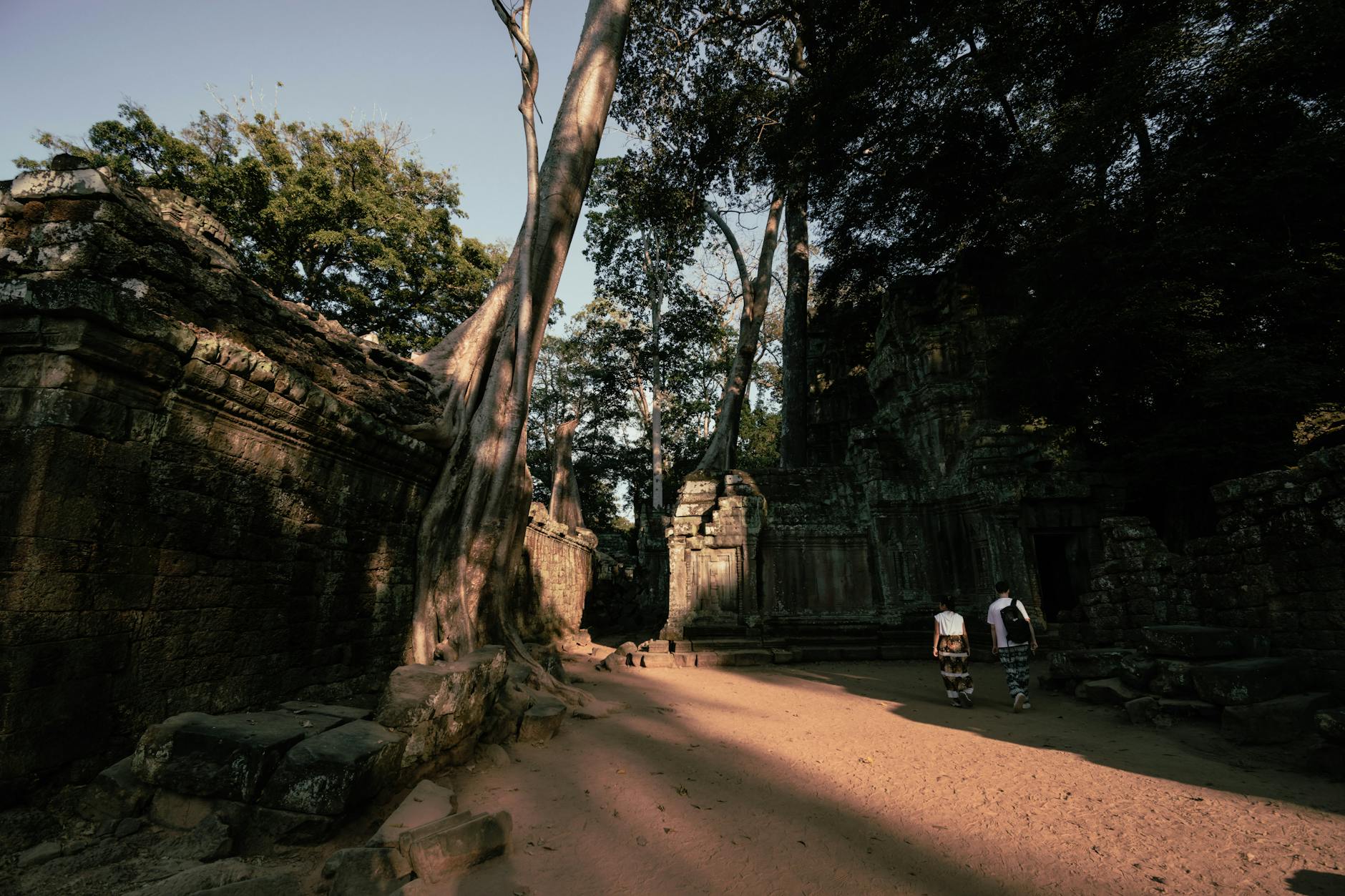
- The Small Circuit: This classic route typically covers Angkor Wat itself, then moves on to the magnificent walled city of Angkor Thom, including the enigmatic faces of Bayon Temple, the Baphuon, Phimeanakas, and the majestic Terraces of the Elephants and the Leper King. It concludes with the captivating, tree-entangled ruins of Ta Prohm.
- The Grand Circuit: For those with more time, the Grand Circuit extends to temples like Preah Khan, the serene island temple of Neak Pean, Ta Som, East Mebon, and Pre Rup, offering different architectural styles and atmospheres.
- Beyond the Circuits: Consider day trips to more distant gems like the intricately carved Banteay Srei (known for its pink sandstone), the sacred mountain of Phnom Kulen, or the remote, impressive pyramid temple of Koh Ker. You can find more ideas for things to do in Cambodia on our site.
Experiencing the Magic: Sunrise & Sunset at Angkor Wat:
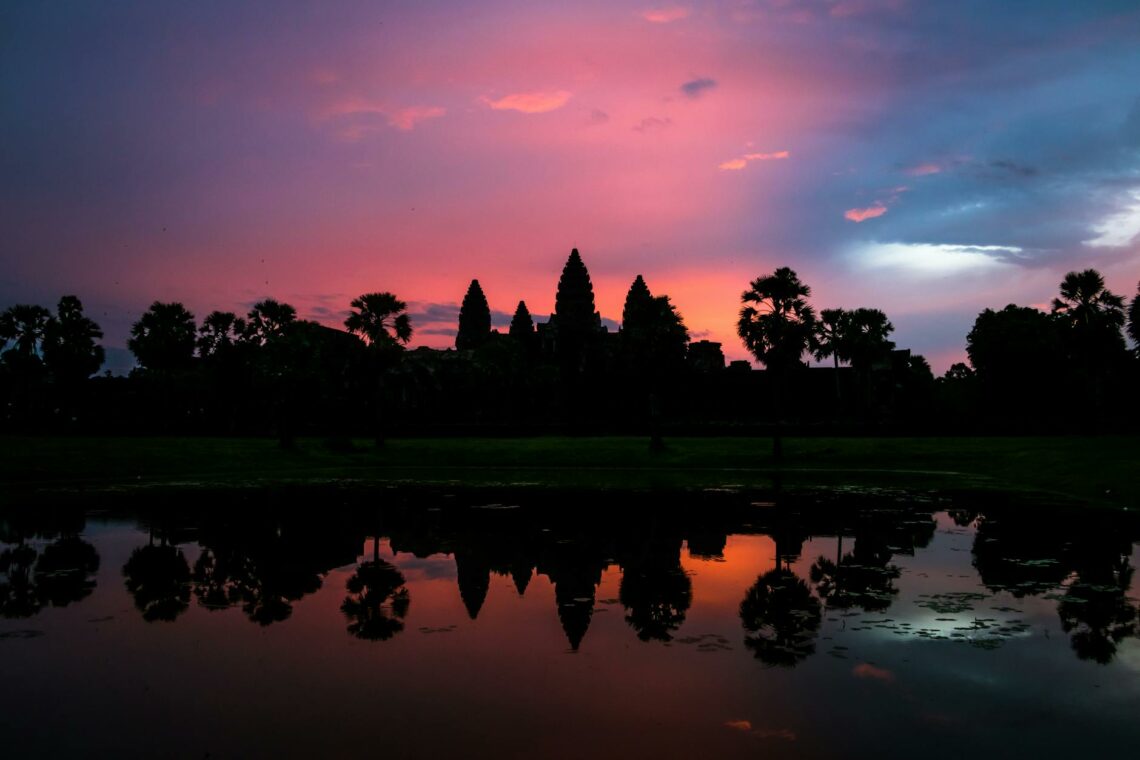
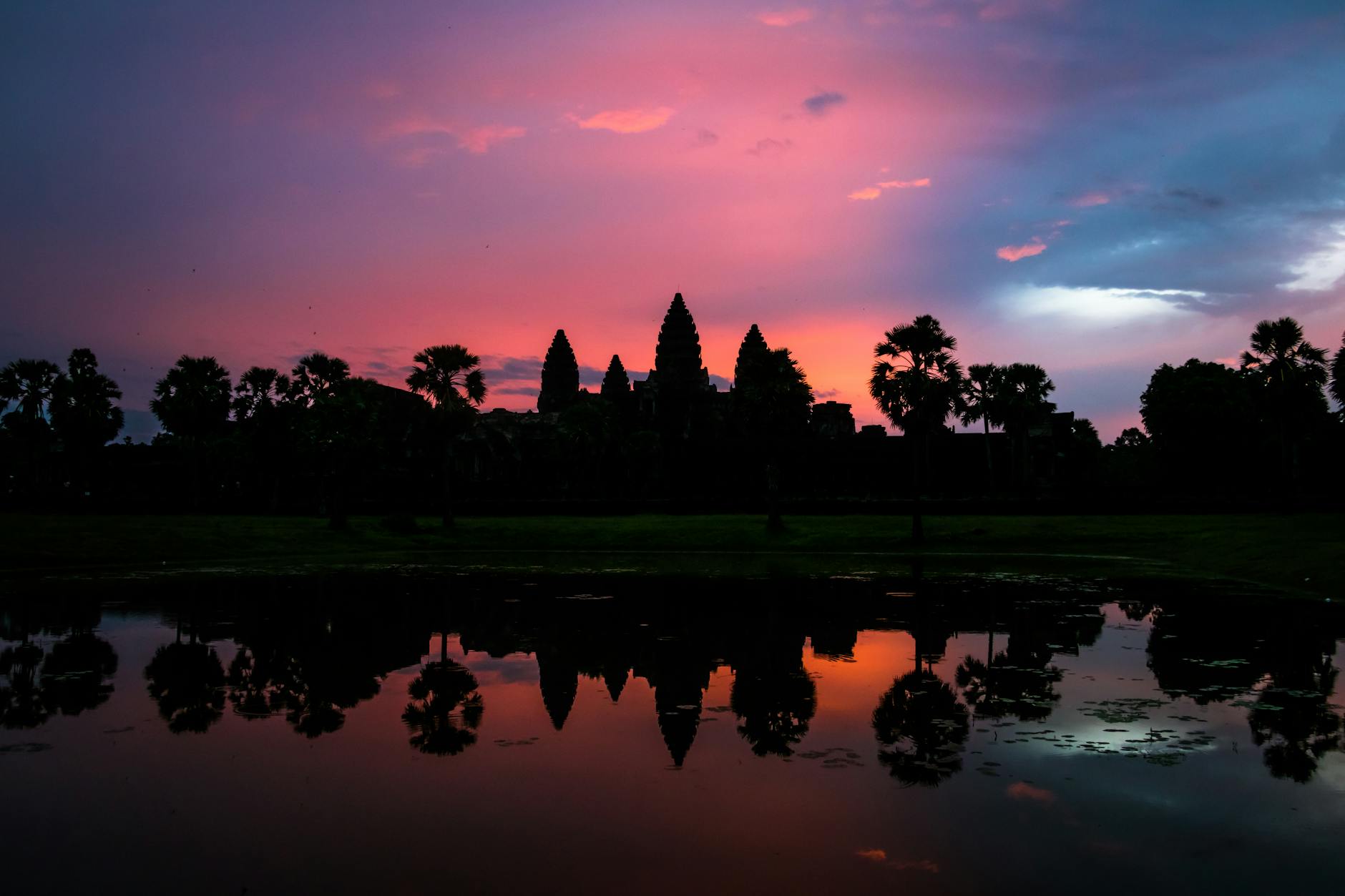
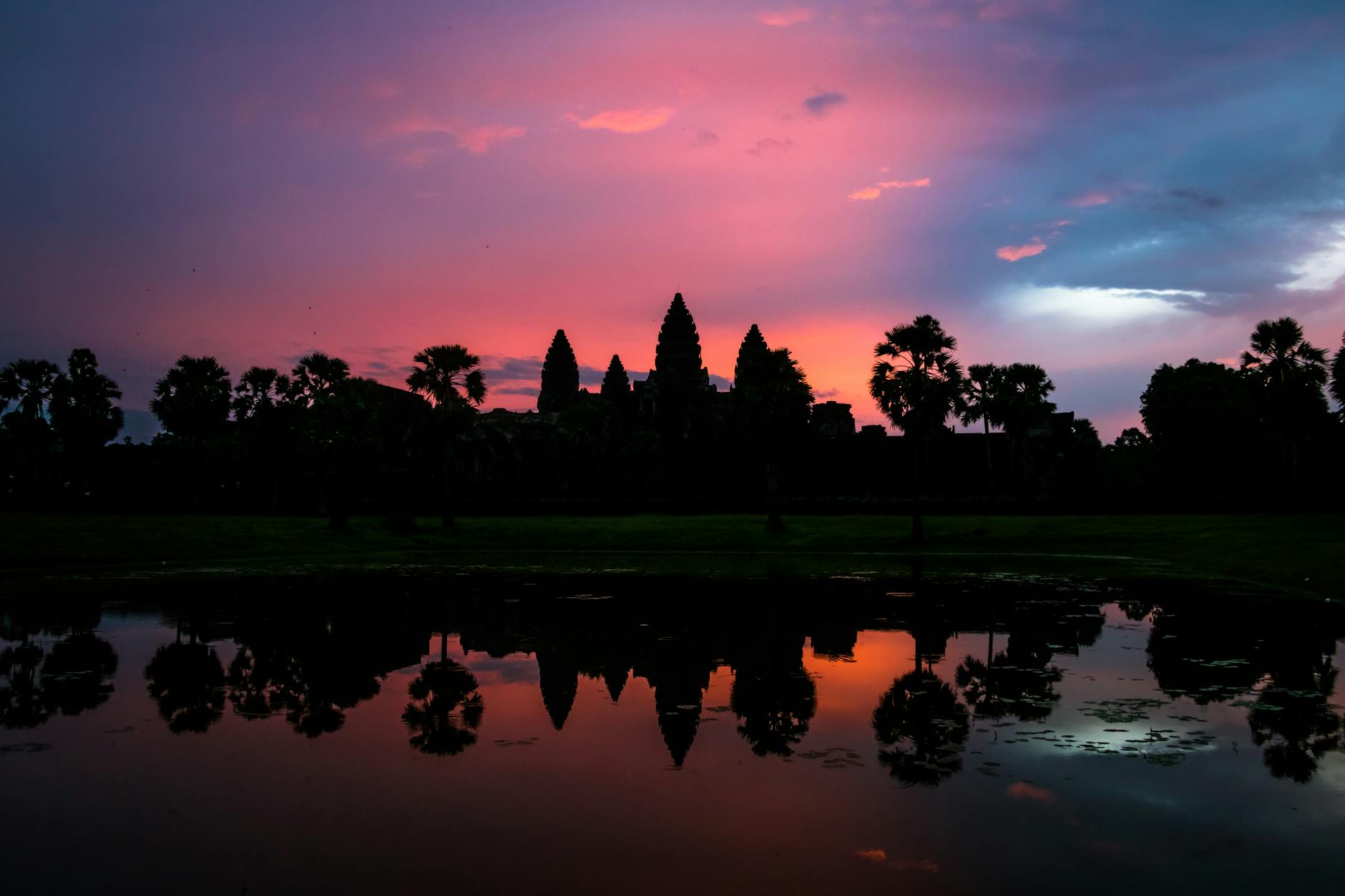
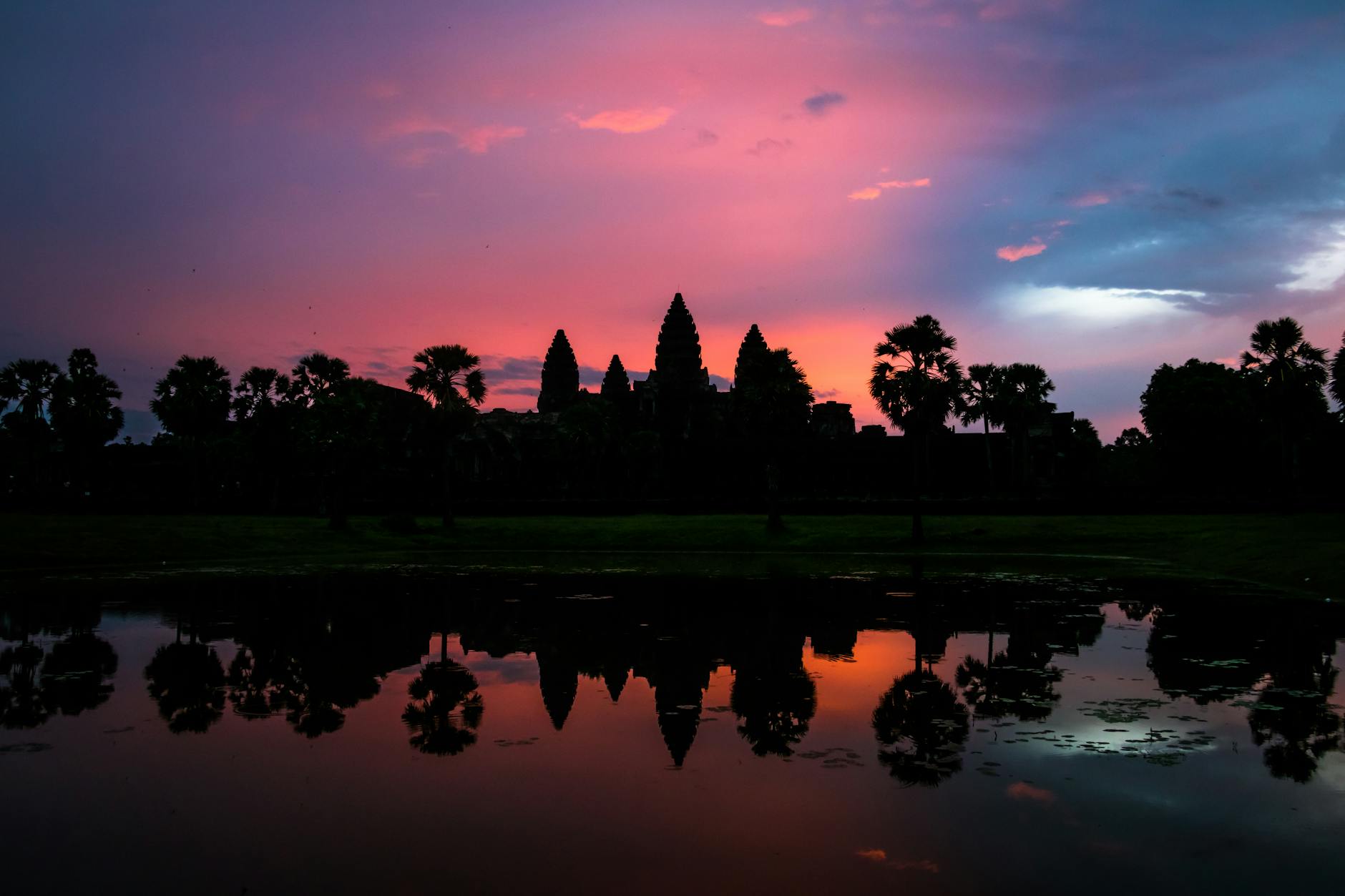
Sunrise at Angkor Wat is an iconic, bucket-list experience. Arrive well before dawn to secure a good spot, typically at the left reflection pond, for that classic shot of the temple silhouetted against a pastel sky. Expect crowds, but the atmosphere is truly magical. Sunsets are also beautiful, though often less dramatic than sunrise.
Practical Tips for a Respectful & Enjoyable Visit:
Your conduct impacts the preservation and local experience.
- Dress code: For all temples, modesty is essential. Shoulders and knees must be covered. This is not merely a suggestion but a requirement for entering many temple areas, especially the upper levels of Angkor Wat.
- Packing essentials: Carry plenty of water (hydration is crucial in the Cambodian heat), a wide-brimmed hat, sunscreen, effective insect repellent, comfortable walking shoes, and a power bank for your devices.
- Health and safety: Prioritize hydration to prevent heatstroke. Be aware of your surroundings, especially on uneven terrain. Local medical facilities are available in Siem Reap for emergencies.
- Photography etiquette and drone regulations (current policies 2024): Always ask permission before photographing locals, especially monks. Drones are strictly prohibited within the Angkor Archaeological Park without special permits from the APSARA Authority, which are rarely granted for tourists. Respect these rules to protect the heritage site.
- Minimizing your environmental footprint: Stick to designated paths, do not touch carvings, and carry out all your rubbish. Support local, ethical businesses.
Conservation and the Future: Protecting a Priceless Heritage
The preservation of Angkor Wat is a monumental, ongoing task requiring global cooperation. Cambodia’s lead conservation agency, the APSARA Authority, works tirelessly, partnering with international teams from organizations like UNESCO and the World Monuments Fund (WMF). Their work encompasses everything from structural stabilization and stone consolidation to meticulous cleaning and documentation.

Current Restoration Efforts: A Global Collaboration
The preservation of Angkor Wat is a monumental, ongoing task requiring global cooperation. Cambodia’s lead conservation agency, the APSARA Authority, works tirelessly, partnering with international teams from organizations like UNESCO, the World Monuments Fund (WMF), and experts from Japan, France, and Germany. Their work encompasses everything from structural stabilization and stone consolidation to meticulous cleaning and documentation.
Challenges in the 21st Century:
Protecting this ancient marvel faces significant hurdles.
- Environmental Threats: Climate change is a major concern, leading to increased rainfall, flooding, and erosion, which accelerate stone decay. Biodeterioration from microbes, moss, and tree roots also poses constant threats.
- Impact of Mass Tourism: While tourism sustains the site, mass visitation leads to visitor wear-and-tear on stone surfaces, congestion at popular spots, and strain on existing infrastructure. Finding the balance is critical.
- Funding & Resources: Sustaining such extensive, long-term preservation efforts requires substantial and consistent funding, a continuous challenge for a developing nation.
Sustainable Tourism & Future Visions (2024-2026 Initiatives):
The future of Angkor Wat lies in sustainable tourism practices. This involves educating visitors on responsible conduct, managing visitor flows, and channeling tourism revenue directly into conservation and local community development. Initiatives for 2024-2026 focus on enhancing digital monitoring, employing advanced preservation technologies, and fostering greater community involvement, ensuring that local communities directly benefit from and participate in safeguarding their heritage.
Myths, Legends, and the Real History of Angkor Wat
In my years, I’ve heard many incredible stories about Angkor Wat. Let’s separate the fascinating folklore from the established facts to truly appreciate the historical and cultural significance of this amazing site.
Myth: Built by Aliens or Supernatural Beings?
Perhaps the most common myth is that Angkor Wat was built by aliens or supernatural entities due to its colossal scale and intricate detail. The truth, however, is far more compelling: it was built by the ancient Khmer people through sheer human ingenuity, sophisticated engineering, immense organization, and decades of tireless labor. Their advanced understanding of construction, logistics, and art is what truly astounds.
Legend of the “Lost City”:
While Western explorers “rediscovered” Angkor Wat in the 19th century, it was never truly a “lost city.” Local Cambodian communities always knew of its existence and continued to maintain it as a living Buddhist pilgrimage site throughout the centuries. The narrative of a completely abandoned, swallowed-by-jungle ruin is largely a romanticized Western perception.
Secret Passages and Hidden Treasures:
The allure of “secret passages” and “hidden treasures” often surrounds ancient sites. While archaeologists continue to uncover new insights into Angkor Wat’s construction and use, these discoveries usually pertain to architectural nuances, drainage systems, or artifacts of daily life, not fantastical hidden chambers filled with gold. The true treasure lies in its open beauty and historical record.
The Curse of the Apsaras:
You might hear whispers of curses associated with the beautiful Apsara carvings. This is pure folklore, adding to the mystique of the site. These celestial dancers are benevolent figures, symbolizing beauty, fertility, and divine entertainment, not malevolent forces.
Common Mistakes to Avoid When Visiting Angkor Wat
To ensure your trip is as rewarding as possible, learn from what most people get wrong. A little foresight can go a long way in making your visit truly memorable and hassle-free.

Not Doing Your Research:
One of the biggest pitfalls is arriving unprepared. Without a basic understanding of the history, symbolism, and logistics, you’ll miss out on the rich context that makes Angkor Wat so profound. My advice: spend time with guides like this one before you go!
Underestimating the Heat and Humidity:
Cambodia is hot and humid, almost year-round. Many visitors underestimate this, leading to discomfort or even heatstroke. Prioritize hydration, wear light, breathable clothing, and schedule your most strenuous activities for early mornings or late afternoons.
Disregarding Temple Etiquette:
Angkor Wat is a sacred site. Disregarding the dress code (shoulders and knees covered), climbing on delicate structures, or being overly loud shows disrespect. Always remember you are a guest in a place of worship and immense cultural significance.
Only Visiting Angkor Wat:
While magnificent, Angkor Wat is just one jewel in the Angkor Archaeological Park. Overlooking the incredible diversity of other temples like Bayon, Ta Prohm, or Banteay Srei is a missed opportunity to appreciate the full scope of Khmer artistry. You can find a comprehensive guide to the Temples of Angkor on our site.
Falling for Common Tourist Scams:
Be vigilant against common scams, such as overly pushy vendors, inflated prices, or “free” bracelet scams. A polite but firm “no, thank you” is usually sufficient. Your licensed guide or reliable tuk-tuk driver can also help shield you from these.
Not Bringing Local Currency (Khmer Riel):
While US dollars are widely accepted in tourist areas, having small denominations of Khmer Riel is very useful for smaller purchases, tipping, and in local markets. Exchange a small amount for convenience.
Frequently Asked Questions (FAQs) About Angkor Wat
We’ve covered a lot, but some questions always come up. Here are the answers to the most common queries I hear to help you prepare even further for your visit.
- How old is Angkor Wat, really?
- Angkor Wat is approximately 900 years old. Construction began around 1113 CE and was largely completed by 1150 CE during the reign of King Suryavarman II.
- What religion is Angkor Wat primarily?
- Originally, Angkor Wat was a Hindu temple dedicated to Vishnu. Over time, it gradually transformed and is now primarily a Theravada Buddhist site, functioning as a living monastery and pilgrimage destination.
- How much does it cost to enter Angkor Wat (2024-2026)?
- The official Angkor Pass prices for 2024-2026 are approximately: 1-day pass for $37, 3-day pass for $62, and 7-day pass for $72. These passes grant access to the entire Angkor Archaeological Park, not just Angkor Wat.
- What is the best time of year to visit Angkor Wat?
- The dry season (November to February) is generally considered the best due to cooler temperatures and lower humidity. However, this is also peak tourist season. For fewer crowds, consider the shoulder months of March or October, being prepared for more heat.
- Can you climb Angkor Wat’s central tower?
- Yes, you can climb to the uppermost tier of Angkor Wat, known as Bakan Sanctuary. However, there are restrictions: a dress code (shoulders and knees covered) is strictly enforced, and only a limited number of visitors are allowed up at any one time, meaning there can be queues.
- Is Angkor Wat a single temple or a complex?
- While often referred to as a single temple, Angkor Wat is actually a vast temple-mountain complex made up of multiple structures, including concentric galleries, pavilions, and the iconic five central towers, all surrounded by a massive moat.
- What does “Angkor Wat” mean in Khmer?
- “Angkor” is derived from the Sanskrit word nagara, meaning “city” or “capital.” “Wat” means “temple” or “monastery.” So, “Angkor Wat” translates to “City Temple” or “Capital Temple.”
- How long should I allocate to explore Angkor Wat thoroughly?
- To truly appreciate Angkor Wat, I recommend allocating at least half a day, or even a full day, especially if you plan to explore the bas-reliefs in detail, climb the central tower, and experience both sunrise or sunset. Many visitors spend 2-3 hours on the main temple alone.
- Is Angkor Wat a UNESCO World Heritage Site?
- Yes, Angkor Wat, as part of the Angkor Archaeological Park, was inscribed as a UNESCO World Heritage Site in 1992, recognized for its outstanding universal value and cultural significance.
- What is the difference between Angkor Wat and Angkor Thom?
- Angkor Wat is a single, immense temple complex. Angkor Thom is a much larger, walled ancient city that contains several individual temples within its boundaries, most famously Bayon and the Baphuon. Angkor Wat is outside the walls of Angkor Thom.
Conclusion: The Enduring Legacy and Call to Experience Angkor Wat
Angkor Wat stands as an unparalleled testament to human achievement, spiritual depth, and artistic brilliance. Its enduring presence bridges ancient Khmer civilizations with modern aspirations, reminding us of the profound capabilities of human ingenuity and faith. It’s more than stone and history; it’s a living narrative.
A Testament to Human Achievement and Spiritual Depth:
Angkor Wat stands as an unparalleled testament to human achievement, spiritual depth, and artistic brilliance. Its enduring presence bridges ancient Khmer civilizations with modern aspirations, reminding us of the profound capabilities of human ingenuity and faith. It’s more than stone and history; it’s a living narrative.
Your Invitation to Explore:
I wholeheartedly invite you to plan your visit and witness its grandeur firsthand. There’s a transformative power in walking through its ancient halls, watching the sunrise paint its towers, and connecting with a legacy that spans nearly a millennium. It’s an experience that truly changes perspective.
Share Your Journey:
Have you visited Angkor Wat, or are you planning a trip? Share your questions, tips, and personal experiences in the comments below. Let’s build a community around this magnificent wonder.