Imagine yourself raising a crisp Maß of beer in a lively beer garden, strolling through ancient royal palaces, or catching a wave in the heart of the city. Munich, Bavaria’s captivating capital, promises an unforgettable journey where tradition meets innovation. But to truly unlock its magic, you need more than just a list of sights. This definitive guide, meticulously crafted for 2024-2026, is your passport to navigating Munich with confidence, embracing its unique culture, and creating memories that last a lifetime – free from common tourist pitfalls.
Munich’s unique allure captivates millions for good reason. It’s a city where a rich tapestry of history, vibrant culture, cutting-edge innovation, and breathtaking nature seamlessly intertwine.
This guide is for you whether you’re a first-time visitor eager to soak it all in, a seasoned explorer looking for deeper insights, a cultural enthusiast keen on local nuances, or simply an efficiency-focused traveler who values precise, actionable information.
Here, you’ll discover far beyond the obvious tourist trails. We delve into practical essentials, offer deep cultural insights, share insider tips that only locals usually know, and, crucially, show you how to sidestep common tourist mistakes. We aim to make your trip as smooth and enriching as possible.
1. Laying the Foundation: Essential Pre-Trip Planning for Munich (2024-2026)
Effective planning is the secret sauce to any great trip, and Munich is no exception. We’ll cover everything you need to know before you even set foot on the plane. Think of this as your strategic blueprint for a flawless Bavarian adventure.
1.1. Your Comprehensive Munich Pre-Departure Checklist
A well-organized traveler avoids last-minute stress. In our experience, a structured checklist makes all the difference, helping you focus on the excitement rather than the logistics.
- Visa & Entry Requirements (Schengen Area for US/non-EU citizens, ETIAS for 2025): For most non-EU citizens, a Schengen visa might be required, or you might qualify for visa-free entry for up to 90 days. Keep in mind that ETIAS authorization will become mandatory for visa-exempt non-EU visitors from 2025. Always check the official German embassy website for the latest requirements specific to your nationality.
- Passport Validity & Secure Copies: Ensure your passport is valid for at least six months beyond your intended departure date from the Schengen Area. We always recommend making digital copies (stored securely in the cloud or emailed to yourself) and physical photocopies. Keep these separate from your actual passport.
- Travel Insurance: Why It’s Non-Negotiable: Seriously, don’t skip this. Travel insurance is your safety net for unexpected medical emergencies, trip cancellations, lost luggage, or even a sudden need to return home. We’ve seen too many travelers caught off guard; a good policy offers invaluable peace of mind.
- Flight & Accommodation Bookings: Strategic Timing for Best Value: For optimal prices and availability, we advise booking flights and accommodation at least 3-6 months in advance, especially if you’re traveling during peak season like Oktoberfest or the Christmas markets. Prices only go up closer to the date.
- Choosing Your Munich Base: Neighborhood Guide: Munich offers diverse neighborhoods, each with its own charm.
- Altstadt: Right in the historic center, perfect for first-timers wanting to be amidst the main sights.
- Schwabing: Lively, bohemian, known for its cafes, boutiques, and nightlife. A bit further out but well-connected.
- Glockenbachviertel: Trendy, LGBTQ+ friendly, with a vibrant bar and restaurant scene.
- Maxvorstadt: Home to universities and museums, offering a more intellectual and quieter vibe.
- Choosing Your Munich Base: Neighborhood Guide: Munich offers diverse neighborhoods, each with its own charm.
- Digital Document Hub: Create a single folder on your phone or in a cloud service for all essential documents – flight confirmations, hotel reservations, passport copies, insurance details, and emergency contacts. This central hub is a lifesaver when you’re on the go.
1.2. Mastering Munich’s Money Matters: Budgeting & Smart Spending
Understanding how to manage your finances is key to an enjoyable trip. Let’s demystify the Euro and talk about smart spending in Munich.
- The Euro Explained: Germany uses the Euro (€). Familiarize yourself with the common denominations (coins: 1c, 2c, 5c, 10c, 20c, 50c, €1, €2; banknotes: €5, €10, €20, €50, €100). Exchange rates can fluctuate, so keep an eye on them before and during your trip.
- Cash vs. Card: Munich’s Payment Landscape: While cards are widely accepted, Munich still has a strong cash culture, especially for smaller transactions.
- When to Use Cash: Expect to use cash at smaller, independent shops, some traditional beer gardens (especially self-service areas), local markets like Viktualienmarkt, and for tipping. Having €20-€50 on hand daily is a good strategy.
- Credit Card Acceptance: Visa and Mastercard are widely accepted in most larger stores, restaurants, and hotels. American Express is less common. Always carry a backup card if possible.
- ATM Accessibility & Avoiding Fees: ATMs (Geldautomaten) are plentiful. Look for bank-affiliated ATMs (e.g., Sparkasse, Deutsche Bank) to avoid excessive fees charged by independent machines. Decline dynamic currency conversion (DCC) if offered; always pay in Euros.
- Munich Budget Breakdown: 2024-2026 Estimates: Budgeting can feel like a guessing game, so we’ve prepared some realistic estimates.
- Average Daily Costs:
- Budget Traveler: €60-€90 (Hostels, street food/supermarket meals, public transport, free attractions)
- Mid-Range Traveler: €100-€200 (Mid-range hotels/apartments, mix of casual dining & a few nice meals, some paid attractions)
- Luxury Traveler: €250+ (High-end hotels, fine dining, private tours, extensive shopping)
- Sample Costs (Illustrative):
- Meal in a casual restaurant: €12-€20
- Maß of Beer (1 liter): €9-€13 (more at Oktoberfest)
- Museum Entry: €7-€15
- 24-hour MVV Day Ticket (Inner District): €8.80
- Average Daily Costs:
- Tipping Etiquette in Germany: A Clear, No-Fuss Guide: Tipping isn’t as high as in some countries, but it’s appreciated. For good service, round up to the nearest Euro or add 5-10% in restaurants. For a €27 bill, €30 is appropriate. For a quick coffee, a €0.50-€1 tip is fine. Taxis, round up.
- Tax-Free Shopping (VAT Refund) for Non-EU Visitors: If you’re a non-EU resident and spend over €50 on eligible goods at participating stores, you can get a VAT refund (currently 19%). Ask for a “Tax Free Form” at the point of purchase, get it stamped at customs before you leave the EU, and then claim your refund.
FAQ: Is Munich expensive to visit compared to other European cities?
Answer: Munich can be on the pricier side compared to Eastern or Southern European cities, but it offers excellent value for the quality of life, safety, and experiences. Accommodation and dining can be significant costs, but public transport is efficient and affordable.
1.3. Staying Connected: Munich’s Digital Lifeblood
Staying connected is more than just convenience; it’s safety and efficiency. We’ll help you navigate your options for mobile data and Wi-Fi.
- Mobile Roaming vs. Local SIM vs. eSIM: Your Best Options for Germany:
- Roaming: Often expensive, check with your home provider.
- Local SIM: Can be a good option for longer stays. You can buy one at kiosks or telecom shops (Telekom, Vodafone, O2). Requires passport registration.
- eSIM: Our top recommendation for most travelers. It’s digital, easy to activate, and you can buy plans before you even arrive.
- Recommended eSIM Providers & Packages for European Travel: Providers like Airalo, Holafly, and Nomad offer excellent data-only eSIM plans for Germany or Europe. We find them incredibly convenient for immediate connectivity upon arrival.
- Wi-Fi Availability: Public Wi-Fi is available in many squares, cafes, and hotels. Look for “M-WLAN” for Munich’s free public network. While useful, it’s generally less secure and slower than a dedicated mobile connection.
- Essential Apps for Your Munich Journey:
- MVV App: Crucial for public transport navigation and real-time schedules.
- DB Navigator: For longer train journeys outside Munich.
- Google Maps: For walking, driving, and public transport directions.
- Google Translate: Invaluable for quick translations, especially offline.
- Free Now/Uber: For ride-sharing services when public transport isn’t an option.
- Power & Plugs: The German Standard (Type F, 230V): Germany uses Type F (Schuko) sockets, which accept two round pins. The standard voltage is 230V at 50Hz.
- Universal Adapter & Converter Recommendations: Always bring a universal travel adapter. If your devices aren’t dual voltage, you’ll also need a voltage converter, though most modern electronics (phones, laptops) are. Check your device labels.
1.4. Packing Like a Pro: Preparing for Munich’s Dynamic Weather
Munich’s weather can be notoriously unpredictable, often experiencing “four seasons in a day.” Layering is your best friend here.
- The Art of Layering: This is crucial. Even in summer, evenings can be cool, and sudden rain showers aren’t uncommon. A light base layer, a fleece or sweater, and a waterproof outer shell will serve you well.
- Essential Footwear: Comfort is King for City Exploration: You’ll be doing a lot of walking, so prioritize comfortable, broken-in shoes. Waterproof shoes are a bonus, especially in spring, autumn, and winter. Forget fashion over function for daily exploration.
- Seasonal Packing Guides:
- Spring (March-May): Expect mild to cool temperatures. Pack versatile layers, a light waterproof jacket, and an umbrella.
- Summer (June-August): Can be warm to hot, but evenings often cool down. Bring breathable fabrics, sun protection (hat, sunglasses, sunscreen), and a light jacket or cardigan for cooler nights.
- Autumn (Sept-Nov): Layers are essential as temperatures drop. A warmer, waterproof coat, sweaters, and closed-toe shoes are key. If visiting for Oktoberfest, don’t forget traditional attire like Lederhosen or Dirndl if you want to partake!
- Winter (Dec-Feb): Cold and often snowy. Pack a heavy, waterproof winter coat, thermal wear, waterproof boots, a hat, gloves, and a scarf. Think warmth above all else.
- Day Bag Essentials: For daily adventures, we always carry a small backpack or cross-body bag. Inside, you’ll want a reusable water bottle, a small snack, some local currency for small purchases, your phone, a portable charger, and physical copies of your essential documents (or a reliable digital backup).
2. Navigating Munich: Mastering the City’s Transport & Flow
Munich boasts one of the most efficient public transportation systems we’ve ever encountered. Learning to use it will empower your exploration.
2.1. Arriving at Munich Airport (MUC): A Seamless Transition
Getting from the airport to the city center is straightforward once you know your options. Munich Airport (MUC) is well-connected.
- Getting from MUC to the City Center:
- S-Bahn S1/S8: These commuter trains are the most popular and efficient option, taking approximately 40-45 minutes to reach Marienplatz or Hauptbahnhof (main station). They run frequently.
- Lufthansa Express Bus: A comfortable alternative, stopping at Nordfriedhof and Hauptbahnhof. It’s often a good choice if you’re staying near one of those stops or prefer fewer transfers with luggage.
- Taxis: Available directly outside the terminals, but significantly more expensive (€70-€90+) than public transport.
- Understanding the MVV Ticket System at the Airport: You’ll need an “Airport-City-Day-Ticket” or a single ticket covering all zones from the airport to the city center. We recommend purchasing at the MVV ticket machines (available in multiple languages) or the MVV service counter.
2.2. Munich’s Public Transport: Your Best Friend (U-Bahn, S-Bahn, Tram, Bus)
The Munich Public Transport Authority (MVV) network is incredibly comprehensive. It will be your primary mode of getting around, and it’s remarkably user-friendly.
- Demystifying the MVV Network: Routes, Lines, & Zones: The MVV system comprises U-Bahn (underground), S-Bahn (commuter rail), trams, and buses. The network is organized into zones radiating out from the city center. Most tourist attractions fall within the Inner District (Zone M), previously known as the “white zone.”
- Ticket Options Explained: Single Tickets, Day Tickets, Group Tickets, CityTourCard, IsarCard:
- Single Tickets: For one-off journeys.
- Day Tickets (Tageskarte): Most popular for visitors, offering unlimited travel for 24 hours or longer within selected zones.
- Group Day Tickets: Fantastic value if you’re traveling with 2-5 people, significantly reducing costs per person.
- CityTourCard: Combines unlimited MVV travel with discounts on attractions.
- IsarCard: For longer stays (weekly, monthly), less common for short-term tourists.
- Which Ticket is Right for You?: If you’re traveling solo and plan more than 2-3 rides a day, a 24-hour or 48-hour Day Ticket (Single or Group) is usually the most economical choice for the Inner District. For groups of up to five, the Group Day Ticket is almost always the best value.
- Crucial: Ticket Validation Rules (Avoid Steep Fines!): This is perhaps the most important rule for public transport. You must validate your ticket before your first journey. Look for small blue or yellow machines on platforms (U-Bahn/S-Bahn) or inside trams/buses. Failing to validate means a hefty fine (around €60). Digital tickets from the MVV app are pre-validated.
- Using Digital Navigation: MVV App, Google Maps, & Real-Time Updates: Download the official MVV App – it’s intuitive and offers real-time departure information. Google Maps also integrates MVV routes seamlessly. We rely on both.
- Etiquette on Public Transport: Bavarians appreciate order and cleanliness. Keep noise levels down, offer priority seats to the elderly or pregnant, and keep your feet off the seats. It’s common courtesy.
FAQ: How easy is it to use Munich’s public transport system for a newcomer?
Answer: Incredibly easy! The system is well-signed, punctual, and the MVV app makes navigation a breeze. Once you understand the ticket validation rule, you’ll be moving like a local in no time.
2.3. Exploring Munich on Foot & By Bike
Munich is a wonderfully walkable city, and exploring on two wheels is also a popular option.
- The Walkable City: Best Neighborhoods for Strolling: The Altstadt, with its pedestrian zones, is perfect for strolling. Also, Schwabing, Glockenbachviertel, and around the English Garden are delightful to explore on foot. We encourage you to wander; you’ll discover so much.
- Bike Rentals & Cycling Culture: Munich has an excellent network of bike paths. You can rent bikes through MVG Rad (the city’s bike-sharing system), or from private rental shops. The English Garden offers some particularly scenic routes.
2.4. Taxis & Ride-Sharing: When & How to Use Them
While public transport covers most needs, taxis and ride-sharing have their place.
- Official Taxis in Munich: Recognized by their cream color and “Taxi” roof sign. You can hail them on the street, find them at designated taxi stands (e.g., train stations, major squares), or book via phone. Drivers are professional and meters are always used.
- Ride-Sharing Apps (Uber, Free Now): Both Uber and Free Now (a popular German app) operate in Munich. They offer a convenient alternative, especially for late nights or when carrying heavy luggage. Free Now often works with official taxi drivers, allowing you to pay via the app.
3. Embracing Bavarian Culture: Etiquette, Language & Local Life
Munich may be a big city, but it retains a strong sense of its Bavarian heritage. Understanding these cultural nuances will enrich your experience.
3.1. Understanding the “Millionendorf”: Big City, Village Heart
Munich is affectionately called the “Millionendorf” – the “village of a million people.” This moniker perfectly captures its unique blend of cosmopolitan vibrancy with a charming, almost provincial, small-town feel.
- German Directness: Interpreting Communication & Setting Expectations: Germans, and Bavarians, are known for their direct communication. This isn’t rude; it’s simply efficient and honest. Don’t interpret it as unfriendliness; it’s just how they communicate. We’ve learned to appreciate the clarity.
- Punctuality & Order: Why These Values Matter in Bavaria: Punctuality is highly valued. If you have an appointment, be on time. Order and efficiency are also deeply ingrained, which you’ll notice in everything from public transport to queuing.
- The Power of “Bitte,” “Danke,” and “Entschuldigung”: These three words are your cultural keys.
- Bitte: Please, you’re welcome, pardon?
- Danke: Thank you
- Entschuldigung: Excuse me, sorry
Using them frequently shows respect and opens doors.
- The Concept of “Gemütlichkeit” (Cozy Comfort & Friendliness): While often associated with a certain reserved nature, Bavarians also deeply value “Gemütlichkeit.” This describes a feeling of warmth, coziness, and good cheer, often found in beer gardens or traditional pubs among friends. It’s a feeling we actively seek out.
3.2. Essential German Phrases for Travelers (Mini Phrasebook)
While many people in tourist areas speak English, making an effort to speak a few German phrases goes a long way. Locals appreciate the effort.
- Greetings & Farewells:
- Grüß Gott: (Literally “Greet God”) A common, traditional Bavarian greeting.
- Servus: (Like “Hello” or “Goodbye”) Informal, widely used in Bavaria.
- Guten Tag: Good day (more formal)
- Auf Wiedersehen: Goodbye (formal)
- Tschüss: Bye (informal)
- Dining Out:
- Eine Maß Bier, bitte: A liter of beer, please.
- Die Rechnung, bitte: The bill, please.
- Ich bin Vegetarier/in: I am vegetarian (m/f).
- Ich habe eine Allergie gegen…: I have an allergy against…
- Navigation:
- Wo ist…?: Where is…?
- Links/Rechts/Geradeaus: Left/Right/Straight ahead
- Die Straße: The street
- Shopping:
- Was kostet das?: How much does that cost?
- Ich möchte kaufen…: I would like to buy…
- Haben Sie…?: Do you have…?
Expert Tip: Don’t be intimidated by the Bavarian dialect; High German is widely spoken, and most people in tourist-facing roles speak excellent English. Your efforts with basic phrases will always be met with appreciation.
FAQ: Do I need to speak German to get around Munich?
Answer: No, you don’t need to be fluent. Most people in hotels, restaurants, and tourist attractions speak excellent English. However, learning a few basic phrases like “Bitte,” “Danke,” and “Entschuldigung” will significantly enhance your interactions and show respect.
3.3. Dining & Drinking Etiquette: From Beer Gardens to Fine Dining
Bavarian dining experiences are a highlight of any trip. Knowing a few etiquette rules will help you enjoy them fully.
- Restaurant Reservations: Why They’re Crucial, Especially for Dinner: For popular restaurants, especially on weekend evenings, making a reservation is highly recommended. We’ve often seen people turned away without one. Call ahead or book online.
- Beer Garden Culture Unpacked: Rules, Self-Service, and Sharing Tables: Beer gardens are informal and wonderful.
- Self-Service Areas: Many have self-service sections where you grab your food and drink, then find an open spot.
- Shared Tables: It’s common and perfectly acceptable to sit at a partially occupied table. Just ask “Ist hier frei?” (Is this free?).
- Bring Your Own Food: In some traditional beer gardens, you can bring your own snacks or Brotzeit (a traditional snack plate), though you must buy your drinks there.
- Ordering Water: Sparkling (Mit Sprudel) vs. Still (Ohne Sprudel): When ordering water, be specific. “Ein Wasser, bitte” will almost always get you sparkling water. If you prefer still, ask for “Stilles Wasser, bitte” or “Wasser ohne Sprudel, bitte.”
- Meal Times & Sunday Closures: Planning Your Gastronomic Adventures: Lunch is typically 12 PM – 2 PM, and dinner often starts around 6 PM or 7 PM. Many restaurants close mid-afternoon. Be aware that most shops and some smaller restaurants are closed on Sundays – plan accordingly.
- Table Manners & Cutlery Usage: A Quick Refresher: Hands should be kept above the table (not in your lap). Cutlery is generally held in the European style (fork in left hand, knife in right). Don’t rush your meal.
FAQ: What’s the etiquette for sharing tables in a traditional Bavarian beer garden?
Answer: It’s expected and encouraged! Look for an empty spot, politely ask “Ist hier frei?” (Is this free?), and if it is, feel free to sit down. You’ll often find yourself striking up conversations with locals and fellow travelers.
3.4. Shopping Hours & the Sacred Sunday Closure
The “Ruhetag” (day of rest) on Sunday is a significant cultural aspect to be aware of.
- Typical Weekday & Saturday Shopping Hours in Munich: Most shops open around 9 AM or 10 AM and close between 6 PM and 8 PM on weekdays. Saturdays, shops generally close earlier, around 4 PM or 6 PM.
- The “Ruhetag”: What to Expect on Sundays (Limited exceptions): Almost all retail stores, supermarkets, and pharmacies are closed on Sundays. This is a day for rest, family, and leisure.
- Exceptions: You’ll find some shops, bakeries, and florists open at major train stations (like Hauptbahnhof and Ostbahnhof) and at Munich Airport. Restaurants and cafes, of course, are generally open.
- Navigating Public Holiday Closures: Public holidays (Feiertage) in Bavaria also mean widespread closures, similar to Sundays. Check local holiday calendars if your trip falls during these times.
4. Munich’s Culinary Canvas: What to Eat, Drink & Savor
Munich’s food and drink scene is a delectable journey into hearty Bavarian traditions, coupled with surprising international flair. Prepare your taste buds!

4.1. The Unmissable Bavarian Specialties (Beyond the Pretzel & Beer)
While a giant pretzel (Brezn) and a Maß of beer are iconic, Munich offers so much more. We love delving into these local favorites.
- Weißwurstfrühstück: The Morning Ritual: This traditional breakfast consists of Weißwurst (white sausage, usually veal and pork), sweet mustard, a pretzel, and a Weißbier (wheat beer). Crucially, Weißwurst should be eaten before noon! We usually just pull the sausage out of its skin using our hands, but you can also use a knife and fork.
- Schweinshaxe (Pork Knuckle) & Ente (Roast Duck): These are hearty, flavorful main courses. Schweinshaxe is a roasted pork knuckle with incredibly crispy skin and tender meat. Ente (roast duck) is particularly popular during autumn and winter, often served with potato dumplings.
- Leberkäse (Meatloaf) & Obatzda (Cheese Spread): Leberkäse is a baked meatloaf, often served warm in a bun (Leberkässemmel) for a quick snack. Obatzda is a delicious, spiced cheese spread (camembert, butter, paprika) typically served with pretzels and bread in beer gardens. It’s a personal favorite.
- Spätzle, Knödel, & Kartoffelsalat (Classic Sides): Don’t forget the sides! Spätzle are soft egg noodles, often served with cheese (Käsespätzle). Knödel are dumplings (potato or bread-based), perfect for soaking up gravy. Kartoffelsalat (potato salad) in Bavaria is typically made with broth and vinegar, not mayonnaise.
- Decadent Desserts: Apfelstrudel, Prinzregententorte, Kaiserschmarrn: Satisfy your sweet tooth with Apfelstrudel (apple strudel), Prinzregententorte (a chocolate and buttercream layer cake), or Kaiserschmarrn (shredded pancake with fruit compote).
4.2. Dive into Munich’s Legendary Beer Culture
Munich is synonymous with beer, and for good reason. Its brewing traditions are ancient and deeply respected.
- Understanding Bavarian Beer Types:
- Helles: The most common, light lager, crisp and refreshing.
- Weißbier/Weizen: Wheat beer, often fruity and cloudy.
- Märzen: Amber lager, traditionally brewed in March (e.g., Oktoberfest beer).
- Bock/Doppelbock: Stronger, darker beers, typically seasonal.
- Iconic Beer Gardens & Breweries: A visit to Munich isn’t complete without a beer garden experience.
- Hofbräuhaus am Platzl: The most famous, can be very touristy but historically significant.
- Augustiner Keller: A classic, huge beer garden with a lovely atmosphere.
- Hirschgarten: Munich’s largest beer garden, often frequented by locals.
- Paulaner am Nockherberg: Another large, traditional brewery-owned beer garden.
- The “Maß” (Liter Stein) & “Halbe” (Half Liter): How to Order: In beer gardens, beer is primarily served in a Maß (a one-liter glass stein). If you want a smaller portion, ask for a “Halbe” (half-liter), often served for Helles or Weißbier.
- Oktoberfest Planning: Tips for First-Timers (Booking, Attire, Tents): Oktoberfest is an unforgettable experience, but requires planning.
- Book accommodation months in advance.
- Consider traditional attire (Dirndl for women, Lederhosen for men) – it adds to the fun!
- Familiarize yourself with the different beer tents; some are more traditional, others more lively. Arrive early for a seat.
- Beyond Oktoberfest: Explore other seasonal beer festivals like Starkbierfest (strong beer festival in spring), Frühlingsfest (spring festival, often called “mini-Oktoberfest”), and various smaller local beer festivals throughout the year.
4.3. Dining Recommendations: From Traditional to Trendy
Munich’s dining scene offers a delightful spectrum, from rustic taverns to contemporary international cuisine.
- Authentic Bavarian Gasthäuser & Wirtshäuser (Pubs/Inns): For truly traditional food in a cozy atmosphere, seek out a Gasthaus or Wirtshaus. These are often family-run and serve classic dishes with local flair. We always prioritize these for an authentic experience.
- Munich’s Diverse International Cuisine Scene:
- Myth: All foreign food in Munich is bland.
- Fact: Munich boasts a vibrant international food scene, with excellent Italian, Greek, Middle Eastern, and Asian options. Many chefs cater to diverse palates, and you can always ask for more spice! We’ve had incredible global meals here.
- Must-Visit Food Markets & Halls:
- Viktualienmarkt: A permanent outdoor market with stalls selling fresh produce, cheeses, spices, flowers, and prepared foods. A fantastic spot for lunch or a snack.
- Elisabethmarkt: A smaller, charming market in Schwabing, offering similar delights.
- Vegetarian & Vegan Options: A Growing Trend in Munich: Munich has seen a significant increase in vegetarian and vegan-friendly restaurants and options in recent years. Many menus now clearly mark plant-based dishes.
4.4. Coffee Culture & Cafes: Your Bavarian Break
Beyond beer, Munich offers a delightful coffee culture perfect for a relaxing break.
- Experiencing “Kaffee und Kuchen” (Coffee and Cake): This is a cherished German tradition. In the afternoon, pop into a cafe for a coffee and a slice of delicious cake – a perfect way to recharge.
- Top Cafes for Relaxation, People-Watching, or Remote Work: Munich is dotted with charming cafes. Places around Marienplatz are great for people-watching, while those in Maxvorstadt or Schwabing offer a quieter ambiance for relaxing or even getting some remote work done.
5. Munich’s Top Attractions & Unforgettable Experiences
Munich is rich in history, art, and natural beauty. Here are some of the experiences we consider essential.
5.1. Munich’s Historic Heart & Soul
These landmarks are central to Munich’s identity and a great starting point for any visit.
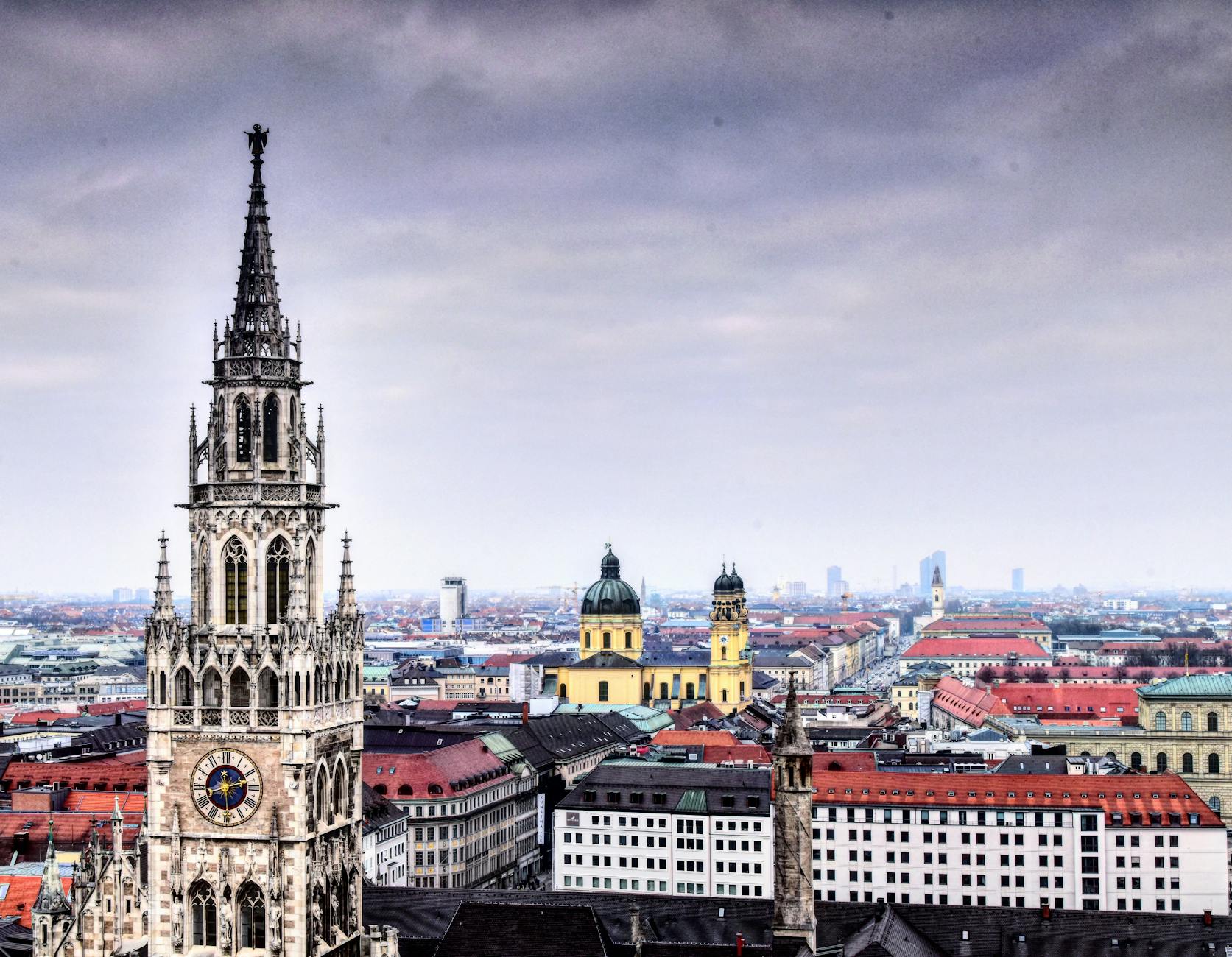
- Marienplatz & Neues Rathaus (New Town Hall): The Iconic Glockenspiel: Marienplatz is the city’s main square. The Glockenspiel at the New Town Hall (Neues Rathaus) performs daily at 11 AM and 12 PM (and 5 PM in summer), a charming mechanical show that draws crowds. It’s a must-see.
- Frauenkirche (Cathedral Church of Our Lady): Views & Legends: This iconic twin-domed cathedral offers panoramic views of the city (and sometimes the Alps!) from its south tower. Don’t miss the “Devil’s Footprint” legend near the entrance.
- Residenz & Treasury: The Grandeur of Bavarian Royalty: The former royal palace of the Bavarian monarchs, the Residenz, is Germany’s largest city palace. Explore its opulent rooms, courtyards, and the dazzling Treasury. It offers a fascinating glimpse into Bavarian history.
- Viktualienmarkt: A Culinary & Cultural Landmark: As mentioned, this vibrant market is not just for food. It’s a cultural experience, perfect for observing local life, grabbing a snack, or finding unique Bavarian gifts.
- Hofbräuhaus am Platzl: Tourist Hotspot, Still Worth a Visit: While undoubtedly a major tourist attraction, the Hofbräuhaus is iconic for a reason. Its history and lively atmosphere make it worth at least one visit, even if just for a quick beer and to soak in the ambiance.
5.2. World-Class Museums & Galleries
Munich is a cultural powerhouse, boasting an impressive array of museums and galleries.
- The Kunstareal: Pinakotheken (Alte, Neue, Moderne) & Lenbachhaus: This “art area” is home to three major art galleries – the Alte Pinakothek (Old Masters), Neue Pinakothek (19th-century art), and Pinakothek der Moderne (modern art). The Lenbachhaus focuses on Expressionist art. You could spend days here!
- Deutsches Museum: A Paradise for Science & Technology Enthusiasts: One of the oldest and largest science and technology museums in the world. It’s incredibly interactive and captivating for all ages. Allow plenty of time.
- BMW Welt & Museum: A Must for Automotive Fans: Even if you’re not a car enthusiast, BMW Welt (exhibition center) and the adjacent BMW Museum are architectural marvels and offer a fascinating look into the brand’s history and future.
- Dachau Concentration Camp Memorial Site: A Solemn & Important Visit: Located just outside Munich, Dachau was the first Nazi concentration camp. It’s a somber and powerful reminder of a dark chapter in history, offering crucial lessons. It’s a profoundly moving visit that we believe everyone should make.
5.3. Parks, Palaces & Relaxation
Munich offers abundant green spaces and magnificent palaces for relaxation and exploration.
- Englischer Garten (English Garden): Surfing, Beer Gardens, & More: Larger than New York’s Central Park, the English Garden is an urban oasis. Watch surfers ride the standing wave at the Eisbach, enjoy a beer at the Chinese Tower beer garden, or simply stroll through its vast expanse. It’s one of our favorite places to unwind.
- Nymphenburg Palace: Baroque Splendor & Expansive Gardens: This stunning Baroque palace was the summer residence of Bavarian rulers. Explore its lavish interiors and then wander through its enormous, beautifully manicured gardens, complete with smaller pavilions.
- Olympic Park (Olympiapark): History, Views, & Recreation: Built for the 1972 Summer Olympics, the Olympiapark is now a vibrant recreational area. Climb the Olympiaberg for fantastic city views, or take a tour of the iconic Olympic Stadium.
5.4. Unique & Offbeat Munich Experiences
Beyond the main attractions, we encourage you to seek out some truly special Bavarian moments.
- Day Trips from Munich: The city is a perfect base for exploring Bavaria and beyond.
- Neuschwanstein Castle: The famous fairytale castle, a must-see for many.
- Salzburg, Austria: Mozart’s birthplace, just a short train ride away.
- Garmisch-Partenkirchen: A picturesque Alpine town, gateway to the mountains.
- Zugspitze: Germany’s highest mountain, offering breathtaking panoramic views.
- To effortlessly explore day trips and tours, consider booking in advance.
- Discovering Local Festivals Beyond Oktoberfest: Munich hosts many wonderful festivals.
- Tollwood Festival: Summer and winter versions, offering live music, arts, crafts, and international food.
- Christmas Markets (Christkindlmärkte): Magical in December, especially the one at Marienplatz.
- Auer Dult: Traditional folk festivals held three times a year, with rides, market stalls, and food.
- Exploring Charming Bavarian Villages: Take a train to nearby picturesque villages like Mittenwald or Berchtesgaden for a taste of authentic rural Bavaria.
- Real-World Scenario: Imagine a snowy Christmas market evening at Marienplatz, the scent of Glühwein filling the air. This guide helps you plan for such unforgettable moments, advising you on seasonal clothing and ensuring you know where to find the best market stalls.
FAQ: What’s the absolute best time of year to visit Munich?
Answer: It depends on your interests! Spring (April-May) offers milder weather and blooming flowers. Summer (June-August) is ideal for beer gardens and outdoor activities. Autumn (September-October) is famous for Oktoberfest, but also beautiful foliage. Winter (December) is magical for Christmas markets and festive cheer.
FAQ: How many days should I allocate for a first-time trip to Munich?
Answer: We recommend 3-5 full days to cover the main attractions and get a good feel for the city. If you plan a day trip to Neuschwanstein or the Alps, add an extra day or two.
6. Staying Safe & Healthy in Munich: Essential Practicalities
Munich is an incredibly safe city, but like any major urban center, it pays to be aware and prepared.
6.1. General Safety & Awareness
A little vigilance goes a long way in ensuring a stress-free trip.
- Pickpocketing & Minor Scams: How to Stay Vigilant: These are the most common issues, especially in crowded tourist areas like Marienplatz, Hauptbahnhof, or during Oktoberfest. We advise keeping valuables secure, using an anti-theft bag, and being mindful of your surroundings.
- Emergency Numbers (Police, Ambulance, Fire): The Unified 112: In Germany, the universal emergency number for police, ambulance, and fire services is 112. It’s free to call from any phone, including mobile phones without a SIM card.
- Your Home Country’s Consulate/Embassy in Munich: Know the location and contact information for your country’s consulate or embassy. They can assist with lost passports, emergency situations, or legal issues.
6.2. Health & Medical Care
Access to quality healthcare is excellent in Germany.
- Pharmacies (Apotheke): Identifying Them & After-Hours Service: Pharmacies are marked with a large, green “A” cross. For after-hours emergencies, look for a sign on the door listing the nearest “Notdienst Apotheke” (emergency pharmacy).
- Accessing Non-Emergency Medical Care (Hausarzt, Notdienst): For non-emergency medical issues, you can visit a general practitioner (Hausarzt). For urgent but non-life-threatening concerns outside regular hours, call 116117 (the national on-call medical service).
- The Lifesaving Role of Travel Insurance: We cannot stress this enough – travel insurance is paramount. It covers unexpected medical costs, which can be very high if you’re not an EU resident with an EHIC card. It truly is a lifesaver.
6.3. Specific Safety Advice for All Travelers
We believe in empowering all travelers with tailored advice.
- Solo Travelers (Especially Solo Female Travelers): Tips for Confidence & Security: Munich is very safe for solo travelers. We advise staying aware of your surroundings, especially at night. Trust your instincts, use official taxis or ride-shares late at night, and let someone know your itinerary.
- Families with Children: Kid-Friendly Resources & Safety Considerations: Munich is very family-friendly. Many attractions have child discounts, and parks like the English Garden are wonderful for kids. Public transport is easy with strollers. Keep children close in crowded areas.
- LGBTQ+ Travelers: Munich’s Inclusive & Welcoming Atmosphere: Munich is a vibrant and welcoming city for LGBTQ+ travelers. The Glockenbachviertel is a well-known hub with many gay-friendly establishments. We’ve always found it to be a very open and accepting environment.
- Travelers with Disabilities: Resources for Accessible Transport, Attractions, & Accommodation: Munich is generally quite accessible. The U-Bahn and S-Bahn stations often have elevators or ramps. Many museums and major attractions offer accessible entrances and facilities. When booking accommodation, specify your needs. The MVV website also offers accessibility information.
FAQ: Is Munich a safe city for solo travelers, especially women?
Answer: Yes, absolutely. Munich is consistently ranked as one of the safest major cities in the world. While general vigilance is always advised, solo female travelers can feel confident exploring the city day and night.
7. Common Tourist Mistakes to Avoid in Munich (and How to Master Them)
Learning from others’ missteps is a smart way to ensure your own trip runs smoothly. Here’s what most people get wrong.
- Mistake 1: Not Validating Your Transport Ticket (Understanding the “Schwarzfahrer” fines)
- The Fix: Always validate your paper ticket before your first use in the small blue or yellow machines on platforms or inside vehicles. Digital tickets from the app are pre-validated. A €60 fine for “Schwarzfahren” (fare dodging) is not a souvenir you want.
- Mistake 2: Assuming All Shops and Supermarkets are Open on Sunday
- The Fix: Plan your shopping for weekdays or Saturday. For emergencies or last-minute needs, train stations and the airport offer limited Sunday shopping options, including some supermarkets and bakeries.
- Mistake 3: Only Eating at Tourist Traps Around Marienplatz
- The Fix: While Marienplatz offers convenience, venture just a few blocks away or use our recommendations. You’ll find more authentic, better-value, and delicious local eateries where Munich residents actually dine.
- Mistake 4: Underestimating the Size and Scope of the English Garden
- The Fix: This isn’t just a small park. Allot ample time (several hours to a full day) to explore its different sections, prioritize what you want to see, or consider renting a bike to cover more ground.
- Mistake 5: Not Carrying Some Cash for Smaller Transactions
- The Fix: Even in a modern city, cash is king for small cafes, some market stalls, public toilets (€0.50-€1), and smaller beer garden food vendors. Always have €20-€50 on hand.
- Mistake 6: Forgetting to Make Dinner Reservations
- The Fix: Especially for popular restaurants or on weekend evenings, call ahead or book online a day or two in advance. Showing up without a reservation often leads to disappointment.
- Mistake 7: Relying Solely on English for Everything
- The Fix: While widely spoken, learning a few basic German phrases like “Bitte,” “Danke,” “Entschuldigung,” and simple greetings shows respect and can genuinely enhance interactions with locals.
- Mistake 8: Treating Oktoberfest as Just a Party
- The Fix: Oktoberfest is a traditional Bavarian folk festival. Pace yourself, drink plenty of water, and respect local traditions and the festive atmosphere. It’s a marathon, not a sprint, and genuine camaraderie is part of the experience.
- Mistake 9: Overpacking for Every Single Scenario
- The Fix: Focus on versatile layers and comfortable, multi-purpose shoes. You can always buy necessities in Munich if you forget something. Traveling light makes navigating public transport and cobblestone streets much easier.
- Mistake 10: Skipping Out on Munich’s Incredible Day Trip Opportunities
- The Fix: Allocate at least one day in your itinerary for a trip to the Alps, a historical site like Neuschwanstein, or a charming Bavarian village. These experiences add immense depth to your Bavarian adventure.
8. Insider Tips & Essential Information for Your Munich Trip
We provide you with truly authoritative and trustworthy content, drawing on our collective experience.
8.1. “Local’s Choice”: Insider Tips from a Munich Resident
Having lived here, we have a few personal insights we love to share.
- “My Favorite Hidden Gem”: Skip the always-crowded Augustiner Keller for an evening. Instead, try Taverna Kalypso near Viktualienmarkt for incredible, authentic Greek food run by a lovely family. It’s a small slice of local magic.
- “The Best Way to Experience a True Bavarian Evening”: It’s not just about the Hofbräuhaus. Head to a smaller, neighborhood Wirtshaus in a district like Maxvorstadt or Haidhausen, enjoy a hearty meal, and soak in the genuine “Gemütlichkeit” with locals.
- “A Common Misconception About Munich I Want to Clear Up”: Many think Munich is always quiet and traditional. While it honors tradition, it’s also a highly innovative, green, and modern city with a thriving startup scene and diverse cultural events. It’s far from a sleepy village.
8.2. Munich by the Numbers (2024-2026)
Understanding some key data points can provide helpful context for your trip.
- Annual Visitor Statistics & Key Demographics: Munich typically welcomes around 7-8 million overnight visitors annually, with a significant increase during Oktoberfest (another 6 million+ festival-goers). Roughly 60% of visitors are domestic, with significant international contingents from the US, UK, and Italy.
- Public Transport Ridership & Efficiency Ratings: The MVV system handles over 1.5 million journeys daily, boasting an impressive punctuality rate of over 95%. It’s a testament to German engineering and planning.
- Environmental Initiatives & Sustainability Efforts: Munich is consistently ranked among the greenest cities. Over 80% of its public transport runs on renewable energy, and the city aims for 100% renewable energy for its municipal electricity by 2025. This commitment makes it an ideal destination for responsible travelers.
8.3. Your Munich Travel Summary Card
For a quick reference, here’s a cheat-sheet of critical information.
- Key Facts:
- Currency: Euro (€)
- Language: German (Bavarian dialect in casual speech)
- Time Zone: Central European Time (CET), UTC+1 (UTC+2 in summer)
- Emergency #: 112 (Police, Ambulance, Fire)
- Plug Type: Type F (2-pin, round), 230V
- Top 3 Actionable Tips for Immediate Success:
- Validate your MVV ticket! Seriously, don’t forget.
- Always carry a small amount of cash (€20-€50).
- Learn to say “Bitte” and “Danke” – it goes a long way.
- Downloadable PDF Checklist & Phrasebook
8.4. Real-World Scenario: Problem-Solving on the Go
Unexpected situations happen. Knowing how to react can save the day.
- Scenario: You’ve lost your MVV ticket and a ticket inspector is approaching.
- Solution: Remain calm and polite. Explain the situation in English (or basic German if you know it). If you bought a digital ticket, show proof of purchase on your phone. If it was a paper ticket and genuinely lost, you will likely face a fine, but politeness can sometimes lead to understanding. Be prepared to pay the €60.
- Scenario: You’re in a restaurant and need to communicate a severe food allergy (e.g., nuts).
- Solution: Don’t rely on verbal communication alone. Use a translation app to create a clear phrase in German (“Ich habe eine schwere Nussallergie. Gibt es Nüsse in diesem Gericht?”). Even better, carry a pre-printed allergy card in German. Ask for “Speisekarte für Allergiker” (allergy menu) if available.
FAQ: What is the legal drinking age for beer and spirits in Germany?
Answer: The legal drinking age is 16 for beer and wine, and 18 for spirits. We encourage responsible consumption.
FAQ: Are there any specific cultural taboos or gestures I should avoid?
Answer: Avoid pointing with your index finger, as it can be seen as rude. Don’t put your feet up on seats on public transport. Also, public displays of excessive intoxication are generally frowned upon.
FAQ: Can I drink tap water in Munich? Is it safe?
Answer: Yes, absolutely! Munich’s tap water is of excellent quality and perfectly safe to drink. We encourage carrying a reusable water bottle.
FAQ: Where can I find the best souvenirs that aren’t overly touristy?
Answer: Beyond the tourist shops around Marienplatz, explore independent boutiques in Schwabing or Glockenbachviertel for unique gifts. The Viktualienmarkt also has high-quality local food items and crafts that make excellent, authentic souvenirs.
Conclusion: Your Seamless Munich Adventure Awaits!

With this ultimate guide in hand, you’re not just visiting Munich; you’re immersing yourself in its history, savoring its flavors, and living its vibrant life. We truly believe that understanding the nuances, from transport tickets to cultural etiquette, transforms a good trip into an unforgettable one. The “Millionendorf” is calling, ready to charm you with its unique blend of tradition and modernity, promising memories that will last a lifetime.
Ready to pack your bags and experience Bavaria? Share your Munich plans or questions in the comments below! We’d love to hear from you. Go forth and explore with confidence. Prost!