🌟 Best in Travel 2026 is here!
Cambodia
countryAsia
4.88 / 5.0

Cambodia

An ancient empire of majestic temple ruins, warm smiles, and resilient spirit.

Editorial Guide

About Cambodia

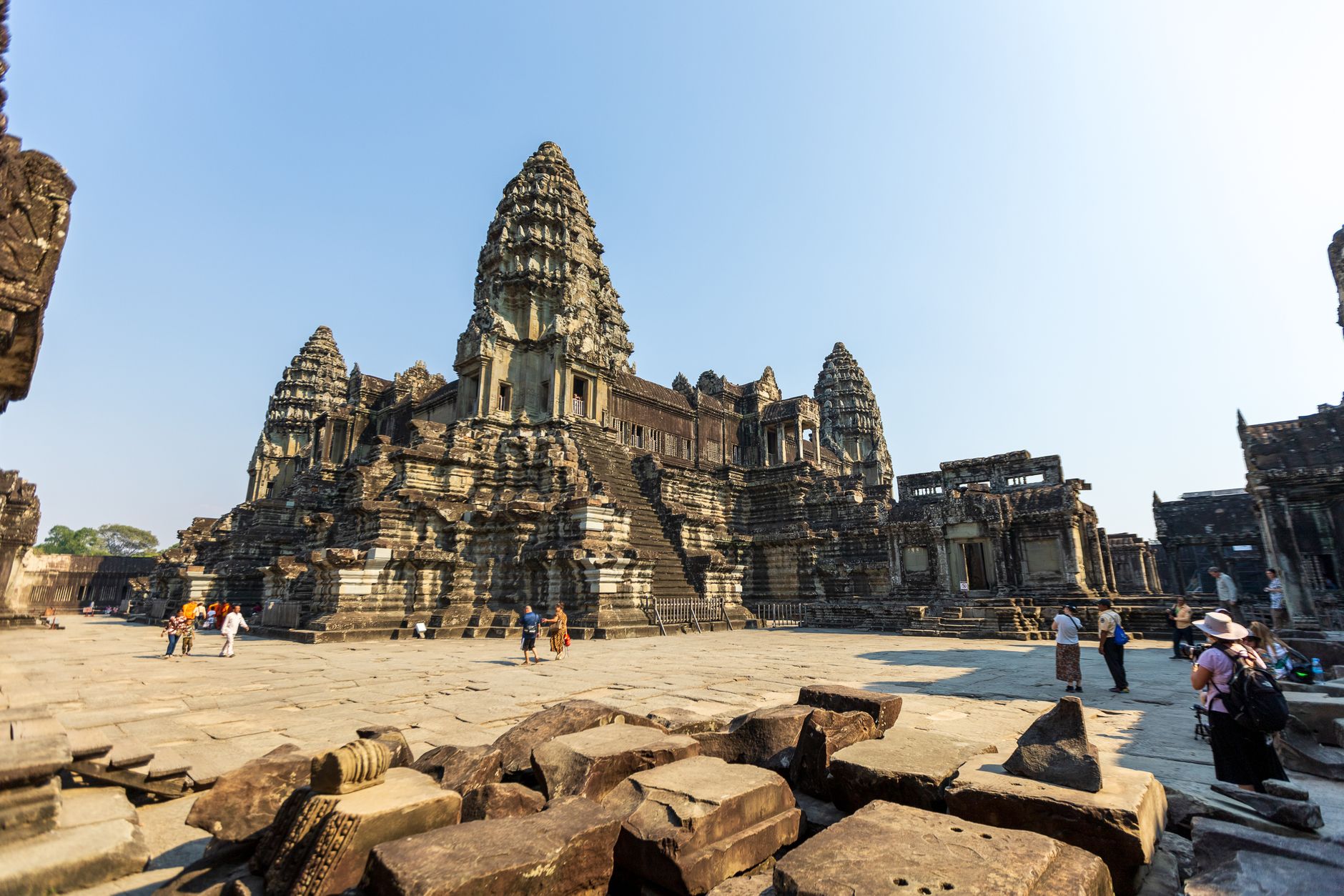
Cambodia is a land where ancient history and poignant modern realities coexist beneath a tropical sun. Spanning the fertile plains of the Mekong Delta, the dense jungles of the Cardamom Mountains, and the idyllic shores of the Gulf of Thailand, the country is dominated by the legendary legacy of the Khmer Empire. From the ninth to the fifteenth centuries, Khmer kings ruled a vast territory stretching across Southeast Asia, leaving behind architectural wonders like Angkor Wat that still humble travelers with their intricate stone carvings and monumental scale. Beyond the temples, Cambodia's geography is defined by the Tonle Sap lake—a unique hydrological wonder that reverses its flow annually—and the mighty Mekong River, which shapes the rhythm of rural life.

Culturally, Cambodia is a tapestry woven from Theravada Buddhism, traditional arts, and a profound resilience. The dark shadow of the late twentieth-century Khmer Rouge regime is met today by an overwhelmingly youthful, welcoming population eager to share their heritage. Traditional Apsara dance performances, vibrant textile weaving cooperatives, and the bustling stalls of local markets all reflect a culture fiercely proud of its identity. Life here moves at a deliberative, graceful pace, whether you are sipping sugarcane juice on a dusty provincial roadside or watching the sunrise paint the lotus ponds of Siem Reap in shades of rose and gold.

The atmosphere across the country shifts dramatically between the bustling French-colonial capital of Phnom Penh, the temple-studded spiritual heartland of Siem Reap, and the sleepy coastal retreats of Kampot and Kep. Phnom Penh offers wide boulevards, bustling riverfront promenades, and tragic yet essential historical sites like the Tuol Sleng Genocide Museum and the Killing Fields, which provide crucial context for understanding the nation's journey toward healing. Meanwhile, the southern islands offer powder-soft white sand beaches and crystalline waters largely untouched by mass commercial tourism.

Geographically, Cambodia's tropical monsoon climate dictates two distinct seasons: the dry season, characterized by sun-drenched days and refreshing breezes, and the green season, when sudden afternoon downpours transform the landscape into an emerald paradise. Traveling through Cambodia means navigating a network of red-dirt roads, bustling waterways, and emerging infrastructure. It is a destination that rewards the curious traveler with unscripted encounters, breathtaking sunrises, and a deep appreciation for human perseverance and warmth.

Visual Impressions & Moments
Cambodia photo 1
Cambodia photo 2
Cambodia photo 3
Cambodia photo 4
Cambodia photo 5
Cambodia photo 6
Unmissable Moments

Top Things to Do in Cambodia

Must-Do

Watch the Sunrise Over Angkor Wat's Lotus Towers

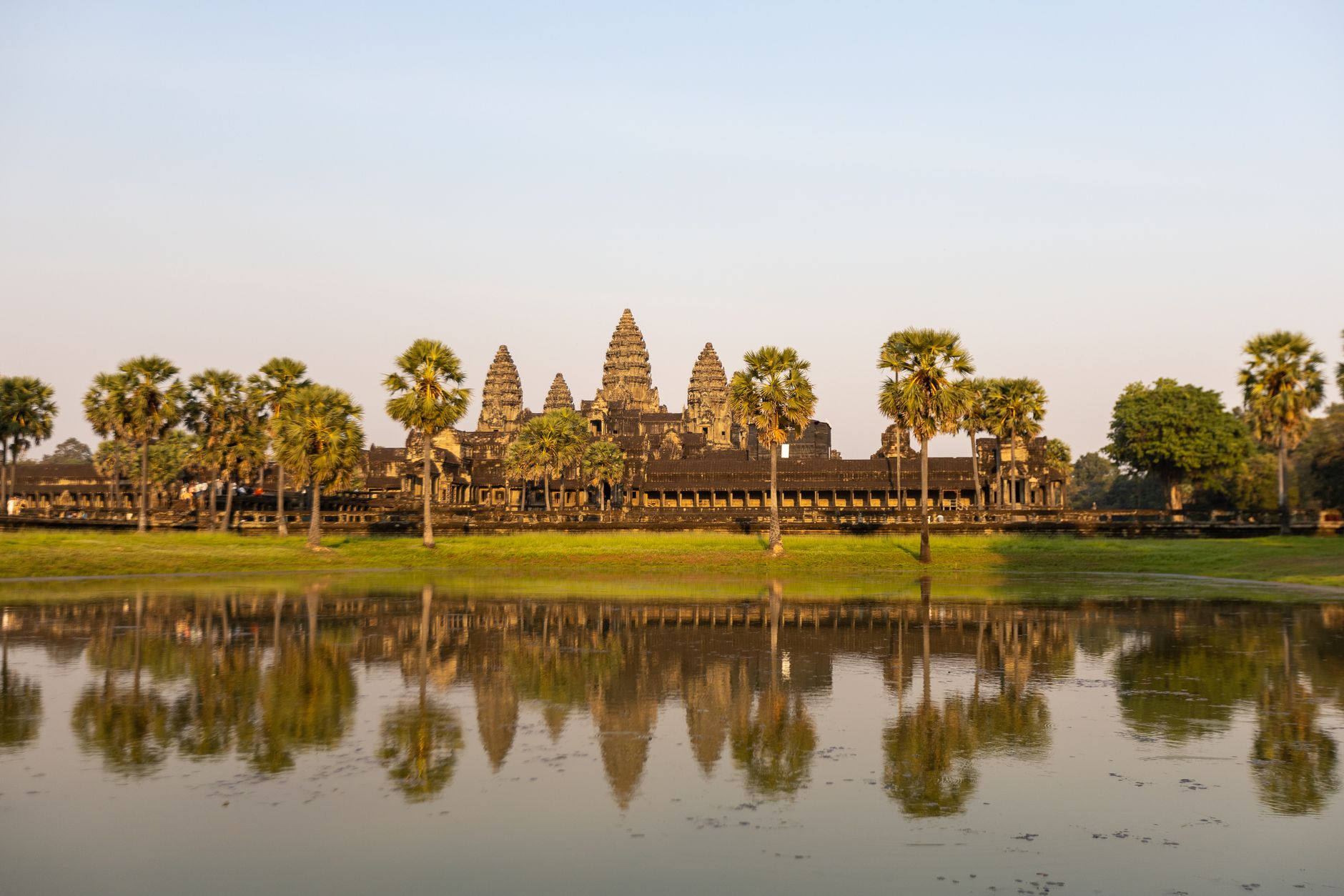
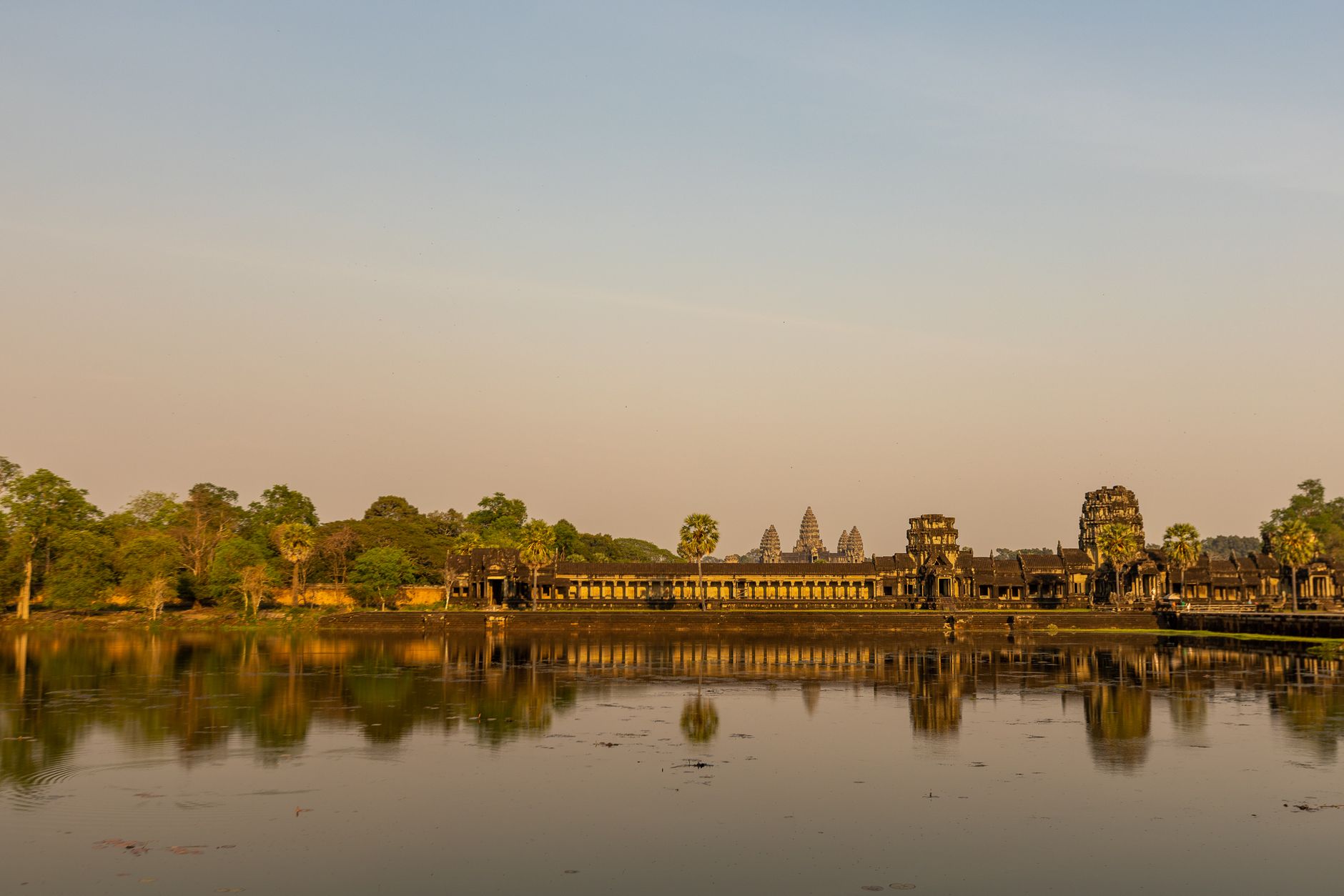
Witnessing the sun break behind the iconic five lotus towers of Angkor Wat is a quintessential Southeast Asian travel experience. Arrive at the temple complex by 5:00 AM, walk down the causeway, and position yourself by the northern reflection pool. As the sky shifts from indigo to fiery orange, the silhouette of the world's largest religious monument emerges with breathtaking clarity. Tip: After the initial sunrise spectacle, head immediately into the inner sanctum before the main tour bus crowds arrive.

Culture

Navigate the Stilt Villages of Tonle Sap Lake

Take a boat journey onto the vast expanse of Tonle Sap, Southeast Asia's largest freshwater lake, to explore floating villages like Kompong Phluk or Chong Khneas. Here, entire communities—complete with schools, churches, markets, and pig farms—float on the water or are hoisted high on towering stilts to accommodate the lake's dramatic seasonal expansion. Engage with local fishermen and observe a unique aquatic lifestyle that has endured for centuries.

Adventure

Kayak Through the Mangroves and Pepper Farms of Kampot

Escape the temple circuit for the sleepy riverside town of Kampot, famous for producing what culinary experts consider the world's best black and white pepper. Spend a day kayaking down the emerald-green Praek Tuek Chhu river, winding through dense mangrove forests, and visiting an organic pepper plantation. Sample fresh crab at the bustling coastal market in nearby Kep before watching the sunset over the Gulf of Thailand.

Scenic

Trek the Jungles of the Cardamom Mountains

Embark on an eco-adventure into the Cardamom Mountains, one of Southeast Asia's last remaining pristine wilderness tracts. Accompanied by expert local rangers and former poachers turned conservationists, you will trek through dense rainforests, spot rare wildlife such as sun bears and gibbons, and spend nights in community-run jungle camps that directly fund local conservation initiatives.

Must-See Highlights

Top Places & Things to Do in Cambodia

Curated attractions and cultural landmarks with local insider advice.

Angkor Wat
culture
4.96

Angkor Wat

Angkor Wat is the beating heart of Cambodia's national identity and the largest religious monument in the world. Originally constructed in the first half of the 12th century by King Suryavarman II as a Hindu temple dedicated to Vishnu, it later transformed into a Buddhist site. The complex is celebrated for the grandeur and harmony of its architecture, its extensive bas-reliefs, and the soaring lotus tower skyline that graces the national flag. Walking through the vast temple grounds reveals thousands of meters of intricately carved stone walls depicting epic Hindu battles, celestial dancers (Apsaras), and historical processions. The galleries are architectural masterpieces of light and shadow, designed to mirror the mythical Mount Meru, home of the gods. Exploring Angkor Wat requires time and reverence, whether you are gazing at the reflections in the lily ponds at dawn or listening to saffron-robed monks chanting in the twilight.

5:00 AM - 5:30 PM
Admission: $37 for 1-day pass
Insider Tip: Purchase a 3-day pass to thoroughly explore both the main complex and outlying temples without exhaustion. Ensure shoulders and knees are covered to enter sacred areas.
Bayon Temple
culture
4.89

Bayon Temple

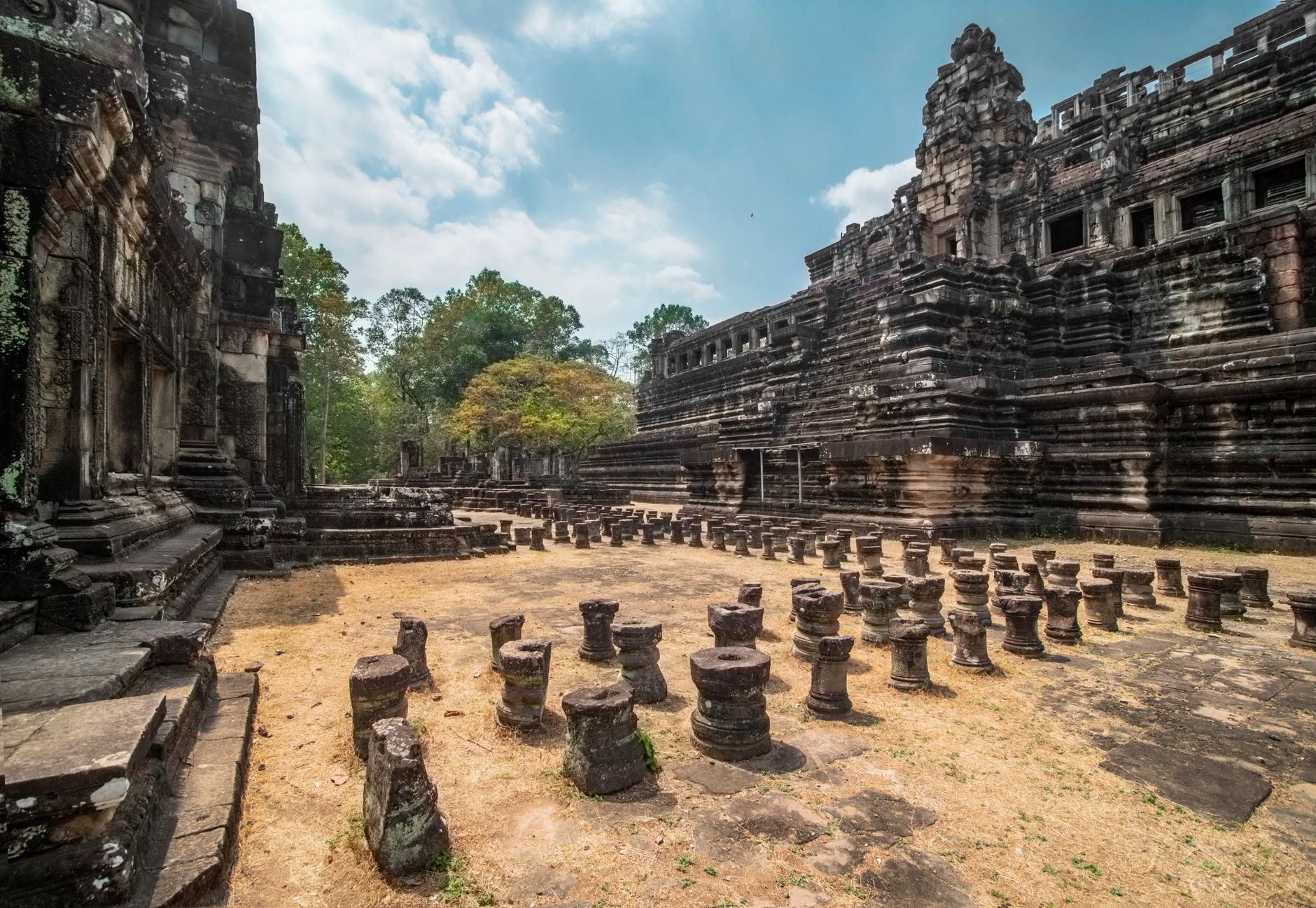
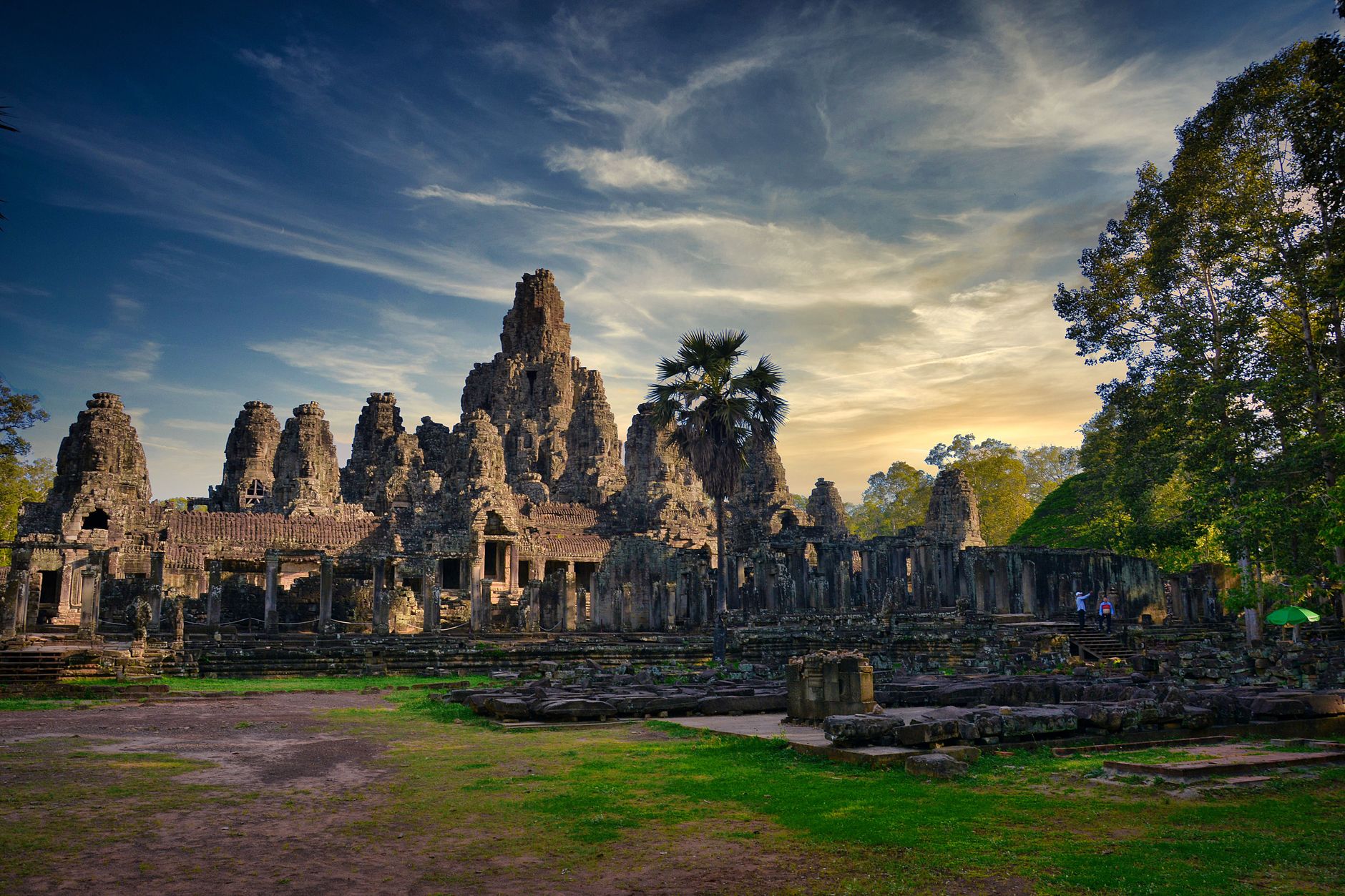
Located at the exact center of the ancient royal city of Angkor Thom, the Bayon is famous for its enigmatic smiling stone faces gazing serenely in all directions. Built in the late 12th century by King Jayavarman VII, this Mahayana Buddhist temple features massive towers adorned with over 200 colossal stone visages that capture a haunting, meditative aura across the jungle canopy. The temple's lower galleries display vivid bas-reliefs depicting scenes of everyday Khmer life, naval battles on the Tonle Sap, and historical military campaigns. Navigating the labyrinthine stone corridors of the upper terrace brings visitors face-to-face with the towering stone smiles, creating one of the most hypnotic and visually stunning encounters in all of Asian archaeology.

7:30 AM - 5:30 PM
Admission: Included in Angkor Pass
Insider Tip: Visit during the late afternoon when the sunlight strikes the golden sandstone blocks, accentuating the smiles and casting dramatic shadows.
Koh Rong Sanloem
nature
4.75

Koh Rong Sanloem

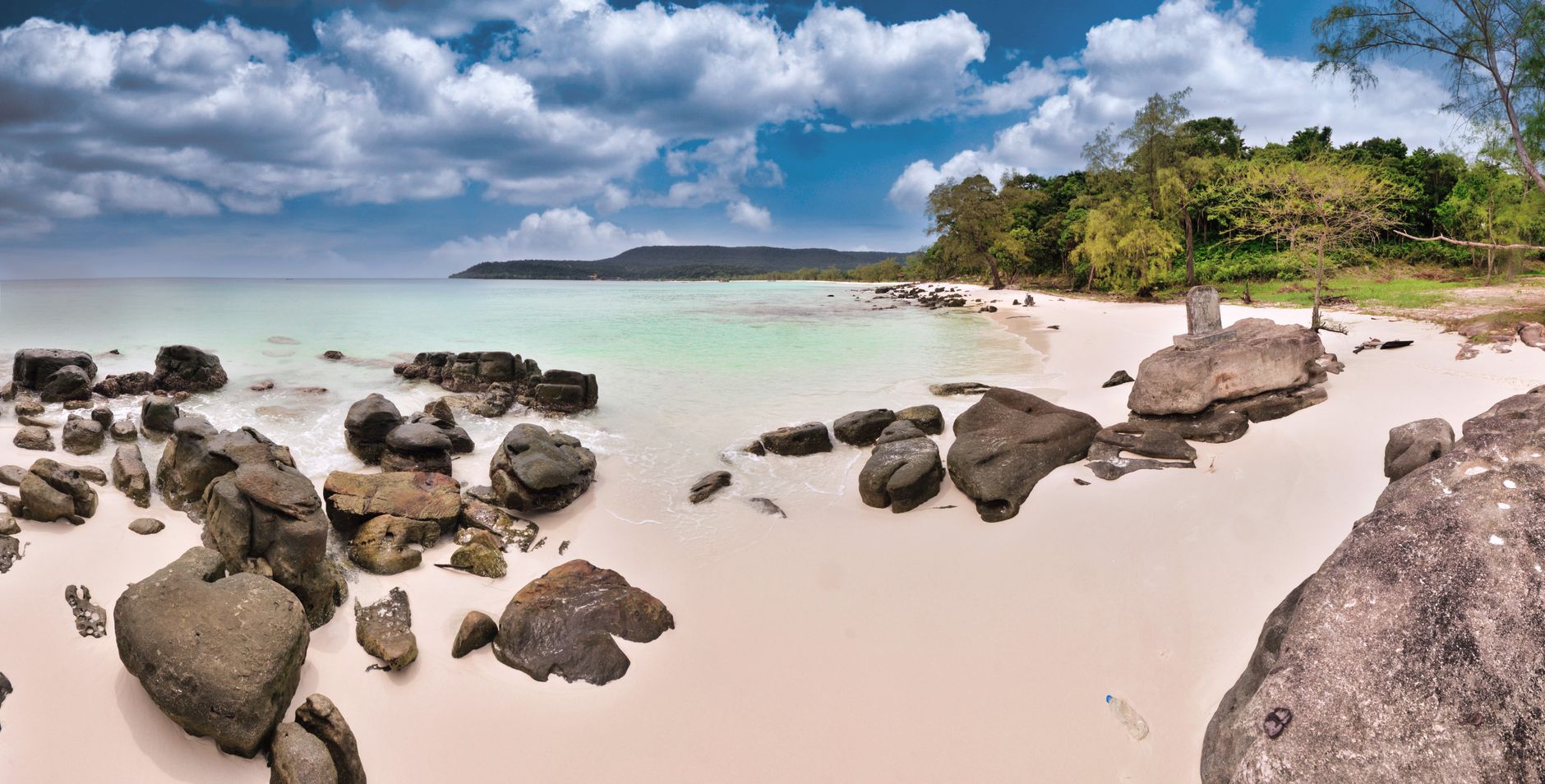
Koh Rong Sanloem is an idyllic tropical island paradise located in the Gulf of Thailand, offering a tranquil escape from mainland hustle. Characterized by powder-soft white sand beaches, turquoise crystalline waters, and dense jungle interior, the island is particularly famous for Saracen Bay, a stunning crescent-shaped natural harbor framed by lush hills. Visitors come here to disconnect, swim with glowing bioluminescent plankton during moonless nights, snorkel coral reefs, and relax in beachside hammocks. Unlike its more party-centric sister island Koh Rong, Sanloem retains a peaceful, slow-paced atmosphere ideal for digital detox, romantic getaways, and nature lovers seeking pristine coastal beauty.

Open 24/7
Admission: Free beach access ($25-$35 for fast ferry return)
Insider Tip: Bring sufficient cash as there are very few ATMs on the island. Pack insect repellent for evening beach walks.
Tuol Sleng Genocide Museum (S-21)
culture
4.82

Tuol Sleng Genocide Museum (S-21)

Housed within a former high school in Phnom Penh, Tuol Sleng (Security Prison 21) serves as a deeply moving memorial to the victims of the Khmer Rouge regime between 1975 and 1979. An estimated 18,000 prisoners passed through these concrete cell blocks before being transported to the Killing Fields for execution; only a handful survived. Walking through the preserved cell blocks, classrooms, and corridors reveals haunting photo archives of men, women, and children whose faces stare back with heartbreaking dignity. Audio guides provide detailed historical context and survivor testimonies, making a visit here an essential, albeit emotionally heavy, pilgrimage to understand modern Cambodia's painful past and resilient recovery.

8:00 AM - 5:00 PM
Admission: $10 (including audio guide)
Insider Tip: Allow at least two to three hours for the audio tour. Dress respectfully with shoulders and knees covered, and approach the site with quiet reverence.
Area Guide

Where to Stay & Best Neighborhoods

Old Market & Pub Street (Siem Reap)

Best for: First-time visitors, nightlife seekers, street food lovers, and souvenir hunters.

Vibe: Energetic, neon-lit, bustling hub of nightlife, shopping, and dining.

Centering around the historic Psar Chas (Old Market), this vibrant neighborhood pulses with energy day and night. By day, narrow lanes overflow with silk scarves, handmade silver jewelry, and fragrant spice stalls. By night, Pub Street comes alive with neon lights, live music, open-air beer bars, and vendors selling deep-fried tarantulas and exotic fruit shakes. It is the ultimate social epicenter for travelers returning from a dusty day of temple hopping.

Riverside & Daun Penh (Phnom Penh)

Best for: History enthusiasts, architecture lovers, and travelers seeking an authentic urban immersion.

Vibe: Colonial architecture, bustling river promenades, chaotic traffic, and royal splendor.

Stretching along the confluence of the Mekong, Tonle Sap, and Bassac rivers, Daun Penh is the historical and cultural core of Cambodia's capital. Grand French colonial villas stand alongside glittering Buddhist pagodas and the magnificent Royal Palace. The riverside promenade (Sisowath Quay) is a favorite gathering spot for locals exercising at dusk, while bustling cafes and rooftop bars offer sweeping views of passing river barges.

French Quarter & Riverside (Kampot)

Best for: Slow travelers, foodies, digital nomads, and couples seeking a romantic getaway.

Vibe: Relaxed, bohemian, faded colonial charm, and slow-paced riverside living.

Kampot's riverside neighborhood oozes a nostalgic charm with its crumbling yellow-ochre French colonial shophouses, shady tamarind trees, and lazy river currents. The area has blossomed into a haven for artisans, boutique guesthouse owners, and international chefs who have opened atmospheric cafes, craft cocktail bars, and farm-to-table bistros overlooking the water.

Food & Drink Scene

What to Eat in Cambodia

Amok Trey (Fish Amok)

Considered Cambodia's national dish, Fish Amok is a fragrant coconut curry featuring delicate river fish, infused with kroeung (a traditional pounded paste of lemongrass, galangal, turmeric, kaffir lime, and shallots). Traditionally steamed inside a banana leaf cup, the dish has a mousse-like texture that melts in the mouth, offering a harmonious balance of creamy richness and subtle citrus spice.

šŸ“ Top spot: The Red Piano, Siem Reap

Nom Banh Chok (Khmer Noodles)

Often referred to as Khmer noodles, this beloved breakfast staple consists of hand-formed fermented rice noodles topped with a greenish fish-based gravy made from pounded lemongrass, kaffir lime, and turmeric. It is piled high with a mountain of fresh raw vegetables, crisp water lily stems, banana blossoms, mint, and basil, creating a refreshing yet intensely savory morning dish.

šŸ“ Top spot: Psar Chas (Old Market), Siem Reap

Beef Lok Lak

A stir-fry favorite featuring succulent cubes of marinated beef flash-fried over high heat with garlic, onions, soy sauce, and oyster sauce. Served atop a bed of crisp lettuce, tomatoes, and cucumber rings, the beef is accompanied by a dipping sauce made of freshly squeezed lime juice and coarse sea salt mixed with black pepper (often the famed Kampot pepper).

šŸ“ Top spot: Romdeng, Phnom Penh
Excursions

Best Day Trips from Cambodia

Beng Mealea Jungle Temple

1.5 hours by taxi or tuk-tuk from Siem Reap

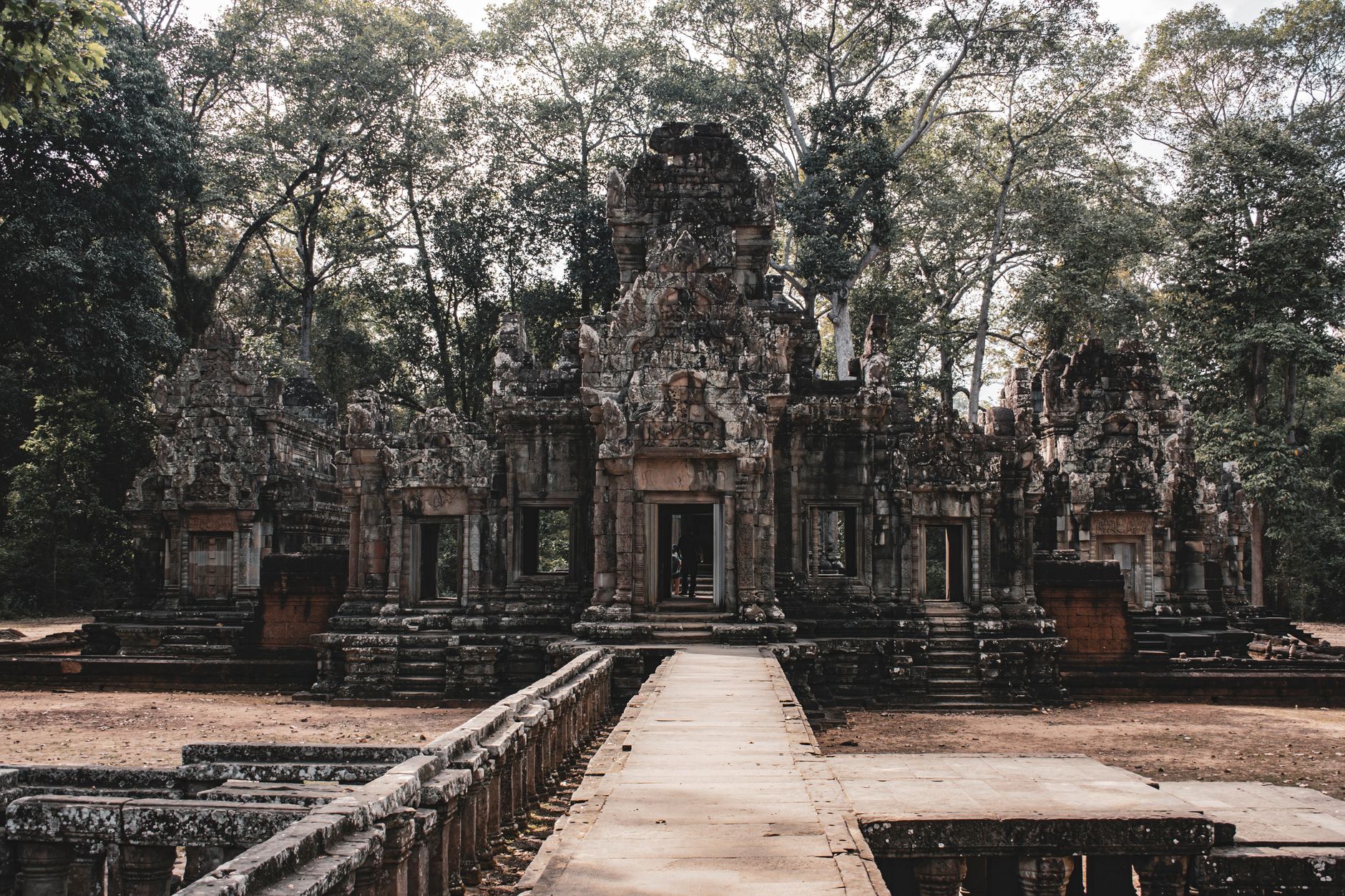
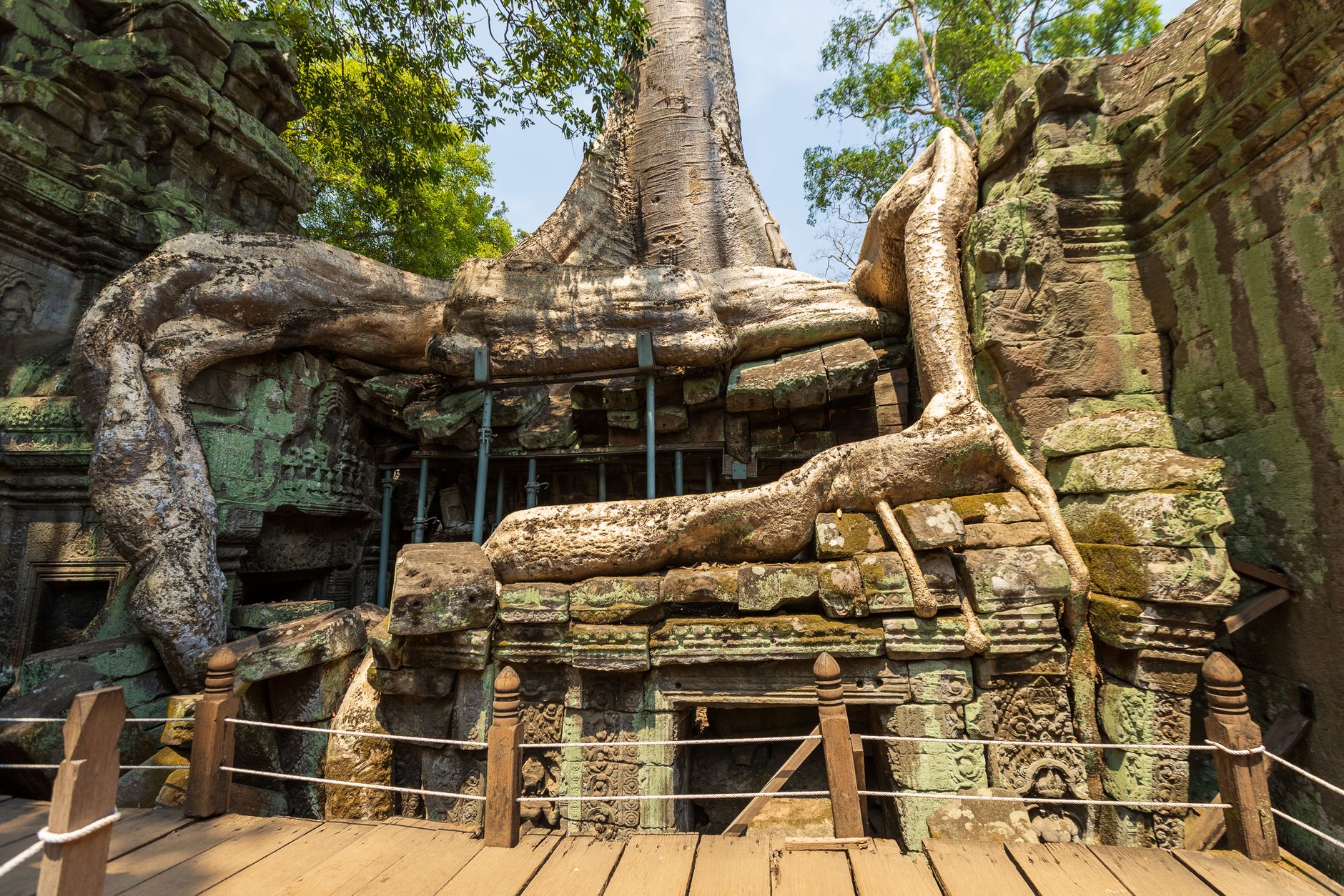
Explore Beng Mealea, a sprawling 12th-century temple swallowed entirely by the jungle. Unlike cleaned-up tourist sites, this temple remains half-buried in massive strangler fig roots and tumbled stone blocks, offering an authentic Indiana Jones-style exploration where you scramble over mossy ruins.

Phnom Kulen National Park

1 hour 45 minutes by car from Siem Reap

Journey to the sacred mountain where the Khmer Empire was officially founded in 802 AD. Hike to cascading waterfalls, visit the massive reclining Buddha carved into live sandstone, and view the 'River of a Thousand Lingas' with ancient Hindu phallic carvings etched into the riverbed.

When to Go

Best Time to Visit & Seasonality

Editor’s Pick: The ideal time to visit Cambodia is during the dry season from November to February, when temperatures are relatively moderate, humidity is lower, and rainfall is minimal. This period is perfect for exploring the temples of Angkor and trekking through the Cardamom Mountains without oppressive heat. March to May brings intense heat, while the green season from June to October offers lush landscapes and fewer crowds.

Spring Overview

(March - May)
Moderate
Average Temperature & Climate35°C to 40°C (95°F - 104°F)

Extremely hot and increasingly humid ahead of the monsoon.

Crowd & Travel ConditionsModerate Tourist Traffic

Fewer lines and better deals.

✨ Seasonal Highlights:Celebrating Chol Chnam Thmey (Khmer New Year) in mid-April with street water fights and traditional ceremonies.
Travel Smarter

Practical Travel Essentials

CurrencyCambodian Riel (KHR) & US Dollar (USD)
LanguageKhmer (English widely spoken in tourist areas)
Time ZoneICT (Indochina Time) UTC+7

Visa & Entry

Most nationalities can obtain a 30-day Tourist Visa on Arrival at international airports in Phnom Penh and Siem Reap, or via the official e-Visa portal online. Ensure your passport is valid for at least 6 months beyond your arrival date.

Getting Around & Transit

Tuk-tuks are ubiquitous and ideal for city travel and short temple runs. For long distances, comfortable air-conditioned buses and minivans connect major hubs like Phnom Penh, Siem Reap, Kampot, and Battambang. Domestic flights are available for faster regional transit.

Daily Budget Expectation

$30 - $80 USD per day for budget to mid-range travelers covering guesthouses, local street food, temple passes, and tuk-tuk transport.

Safety & Health

Cambodia is generally very safe for travelers, with low rates of violent crime. Petty theft, such as bag-snatching by passing motorbike riders in Phnom Penh, can occur, so keep valuables secure.

Local Etiquette & Customs

Always remove your shoes before entering Buddhist temples and private homes. Dress modestly when visiting sacred sites (cover shoulders and knees). Never touch anyone on the head, as it is considered the most sacred part of the body, and use both hands when offering or receiving money.

Questions & Answers

Frequently Asked Questions about Cambodia

Both are used interchangeably. US Dollars are widely accepted for larger purchases, hotels, and tours, while Cambodian Riel is used for small change (under $5 USD). Ensure USD bills are crisp and undamaged, as torn or old bills are frequently rejected.