🌟 Best in Travel 2026 is here!
New Zealand
countryOceania
4.98 / 5.0

New Zealand

A majestic realm of primordial landscapes, rich Māori heritage, and soaring alpine peaks.

Editorial Guide

About New Zealand

New Zealand, known in Te Reo as Aotearoa (The Land of the Long White Cloud), is a geographical masterpiece isolated in the southwestern Pacific Ocean. Comprising two main landmasses—the volcanically active, culturally rich North Island and the glacier-carved, alpine South Island—this country offers an unparalleled encounter with the raw forces of nature. From the sub-tropical forests of the far north to the dramatic, wind-swept fiords of the deep south, the landscape shifts with dramatic speed, presenting a living canvas of snow-capped mountains, ancient temperate rainforests, and pristine coastlines that feel untouched by time.

Visual Impressions & Moments

New Zealand photo 1
New Zealand photo 2
New Zealand photo 3
New Zealand photo 4
New Zealand photo 5
New Zealand photo 6
Unmissable Moments

Top Things to Do in New Zealand

Must-Do

Navigate the Primordial Waters of Milford Sound

Cruising through Milford Sound (Piopiotahi) is a humbling experience where sheer granite cliffs rise over 1,200 meters directly out of the dark, ink-blue water. To truly experience its majesty, board a small-boat nature cruise or paddle a sea kayak during a downpour, when hundreds of temporary waterfalls cascade down the vertical rock faces like silver threads. Keep your eyes peeled for rare Fiordland crested penguins, fur seals basking on rocks, and playful bottlenose dolphins.

Adventure

Trek the Sacred Volcanic Tongariro Alpine Crossing

Often heralded as the world's greatest single-day hike, this challenging 19.4-kilometer trek traverses a surreal, active volcanic landscape on the North Island. You will climb past steaming vents, scramble over ancient lava flows, skirt the edges of massive craters, and gaze down at the brilliant, mineral-tinted Emerald Lakes. Start at dawn to catch the sunrise illuminating the perfect volcanic cone of Mount Ngāuruhoe, and ensure you respect the sacred nature of these peaks to the local Māori iwi (tribes).

Culture

Immerse in Te Ao Māori in Rotorua

Rotorua is the spiritual heartland of New Zealand's indigenous Māori culture. To experience the warmth of manaakitanga (hospitality), visit a living village like Ohinemutu or attend an evening cultural experience at Te Puia. You will witness a powerful pōwhiri (welcome ceremony), hear the haunting melodies of the waiata (songs), watch a spine-tingling haka, and feast on a traditional hāngī dinner—tender meats and root vegetables slow-cooked in baskets lowered into geothermal earth ovens.

Scenic

Stargaze in the Mackenzie International Dark Sky Reserve

Covering over 4,300 square kilometers of the South Island, this is one of the world's premier gold-tier Dark Sky Reserves, completely shielded from light pollution. Head to the Mount John Observatory above Lake Tekapo, where state-of-the-art telescopes reveal the dazzling details of the Southern Cross, the Magellanic Clouds, and the thick, glowing band of the Milky Way. The crisp, clean alpine air makes the stars appear so close and bright they seem almost tangible.

Must-See Highlights

Top Places & Things to Do in New Zealand

Curated attractions and cultural landmarks with local insider advice.

Milford Sound / Piopiotahi
nature
4.99

Milford Sound / Piopiotahi

Described by Rudyard Kipling as the eighth wonder of the world, Milford Sound is a breathtaking testament to the power of glacial carving. Situated within the vast Fiordland National Park, this spectacular fiord is flanked by sheer rock faces that rise vertically from the dark waters, crowned by the iconic, symmetrical peak of Mitre Peak. The surrounding rainforest is incredibly lush, fed by an average annual rainfall of over seven meters, which fuels magnificent, permanent waterfalls like Stirling and Bowen Falls. To fully appreciate the scale and grandeur of the fiord, visitors should take a vessel out to the Tasman Sea opening. Along the way, the ship's captain will nose the bow directly under cascading waterfalls, allowing passengers to feel the spray of glacial water. The unique marine environment of Milford Sound features a thick layer of fresh, tannin-stained rainwater floating on top of salt water, which blocks sunlight and allows rare deep-sea black coral trees to grow in remarkably shallow depths, visible on specialized diving excursions or at the underwater observatory.

Cruises operate daily from 9:00 AM to 4:00 PM; the fiord itself is accessible 24/7
Admission: €45 - €120 (for cruises)
Insider Tip: The Milford Road drive is highly scenic but challenging; allow at least 3 hours from Te Anau and carry snow chains in winter. Book an early morning cruise (before 10:00 AM) to beat the tour buses arriving from Queenstown, and bring heavy-duty insect repellent to ward off the notorious, aggressive Fiordland sandflies.
Aoraki / Mount Cook National Park
nature
4.97

Aoraki / Mount Cook National Park

Aoraki / Mount Cook National Park is a rugged alpine wonderland containing 23 peaks over 3,000 meters, dominated by Aoraki (Mount Cook), New Zealand's highest mountain at 3,724 meters. This sacred peak holds immense spiritual significance for the Ngāi Tahu iwi, representing the ancestral link between the physical and spiritual worlds. The park is a landscape of colossal glaciers, deep valleys, and terminal lakes filled with floating, glowing blue icebergs that have calved off the Tasman Glacier, the country's longest ice river. The park is highly accessible to walkers of all fitness levels via a network of well-maintained trails, the most famous being the Hooker Valley Track. This relatively flat, 10-kilometer return walk crosses three spectacular swing bridges over roaring glacial rivers, leading to a lookout point that offers jaw-dropping, unobstructed views of Aoraki's sheer south face. At night, the park transforms into a celestial theater, free of light pollution, offering some of the clearest stargazing opportunities on the planet.

Open 24/7 year-round
Admission: Free (National Park entry)
Insider Tip: Alpine weather is notoriously volatile and can change within minutes. Always check the Department of Conservation (DOC) alerts before setting out, pack warm windproof layers even in mid-summer, and stop by the excellent visitor center in Mount Cook Village to view historical mountaineering exhibits, including gear used by Sir Edmund Hillary.
Abel Tasman National Park
nature
4.92

Abel Tasman National Park

Located at the sun-drenched northern tip of the South Island, Abel Tasman is New Zealand's smallest national park, but what it lacks in size it makes up for in sheer coastal beauty. It is a coastal paradise where lush, temperate beech forests and giant tree ferns sweep down to meet crescent-shaped beaches of golden, granite-flecked sand and crystal-clear, turquoise waters. The park is completely free of roads, making it a pristine sanctuary for native wildlife and a haven for outdoor enthusiasts. Visitors can explore the park's dramatic coastline by hiking sections of the famous Abel Tasman Coast Track, one of the country's Great Walks, or by paddling a sea kayak through the calm waters of the Tonga Island Marine Reserve. Here, you can float alongside playful New Zealand fur seal pups playing in the shallows and spot blue penguins nesting in the rocky coves. The park's unique geology features striking granite rock formations, including the famous Split Apple Rock (Tokangawhā), which rises dramatically out of the ocean.

Open 24/7 year-round
Admission: Free (Water taxi transfers cost €30 - €60)
Insider Tip: Since there is no road access, the best way to experience the park is by booking a water taxi from Kaiteriteri or Marahau. You can customize your trip by taking a water taxi to a remote beach, hiking a scenic coastal section of the track, and getting picked up at a different bay later in the afternoon. Always check tidal charts, as some estuary crossings are only passable at low tide.
Waimangu Volcanic Valley
attraction
4.85

Waimangu Volcanic Valley

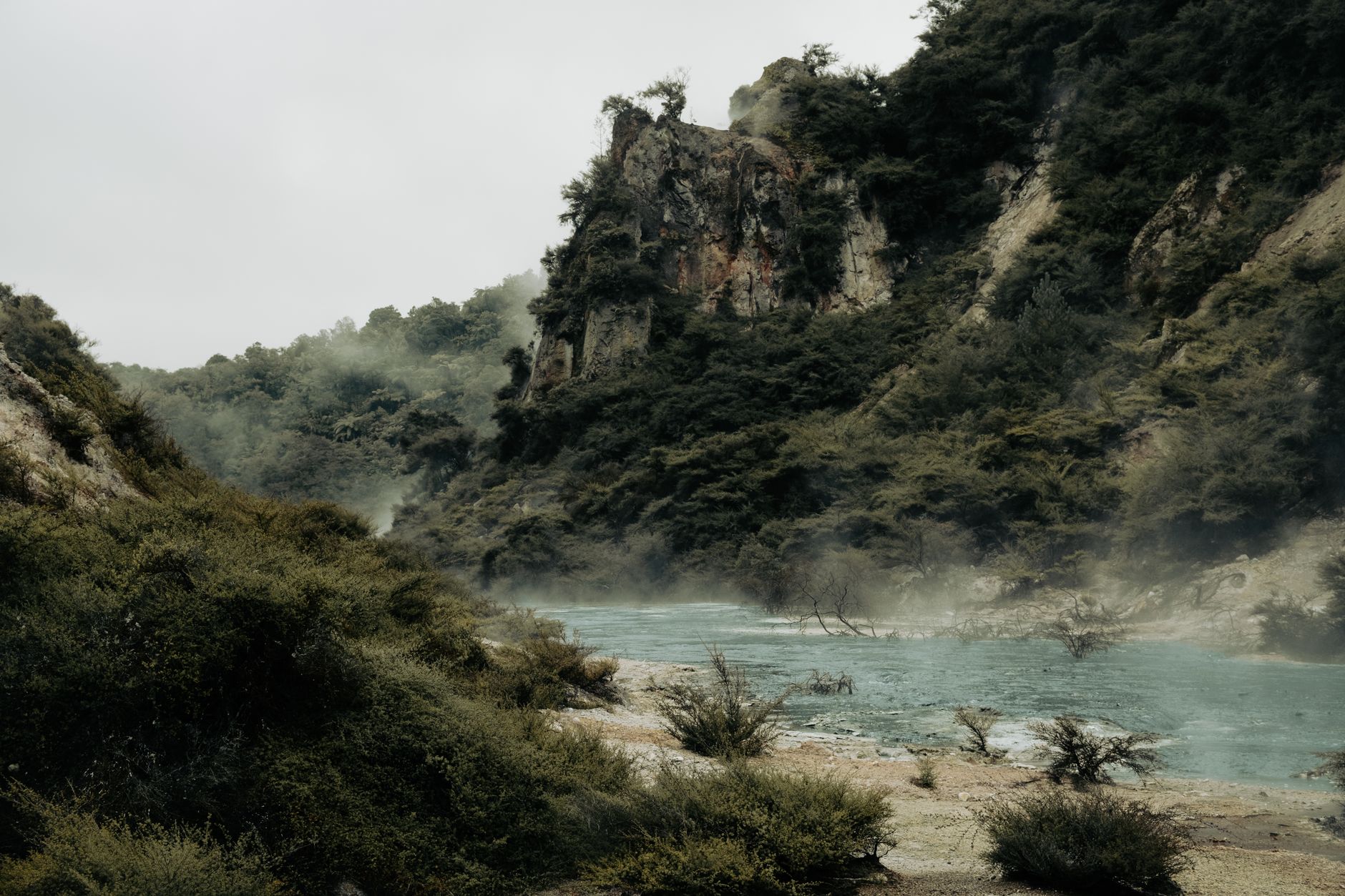
Waimangu Volcanic Valley is the world's youngest geothermal system, created entirely by the cataclysmic eruption of Mount Tarawera on June 10, 1886. This violent event completely reshaped the landscape, destroying the famous Pink and White Terraces and opening a chain of massive craters. Today, the valley is a protected, highly active geothermal reserve where visitors can hike through a prehistoric-looking wilderness dominated by steaming lakes, bubbling hot springs, and multi-colored mineral terraces. Highlight features of the valley include the Frying Pan Lake, which is the world's largest hot spring, constantly steaming with a surface temperature averaging 55°C, and the incredibly vibrant, turquoise-blue Inferno Crater, which behaves like a giant geyser, rising and falling in a unique, highly predictable 38-day cycle. The valley is surrounded by lush, regenerative native forest and geothermal-tolerant ferns that have adapted to thrive in the warm, acidic soil, creating a surreal, primordial atmosphere.

Daily 8:30 AM - 5:00 PM (Last entry at 3:30 PM)
Admission: €25 - €50
Insider Tip: Opt for the self-guided walk and boat cruise combination ticket. The cruise on Lake Rotomahana takes you directly over the site of the lost Pink and White Terraces and past steaming geothermal vents on the lake's edge that are completely inaccessible by foot. Wear sturdy walking shoes as the trail is undulating.
Area Guide

Where to Stay & Best Neighborhoods

Queenstown & Central Otago

Best for: Thrill-seekers, wine connoisseurs, luxury travelers, and skiers.

Vibe: High-octane adventure meets sophisticated alpine luxury.

Framed by the jagged peaks of the Remarkables and the crystal-clear waters of Lake Wakatipu, Queenstown is the birthplace of commercial bungy jumping and a magnet for adrenaline junkies. Beyond the jet boats and skydives, the surrounding Central Otago region transitions into a serene landscape of historic gold-mining towns like Arrowtown and sun-drenched valleys lined with boutique vineyards producing some of the world's finest, highly sought-after Pinot Noir.

Rotorua & the Geothermal Volcanic Plateau

Best for: Culture seekers, wellness enthusiasts, and families.

Vibe: Steaming, sulfur-scented, and deeply rooted in indigenous culture.

Walking through this region feels like stepping onto a living, breathing planet. Plumes of steam rise from roadside drains, bubbling mud pools hiss in public parks, and the distinct scent of sulfur hangs in the air. It is a place where natural geothermal wonders and rich Māori heritage are inextricably linked, offering visitors the chance to soak in mineral-rich hot springs while learning about ancient legends and tribal customs that have shaped the land for centuries.

The Wild West Coast of the South Island

Best for: Nature purists, road-trippers, and solitude seekers.

Vibe: Untamed, rugged, rain-drenched, and intensely green.

Squeezed between the roaring Tasman Sea and the towering Southern Alps, the West Coast (known to locals as 'The Coast') is a frontier land of immense natural beauty. Here, ancient temperate rainforests packed with prehistoric tree ferns grow right up to the edge of massive glaciers like Franz Josef and Fox, which spill down from the mountains almost to sea level. It is a sparsely populated region of friendly, independent locals, roaring rivers, and dramatic coastal rock formations.

Food & Drink Scene

What to Eat in New Zealand

Traditional Māori Hāngī

The ultimate Kiwi culinary heritage experience, a hāngī is a method of cooking food using heated rocks buried in a pit oven dug into the earth. Pork, lamb, chicken, sweet potato (kūmara), pumpkin, and stuffing are wrapped in leaves or foil and slow-cooked for hours. The result is incredibly tender, fall-off-the-bone meat and vegetables infused with a unique, deeply earthy, and smoky flavor that cannot be replicated by modern cooking methods.

🍴 Top spot: Te Puia Geothermal Valley, Rotorua

Foveaux Strait Bluff Oysters

Widely regarded by seafood lovers as the finest oysters in the world, Bluff oysters grow slowly in the cold, clean, and turbulent waters of the Foveaux Strait at the bottom of the South Island. Harvested during a strict seasonal window from March to August, these wild oysters are exceptionally plump, juicy, and meaty, boasting a complex, creamy flavor profile with a distinct, clean metallic-brackish finish.

🍴 Top spot: Oyster Cove, Bluff

Central Otago Pinot Noir

Nestled in the southern-most wine-producing region on Earth, Central Otago's extreme continental climate, hot summers, icy winters, and schist-rich soils yield highly concentrated, deeply expressive Pinot Noir. These wines are celebrated globally for their vibrant aromas of dark cherries, wild thyme, and plum, balanced by a structural elegance, bright acidity, and complex, mineral-driven earthy undertones.

🍴 Top spot: Rippon Vineyard, Wanaka
Excursions

Best Day Trips from New Zealand

Waiheke Island Wine Escape

40 minutes by ferry from Auckland Ferry Terminal

Board a scenic ferry from downtown Auckland and step onto an island paradise of rolling hills, olive groves, and world-class boutique vineyards. Spend the day tasting bold Syrahs and crisp Chardonnays at cliffside wineries overlooking the Hauraki Gulf, followed by a swim at the white sands of Oneroa Beach.

The Magic of Hobbiton Movie Set

1 hour 15 minutes by car from Rotorua

Journey into the heart of the Waikato region to explore the real Middle-earth. Walk through the perfectly preserved, lush pastures of the Shire, marvel at the intricate details of the 44 Hobbit Holes, stand beneath the Party Tree, and finish your tour with a complimentary, specially brewed beverage at the Green Dragon Inn.

When to Go

Best Time to Visit & Seasonality

Editor’s Pick: The best time to visit New Zealand is during the shoulder seasons of Autumn (March to May) and Spring (September to November). During these months, the weather remains pleasant and stable, the massive summer crowds have dissipated, and the landscapes are painted in dramatic colors—either vibrant spring blooms and rushing waterfalls or the rich, golden hues of autumn foliage in regions like Central Otago. Summer (December to February) offers peak warmth and sunshine but comes with premium prices and crowded trails, while Winter (June to August) is a dream for snow sports enthusiasts heading to Queenstown and Wanaka.

Spring Overview

(September - November)
Moderate
Average Temperature & Climate10°C - 18°C

Unpredictable and dynamic, featuring crisp sunny days mixed with sudden spring showers.

Crowd & Travel ConditionsModerate Tourist Traffic

Fewer lines and better deals.

✨ Seasonal Highlights:Waterfalls are at their thunderous peak from melting snow, wild lupins begin to carpet the South Island riverbeds, and newborn lambs dot the rolling green hills.
Travel Smarter

Practical Travel Essentials

CurrencyNZD ($)
LanguageEnglish, Te Reo Māori
Time ZoneNZST (UTC+12)

Visa & Entry

Visitors from visa-waiver countries (including the US, UK, Canada, and EU) do not need a visa for short stays but must apply for an NZeTA (New Zealand Electronic Travel Authority) online before departure. This costs around NZD $17 on the official app and is accompanied by the International Visitor Conservation and Tourism Levy (IVL) of NZD $100.

Getting Around & Transit

Renting a campervan or car is by far the best way to experience New Zealand, offering the flexibility to explore remote wilderness areas. Traffic drives on the left side of the road. Roads are often narrow, winding, and hilly, meaning travel times are always longer than they look on a map. Domestic flights are efficient for traveling between major hubs, and inter-island ferries connect Wellington and Picton.

Daily Budget Expectation

€180 - €320 per day (assuming mid-range accommodation, car rental, dining out, and occasional adventure activities).

Safety & Health

New Zealand is exceptionally safe, ranking highly on the Global Peace Index. Violent crime is rare. The primary safety hazards are environmental: volatile alpine weather, strong ocean currents, and challenging driving conditions. Always check weather forecasts, respect trail signs, and never leave valuables visible in parked cars at trailheads.

Local Etiquette & Customs

Respect for Te Ao Māori (the Māori world) is central to local etiquette. Never step over or sit on tables or pillows (which are considered tapu, or sacred, in Māori culture), and do not touch sacred carvings without permission. Kiwis are generally informal, friendly, and egalitarian. Tipping is not customary in restaurants, bars, or taxis, though a 10% tip for exceptional service in high-end establishments is appreciated.

Questions & Answers

Frequently Asked Questions about New Zealand

If you prefer dramatic alpine scenery, glaciers, fiords, and wildlife, choose the South Island. If you are more interested in volcanic landscapes, geothermal wonders, pristine golden beaches, and rich Māori cultural experiences, choose the North Island. However, with a fast-paced itinerary, you can experience a highlight tour of both islands in 14 days by flying between hubs.