2026 GuideVoyage Roams Best in Travel: Top 10 Bucket List Destinations
Read Rankings
Guatemala
countryNorth America
4.92 / 5.0

Guatemala

A mystical highland realm of smoking volcanoes, ancient Maya empires, and deep-blue lakes.

Advertisement
Editorial Guide

About Guatemala

Stepping into Guatemala is like entering a living museum where ancient civilizations and dramatic geography collide. The air in the highlands is crisp and constantly perfumed with the scent of pine needles, roasting coffee beans, and woodsmoke from wood-fired comales. Here, the landscape is defined by a spine of 37 towering volcanoes, several of which actively paint the night sky with glowing ribbons of lava. Beneath these peaks lie deep caldera lakes, lush cloud forests, and wild, untamed jungles that hide the crumbling stone pyramids of the ancient Maya, offering an intoxicating blend of natural drama and deep historical intrigue.

The country's historical narrative is etched into every stone and textile. From the classic-era Maya superpowers of Tikal and El Mirador to the Spanish colonial elegance of Antigua, Guatemala has weathered eras of profound transformation. Despite centuries of colonial imposition and a turbulent late-20th-century civil war, the Indigenous Maya people—who make up more than half of the population—have fiercely preserved their heritage. Today, the country is a vibrant tapestry of 22 distinct Maya linguistic groups, each maintaining its own traditional dress, spiritual practices, and ancestral wisdom.

Geographically, Guatemala is a land of stark contrasts. The northern lowlands of El Petén are blanketed in a dense, emerald rainforest where howler monkeys call from the canopy. Moving southward, the terrain rises into the rugged Sierra Madre highlands, home to Lake Atitlán, widely considered one of the most beautiful bodies of water in the world. Further east, the landscape transitions into the humid, lush valleys of Alta Verapaz, where turquoise limestone pools cascade through deep gorges, before dropping down to the black-sand beaches of the Pacific coast and the Afro-Caribbean enclave of Livingston on the Atlantic side.

Local life in Guatemala is defined by community, color, and faith. Highland markets like Chichicastenango erupt in a sensory overload of handwoven textiles, fresh produce, and burning copal incense. Spiritual life is a fascinating, deeply syncretic fusion of traditional Maya cosmology and Roman Catholicism, where saints are venerated alongside ancient earth deities. To travel through Guatemala is to witness a resilient culture that does not merely survive, but thrives with a quiet, dignified warmth that welcomes anyone willing to look beyond the surface.

Visual Impressions & Moments
Guatemala photo 1
Guatemala photo 2
Guatemala photo 3
Guatemala photo 4
Guatemala photo 5
Guatemala photo 6
Unmissable Moments

Top Things to Do in Guatemala

Must-Do

Watch Sunrise over Tikal's Temple IV

Ascend the wooden stairs of Temple IV, the tallest pre-Columbian structure in the Americas, while it is still pitch black. As the first light of dawn breaks, watch the mist-shrouded jungle canopy slowly reveal itself beneath you, while the primeval roars of howler monkeys and the calls of toucans echo through the rainforest. It is a hauntingly beautiful, deeply spiritual encounter with the ancient Maya world. To experience this, book an official sunrise tour departing from Flores or stay at one of the basic lodges within the national park gates, ensuring you enter by 4:30 AM before the general public.

Culture

Acquire the Blessing of Maximón in Santiago Atitlán

Navigate the complex spiritual syncretism of the highlands by visiting Maximón (San Simón), a mischievous, cigar-smoking, rum-drinking Maya deity housed in a different local home in Santiago Atitlán each year. Visitors can enter his candlelit, incense-filled shrine to witness local shamans performing curandero rituals and offering prayers. To show respect and secure safe travels, bring offerings of Quetzalteca (local firewater), cigarettes, or candles, and always hire a local Tz'utujil guide to help navigate the etiquette and locate his current residence.

Adventure

Camp Overnight on Volcán Acatenango

Embark on a grueling, high-altitude trek up the slopes of the dormant Volcán Acatenango, climbing through agricultural fields, cloud forests, and alpine volcanic scree. Your reward is a high-altitude base camp situated directly opposite Volcán de Fuego, one of the world's most active volcanoes. As night falls, sit by the campfire and watch Fuego violently erupt every 15 to 20 minutes, sending showers of incandescent red lava and booming shockwaves into the dark sky. Start early with a reputable, safety-focused guiding agency that provides cold-weather gear, as temperatures at the 3,976-meter summit drop below freezing.

Culinary

Master the Art of Maya Weaving in San Juan La Laguna

Spend an afternoon in the quiet Tz'utujil village of San Juan La Laguna on the shores of Lake Atitlán, learning the meticulous art of backstrap weaving from a local women's cooperative. You will discover how local plants, bark, and insects are boiled to create vibrant, natural dyes, and how complex geometric patterns are woven by hand to tell stories of Maya cosmology, lineage, and nature. Buying directly from these cooperatives ensures your money directly supports indigenous female artisans and preserves an ancient art form that has survived for millennia.

Area Guide

Where to Stay & Best Neighborhoods

Antigua Historic Center

Best for: First-time visitors, history lovers, foodies, and Spanish language students.

Vibe: Colonial Spanish Baroque architecture, cobblestone streets, vibrant ruins, and upscale cafes.

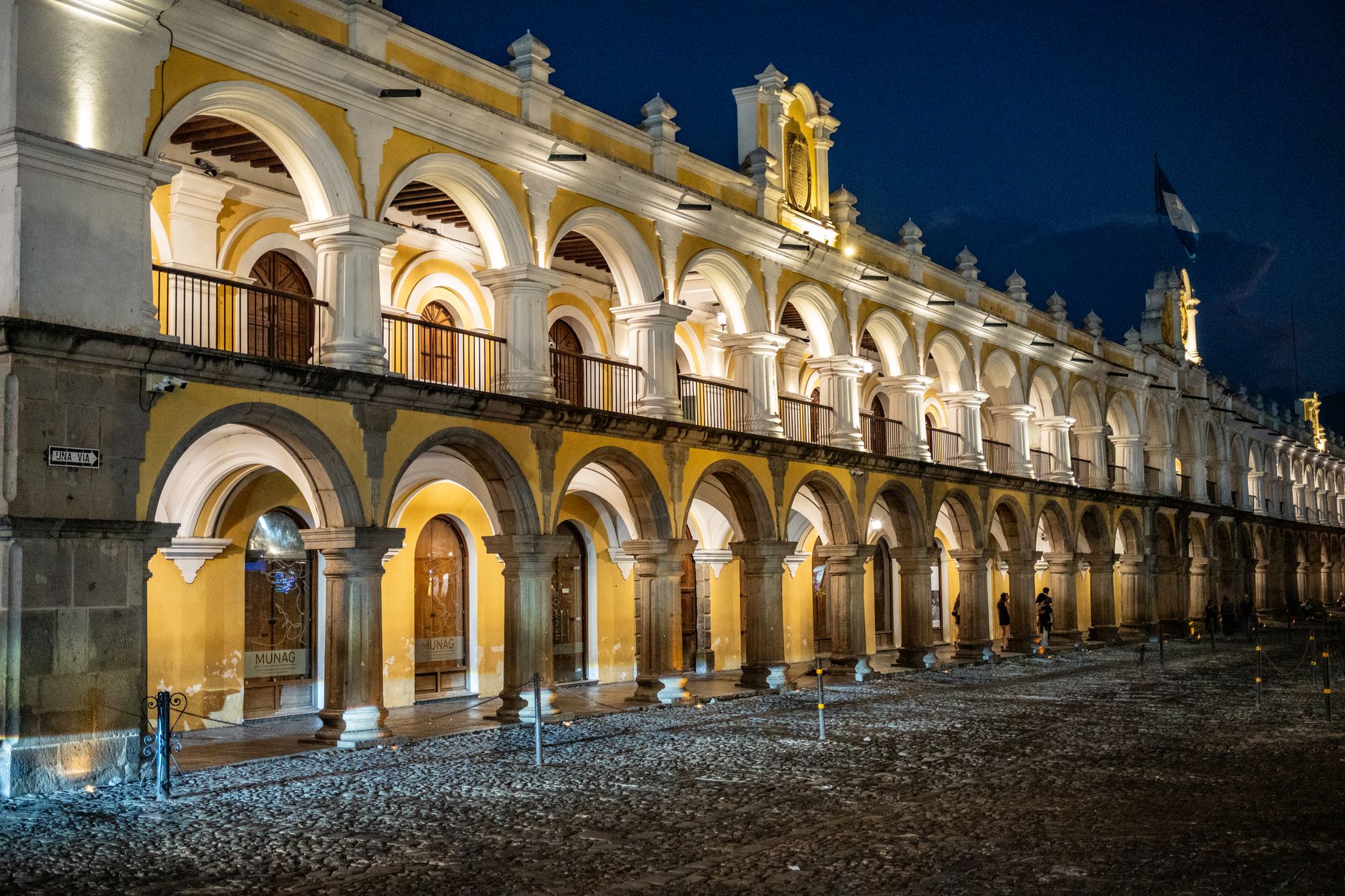
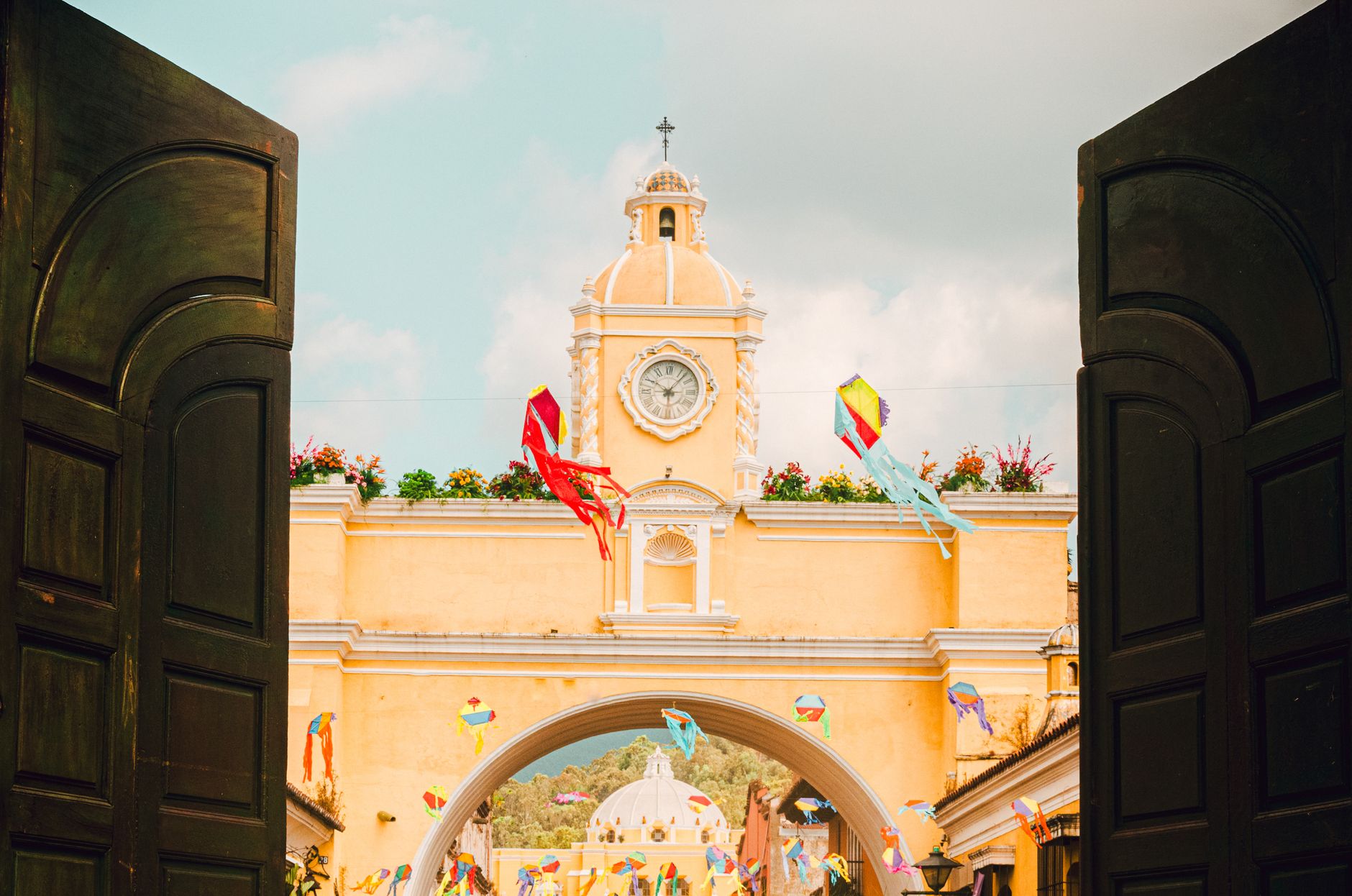
Walking through Antigua's grid-like historic center feels like stepping back into the 18th century. Flanked by pastel-hued colonial mansions, ruined monasteries covered in bougainvillea, and the iconic yellow Santa Catalina Arch, the neighborhood is incredibly walkable. By day, the streets are bustling with street food vendors, artisan markets, and students from the town's famous Spanish schools. By night, the area transforms into a sophisticated hub of candlelit mezcal bars, high-end international restaurants, and boutique hotels housed in restored colonial convents.

San Marcos La Laguna (Lake Atitlán)

Best for: Yoga enthusiasts, meditation practitioners, vegans, and slow travelers.

Vibe: Bohemian, holistic, spiritual, and deeply laid-back.

Nestled on the northern shores of Lake Atitlán, San Marcos is the spiritual and wellness capital of Central America. The main pathways are narrow, car-free dirt lanes winding through lush, banana-tree-filled gardens. Here, the air is filled with the scent of copal incense and sound healing vibrations. The village is packed with holistic centers offering everything from cacao ceremonies and Mayan astrology readings to lakeside yoga platforms and ecstatic dance workshops, all set against the dramatic backdrop of the lake's three volcanoes.

Flores Island

Best for: Archaeology buffs, budget travelers, and sunset seekers.

Vibe: Colorful, compact, lakeside charm with a Caribbean beat.

Connected to the mainland by a short causeway, the island town of Flores sits on Lake Petén Itzá. Its narrow, circular streets are lined with brightly painted pastel buildings, tiny rooftop bars, and local handicraft shops. The entire island can be walked in under twenty minutes, offering constant, breezy views of the lake. It serves as the ultimate, peaceful basecamp for travelers heading deep into the northern jungles to explore Tikal, offering a lively evening scene of lakeside dining, lancha (boat) rides, and stunning red sunsets.

Food & Drink Scene

What to Eat in Guatemala

Pepián de Pollo (Guatemala's National Stew)

A rich, deeply comforting, and complex stew that represents the ultimate fusion of Spanish and Maya culinary traditions. The soul of the dish lies in its recado—a thick sauce made from roasted pumpkin seeds (pepitoria), sesame seeds, charred tomatoes, tomatillos, and chili peppers, thickened with ground tortillas. It is typically slow-simmered with chicken, potatoes, green beans, and carrots, resulting in a savory, smoky, and slightly nutty flavor profile. It is traditionally served with a side of white rice and warm, hand-patted corn tortillas.

🍴 Top spot: La Cuevita de los Urquizú, Antigua (where you can point to clay pots bubbling with traditional stews)

Kak'ik (Traditional Q'eqchi' Turkey Soup)

An ancient, festive Maya broth originating from the Alta Verapaz region, recognized as a national cultural heritage dish. Kak'ik features a large piece of tender turkey (chunto) bathed in a light, fiery-red broth colored and flavored with achiote, coriander, mint, and a variety of local chilies, including the smoky chile cobanero. The soup is intensely aromatic, earthy, and spicy, designed to warm the body in the cool highland cloud forests. It is traditionally eaten accompanied by tamalitos de viaje (plain, unsalted corn tamales wrapped in leaves).

🍴 Top spot: Restaurant Katok, Tecpán or Cobán

Rellenitos de Plátano

A beloved Guatemalan street food and dessert that perfectly balances sweet and savory flavors. Rellenitos consist of a sweet dough made from boiled, mashed ripe plantains, which is shaped into small egg-like croquettes. These are then stuffed with a rich, sweetened paste of black refried beans infused with chocolate and cinnamon. The croquettes are deep-fried until golden brown and crispy on the outside, then served hot, dusted with powdered sugar or drizzled with thick crema (Guatemalan sour cream).

🍴 Top spot: Street food stalls near the Iglesia de la Merced, Antigua
Excursions

Best Day Trips from Guatemala

Chichicastenango Indigenous Market

2 to 2.5 hours by shuttle from Antigua or 1.5 hours from Panajachel

Journey deep into the K'iche' Maya highlands to witness Latin America's largest and most vibrant open-air market, operating every Thursday and Sunday. The entire town transforms into a kaleidoscope of color as indigenous merchants from surrounding villages gather to sell handwoven textiles, carved wooden masks, pottery, and medicinal plants. Beyond shopping, the heart of Chichicastenango is the 400-year-old Santo Tomás Church, where Maya priests perform ancient rituals, burning copal incense and offering flower petals on the church steps, beautifully demonstrating the region's unique religious syncretism.

Yaxhá Archaeological Site at Sunset

1.5 hours by 4x4 or tour van from Flores

Escape the crowds of Tikal by visiting Yaxhá, a massive, classic-era Maya city beautifully positioned on a ridge overlooking Lake Yaxhá. This atmospheric site features over 500 structures, including impressive twin-pyramid complexes and a grand acropolis. Climb to the top of Temple 216 (the handsomest temple in the East Acropolis) in the late afternoon to watch the sun sink directly into the glassy waters of the lake, while the surrounding jungle comes alive with nocturnal wildlife. It is a far more tranquil and raw archaeological experience than its famous neighbor.

When to Go

Best Time to Visit & Seasonality

Editor’s Pick: The absolute best time to visit Guatemala is during the dry season, which runs from November to April (locally known as 'verano'). During these months, the skies are consistently clear, making it the perfect window for hiking volcanoes, exploring the ruins of Tikal without muddy trails, and enjoying the outdoor cafes of Antigua. This period also hosts Guatemala's most spectacular cultural events, including the Giant Kite Festivals on Day of the Dead (November 1st) and the world-famous Semana Santa (Holy Week) processions in March or April, when Antigua's cobblestone streets are carpeted in intricate, colorful sawdust tapestries.

Spring Overview

(March - May)
Peak Crowds
Average Temperature & Climate18°C - 32°C (64°F - 90°F)

Warm and sunny with occasional late-afternoon showers starting in May. Highland areas remain pleasant while the lowlands (Petén) can become quite hot and humid.

Crowd & Travel ConditionsPeak Tourist Traffic

Book hotels 3-6 months ahead.

✨ Seasonal Highlights:Witnessing the world-renowned Semana Santa (Holy Week) processions in Antigua, where the streets are filled with elaborate incense-perfumed parades and hand-dyed sawdust carpets.
Travel Smarter

Practical Travel Essentials

CurrencyGuatemalan Quetzal (GTQ)
LanguageSpanish (official), plus 22 Mayan languages (including K'iche', Kaqchikel, and Q'eqchi')
Time ZoneCST (UTC-6)

Visa & Entry

Citizens of the United States, Canada, the European Union, the United Kingdom, Australia, and New Zealand do not require a visa for tourist stays of up to 90 days. Upon arrival, you will receive a stamp representing the CA-4 border control agreement, which also allows travel between El Salvador, Honduras, and Nicaragua without additional visa paperwork.

Getting Around & Transit

For long distances, shared tourist shuttles (booked through agencies) are the safest and most comfortable option. For local travel, 'chicken buses' (highly decorated, retired US school buses) are cheap and culturally fascinating, though not recommended for travelers with large bags or at night. Around towns and Lake Atitlán, three-wheeled tuk-tuks are the standard for short trips, while lanchas (public boats) are used to cross the lake.

Daily Budget Expectation

$40 - $120 USD per day. Budget travelers can easily get by on $35-$50 a day staying in hostels and eating at local comedores (diners). Mid-range travelers can expect to spend $70-$150 a day for boutique hotels, private shuttles, and nice meals, while luxury travelers will find high-end options in Antigua and Atitlán starting around $250+ per day.

Safety & Health

Guatemala is generally safe for travelers who exercise standard precautions. Petty theft and pickpocketing are common in crowded markets (like Chichicastenango) and on public chicken buses. Avoid walking alone at night in major cities, stick to well-traveled tourist routes, and always use registered guiding agencies for volcano hikes to avoid robberies along the trails.

Local Etiquette & Customs

Guatemalan culture is polite and conservative. Always greet people with a warm 'Buenos días' (Good morning) or 'Buenas tardes' (Good afternoon). Ask for permission before taking photographs of local people, especially indigenous women and children wearing traditional clothing (traje). Dress modestly when entering churches or visiting traditional indigenous villages, keeping shoulders and knees covered.

Questions & Answers

Frequently Asked Questions about Guatemala

No, tap water in Guatemala is not safe for drinking. Travelers should always drink bottled, filtered, or purified water, which is readily available at hotels, restaurants, and convenience stores. Be cautious with ice, raw salads, and unpeeled fruits in budget establishments, though high-end restaurants in Antigua and Lake Atitlán universally use purified water and ice.