🌟 Best in Travel 2026 is here!
Seville
cityEurope
4.92 / 5.0

Seville

A sun-drenched tapestry of Moorish palaces, fiery flamenco, and orange-scented plazas.

Advertisement
Editorial Guide

About Seville

Seville, the sultry capital of Andalusia, is a city that engages all five senses with effortless drama. Under a sky that remains stubbornly blue for most of the year, the scent of orange blossoms (azahar) mixes with the aroma of sizzling olive oil and incense from ancient churches. It is a city of distinct temporal rhythms, where mornings are spent in the cool shade of Mudéjar courtyards, afternoons are surrendered to the sacred ritual of the siesta, and nights belong to the lively chatter of tapas bars that spill out onto cobblestone alleyways.

Historically, Seville was the jewel of the Almohad Caliphate before becoming the glittering gateway to the New World following the Reconquista. This complex historical collision is etched into every monument, from the gargantuan Gothic cathedral built over a former mosque to the Alcázar, where Christian monarchs commissioned Islamic artisans to carve intricate geometric patterns into their royal halls. The Guadalquivir River, once crowded with Spanish galleons laden with American gold, still slices through the city, separating the historic core from the fiercely independent, bohemian neighborhood of Triana.

To visit Seville is to succumb to a lifestyle of passionate expression. It is the birthplace of flamenco, an art form born of marginalized cultures that finds its rawest, most visceral expression in the intimate peñas (flamenco clubs) of Triana. The locals, known as Sevillanos, possess an infectious zest for life, taking immense pride in their traditions, which culminate each spring in the solemn majesty of Semana Santa (Holy Week) and the joyous, colorful chaos of the Feria de Abril.

As you wander through the labyrinthine streets of the old Jewish quarter, Santa Cruz, you will realize that Seville's greatest charm lies in its details: the sudden glimpse of an elegant, tiled patio behind a wrought-iron gate, the spontaneous burst of song in a neighborhood bar, or the way the golden hour light reflects off the ancient stone of the Torre del Oro. It is a city that does not merely invite exploration; it demands that you slow down, sip a glass of chilled manzanilla sherry, and feel its heartbeat.

Visual Impressions & Moments
Seville photo 1
Seville photo 2
Seville photo 3
Seville photo 4
Seville photo 5
Seville photo 6
Unmissable Moments

Top Things to Do in Seville

Must-Do

Get Lost in the Real Alcázar at Opening Hour

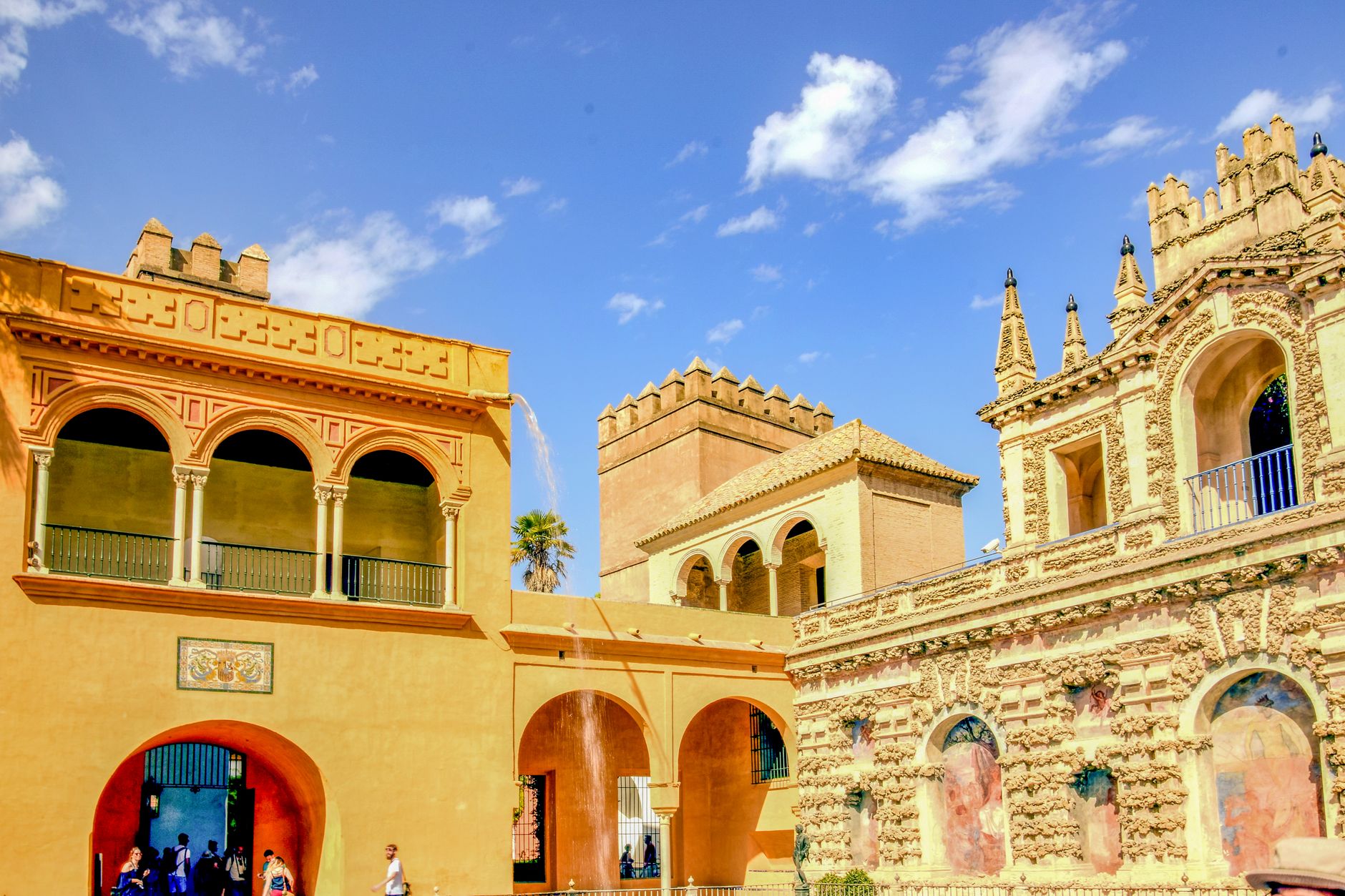
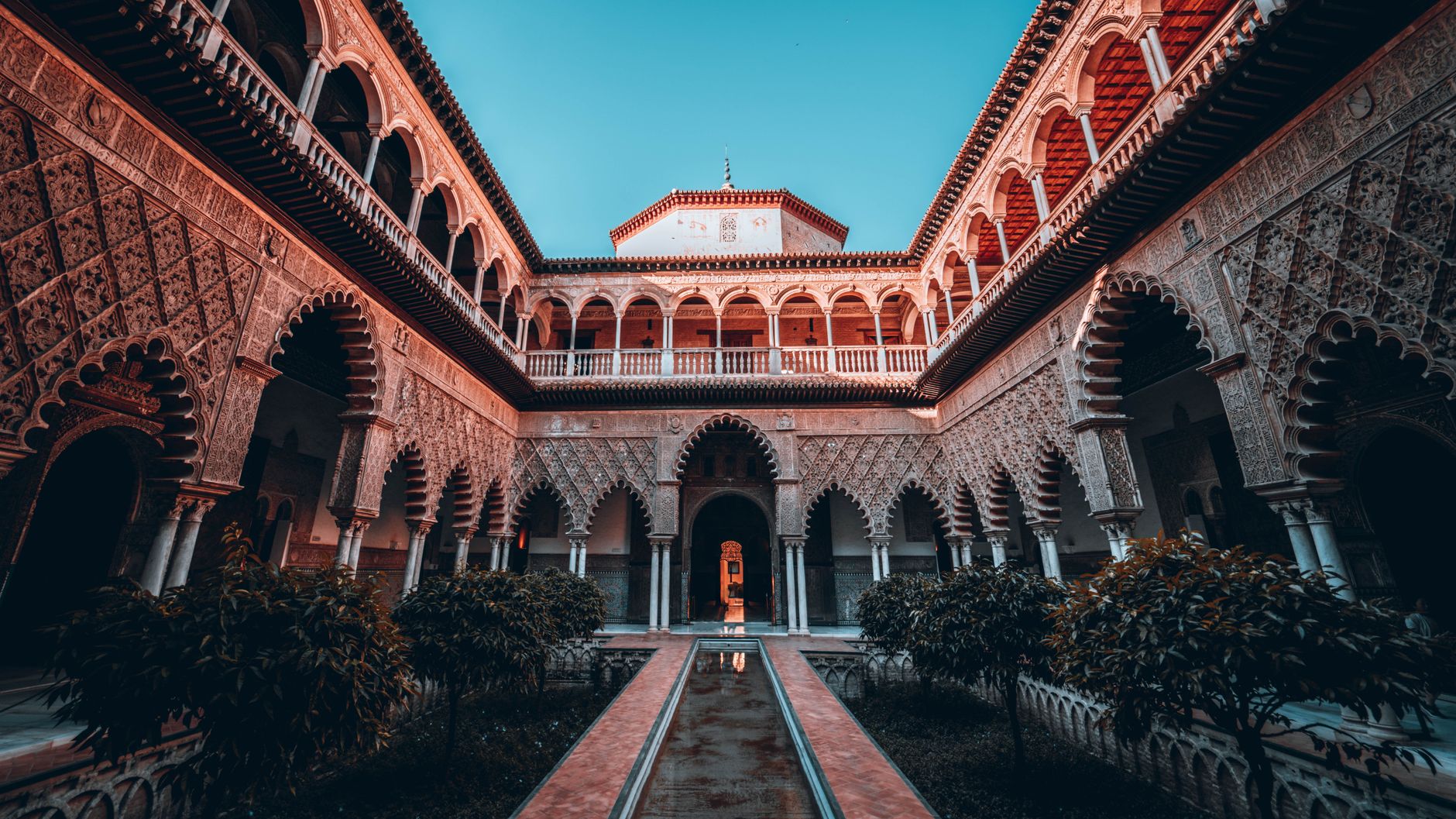
Step into Europe's oldest active royal palace right when the gates open to beat the crowds. The Real Alcázar is a breathtaking showcase of Mudéjar architecture, where delicate plasterwork, vibrant geometric tiles, and tranquil reflection pools evoke the spirit of Al-Andalus. Spend hours wandering from the majestic Hall of Ambassadors to the sprawling, labyrinthine gardens filled with palms, fountains, and roaming peacocks. Booking the earliest online slot is essential to experience the palace in serene silence.

Culture

Experience Raw, Authentic Flamenco in Triana

Avoid the commercial, tourist-trap dinner shows and cross the Isabel II bridge into Triana, the historical cradle of flamenco. Seek out an intimate, late-night performance at a local 'peña' or a dedicated venue like Casa de la Memoria or Teatro Flamenco Triana. Here, without microphones or elaborate staging, the raw, emotional power of the 'cante' (singing), 'toque' (guitar playing), and 'baile' (dance) will leave you spellbound. The performance is an intense dialogue of passion, sorrow, and joy.

Scenic

Climb the Giralda Tower at Golden Hour

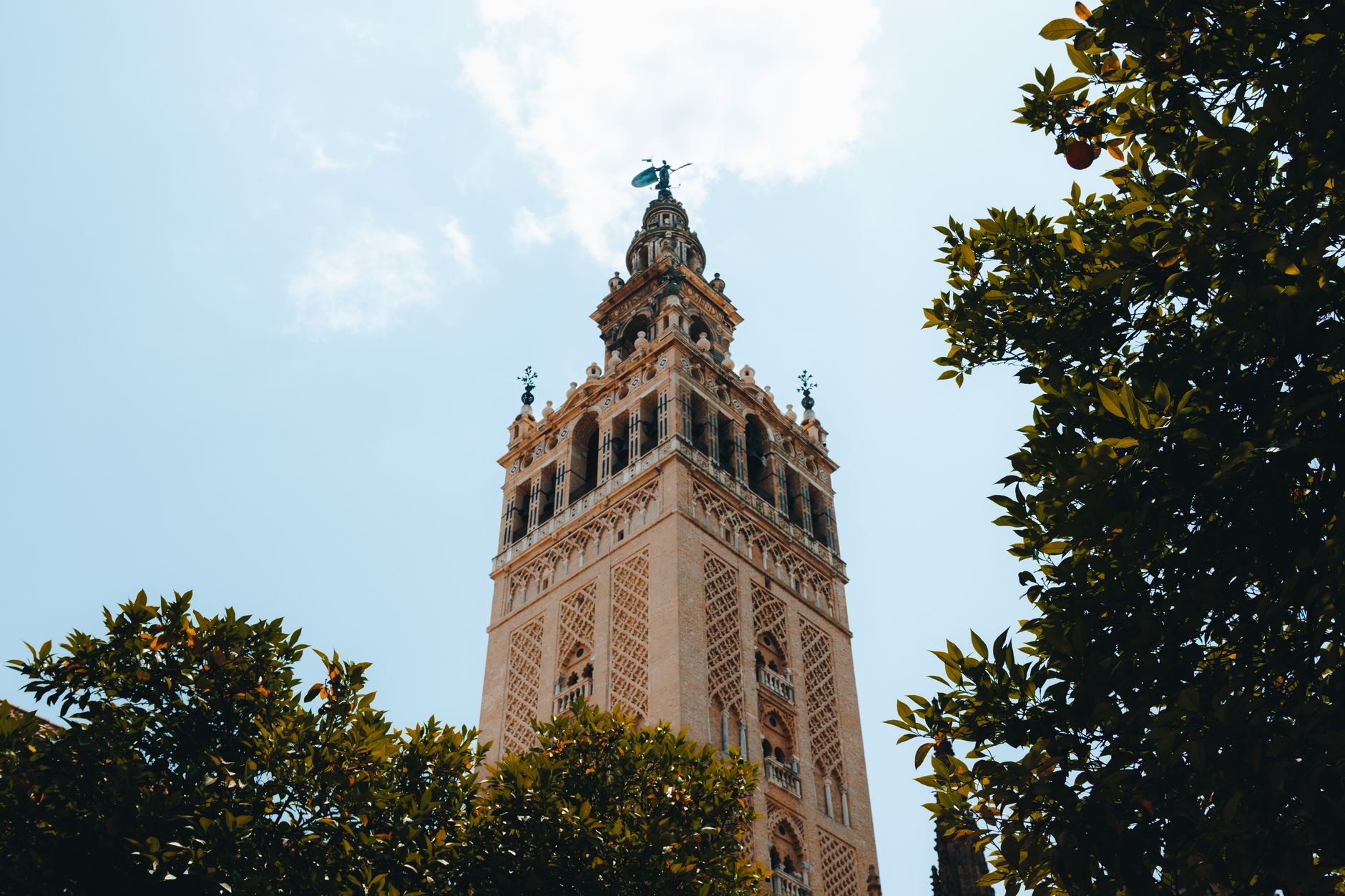
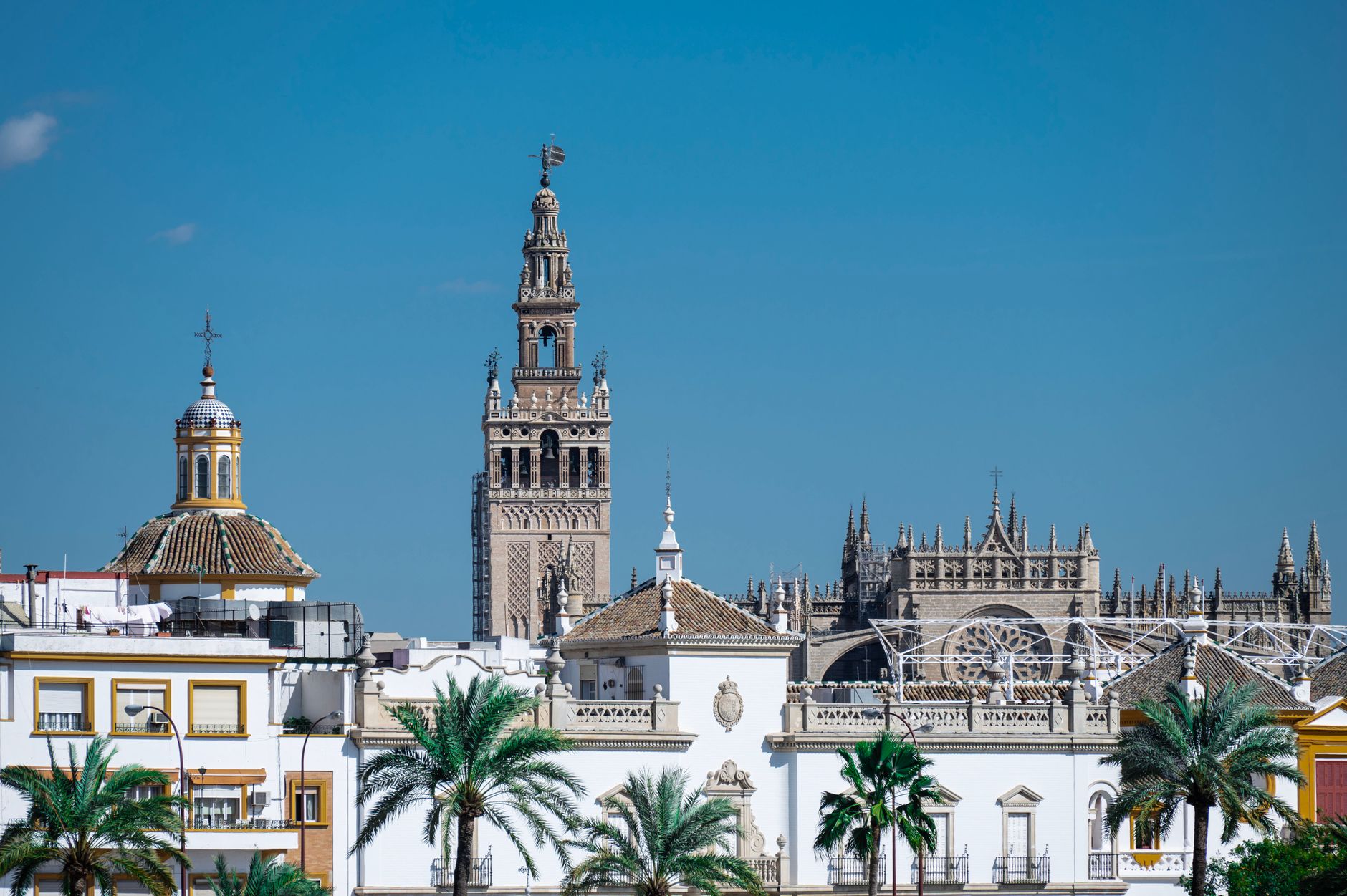
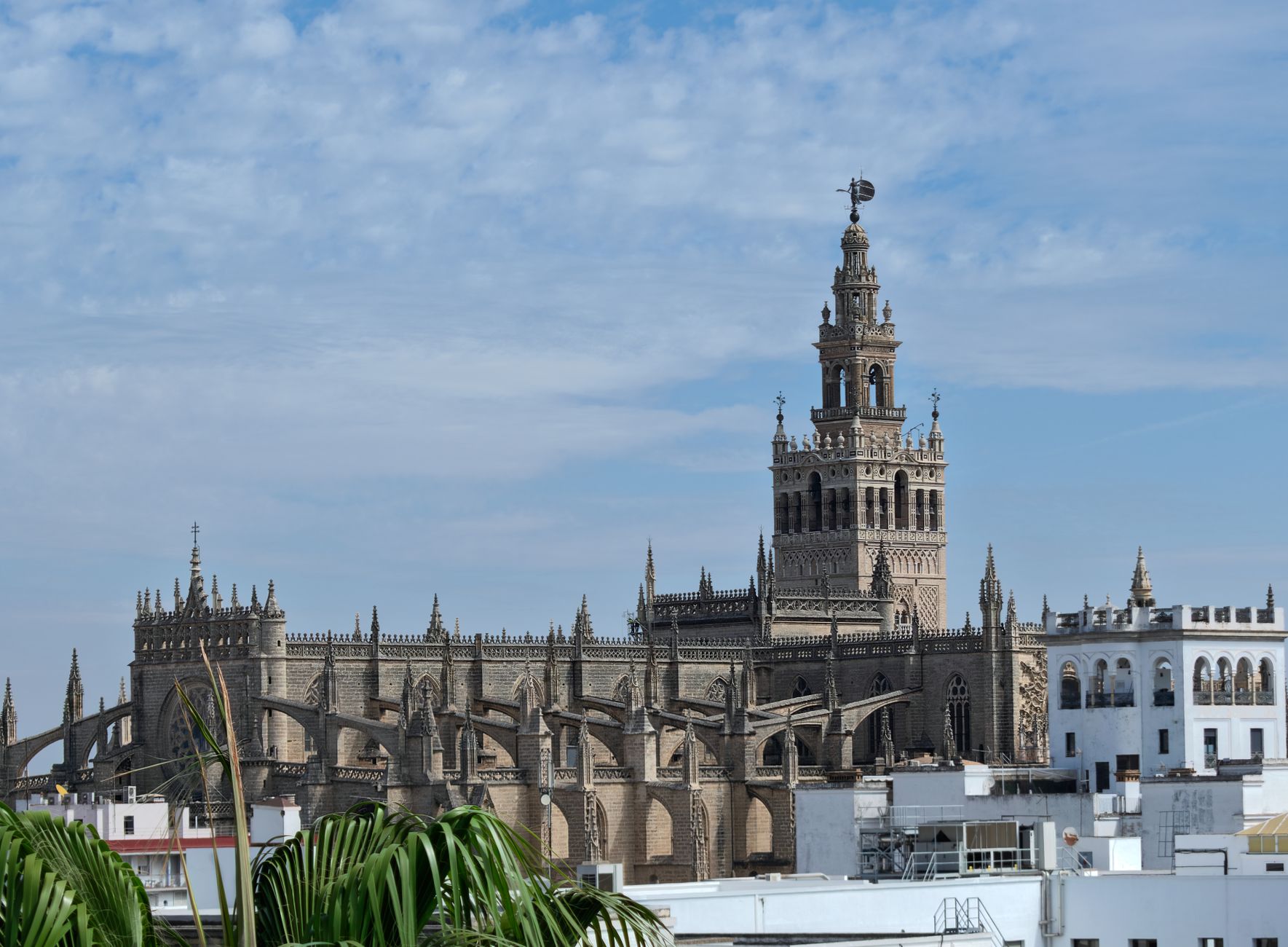
Instead of stairs, ascend the 34 gently sloping ramps of the Giralda—the iconic bell tower of Seville Cathedral that was originally built as a minaret for the 12th-century Almohad Mosque. The ramps were designed so the muezzin could ride his horse to the top to call the faithful to prayer. Timing your climb for late afternoon rewards you with a panoramic, 360-degree view of Seville's terracotta rooftops bathed in a warm, golden Andalusian glow.

Culinary

Embark on a Late-Night Tapas Crawl in El Rinconcillo

Dine like a local by participating in 'el tapeo'—the art of moving from bar to bar, enjoying a single drink and tapas at each stop. Start your evening at El Rinconcillo, founded in 1670, making it the oldest tavern in Seville. Stand at the mahogany bar, order classic dishes like jamón ibérico and spinach with chickpeas, and watch the waiters chalk up your bill directly on the wooden counter. Follow the locals to modern tapas bars in the Alfalfa district to complete the night.

Must-See Highlights

Top Places & Things to Do in Seville

Curated attractions and cultural landmarks with local insider advice.

Real Alcázar de Sevilla
culture
4.9

Real Alcázar de Sevilla

The Real Alcázar is a breathtaking masterpiece of Mudéjar architecture, representing a harmonious blend of Christian and Islamic design. Originally founded as a fort for the Cordoban governors in 913, it was expanded over centuries, most notably by King Pedro I in the 14th century, who employed Moorish craftsmen to construct the stunning Palacio de Don Pedro. Visitors are greeted by intricate plasterwork, dazzling tile mosaics (azulejos), and peaceful courtyards like the Patio de las Doncellas, which features a long reflecting pool. Beyond the palace walls lie the sprawling Alcázar Gardens, an oasis of orange groves, palm trees, and fountains. Here, the scent of jasmine fills the air, and you can hear the calls of resident peacocks. Don't miss the Baños de Doña María de Padilla, vaulted rainwater tanks located beneath the Patio del Crucero, which offer a cool, hauntingly beautiful escape from the heat.

9:30 AM - 5:00 PM (October - March), 9:30 AM - 7:00 PM (April - September)
Admission: €14.50 (General Admission)
Insider Tip: Book your tickets online at least several weeks in advance. Opt for the earliest morning slot (9:30 AM) to experience the palace before the tour groups arrive, and consider adding the ticket for the Cuarto Real Alto (Royal Bedrooms).
Seville Cathedral & La Giralda
attraction
4.8

Seville Cathedral & La Giralda

As the largest Gothic cathedral in the world and a UNESCO World Heritage site, this colossal monument was built on the site of the great 12th-century Almohad Mosque. The Christian builders famously declared their intent to create a church 'so beautiful and so great that those who see it will think us mad.' Inside, the sheer scale is humbling, featuring a cavernous central nave, the tomb of Christopher Columbus supported by four allegorical figures, and the Retablo Mayor—the largest altarpiece in Christendom, carved with thousands of biblical figures covered in gold leaf. The cathedral's bell tower, La Giralda, is the former minaret of the mosque and remains the ultimate symbol of Seville. Instead of steps, visitors ascend a series of 34 ramps designed to allow the muezzin to ride up on horseback. The climb rewards you with breathtaking views over the city's old town and the adjacent Patio de los Naranjos (Orange Tree Courtyard), which survived from the original mosque structure.

10:45 AM - 6:00 PM daily (Sunday hours may vary)
Admission: €12.00 (includes Giralda)
Insider Tip: Your ticket also includes entry to the nearby Iglesia del Salvador; buy your ticket there first to skip the massive main queues at the Cathedral entrance.
Plaza de España
nature
4.9

Plaza de España

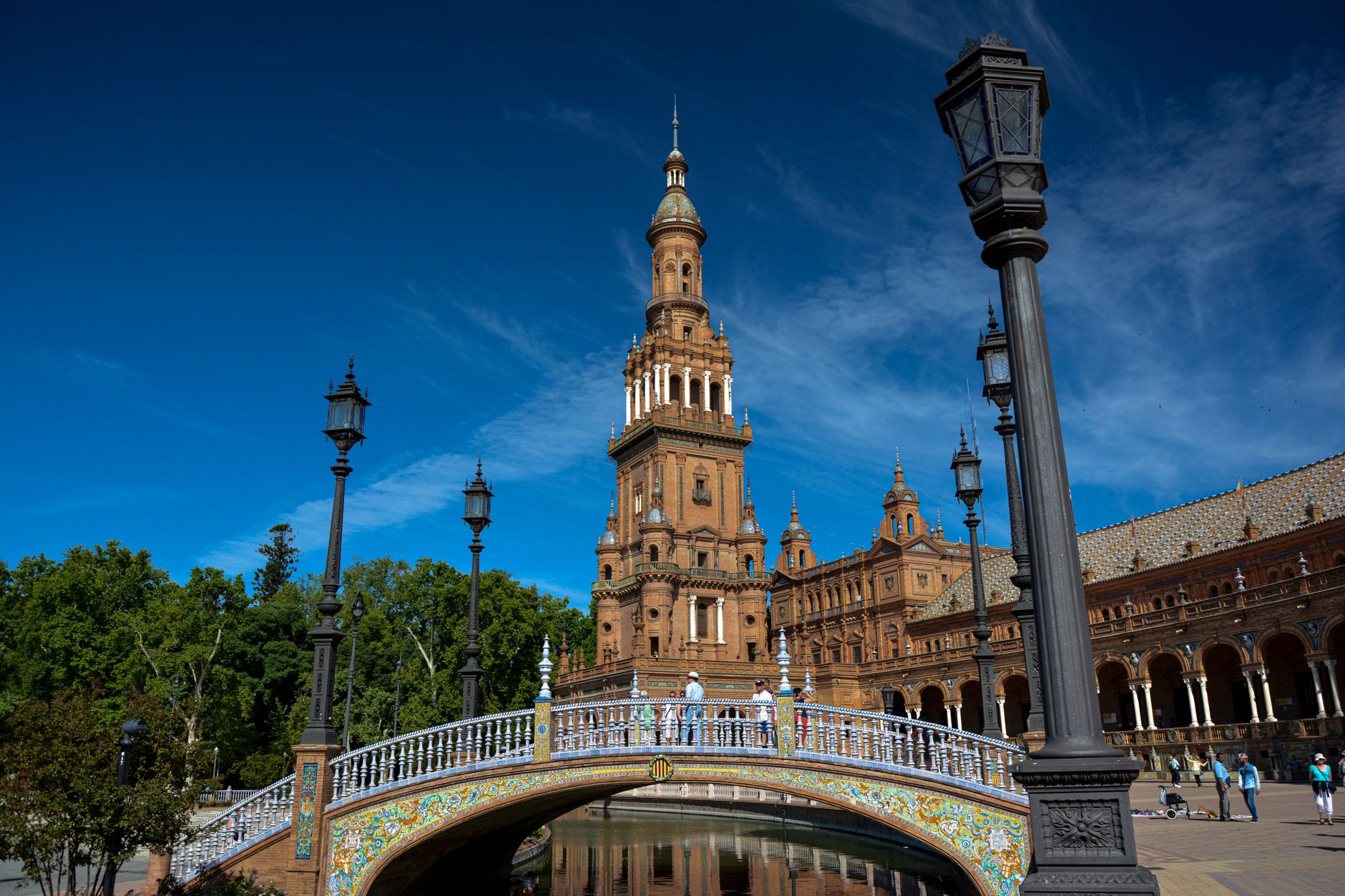
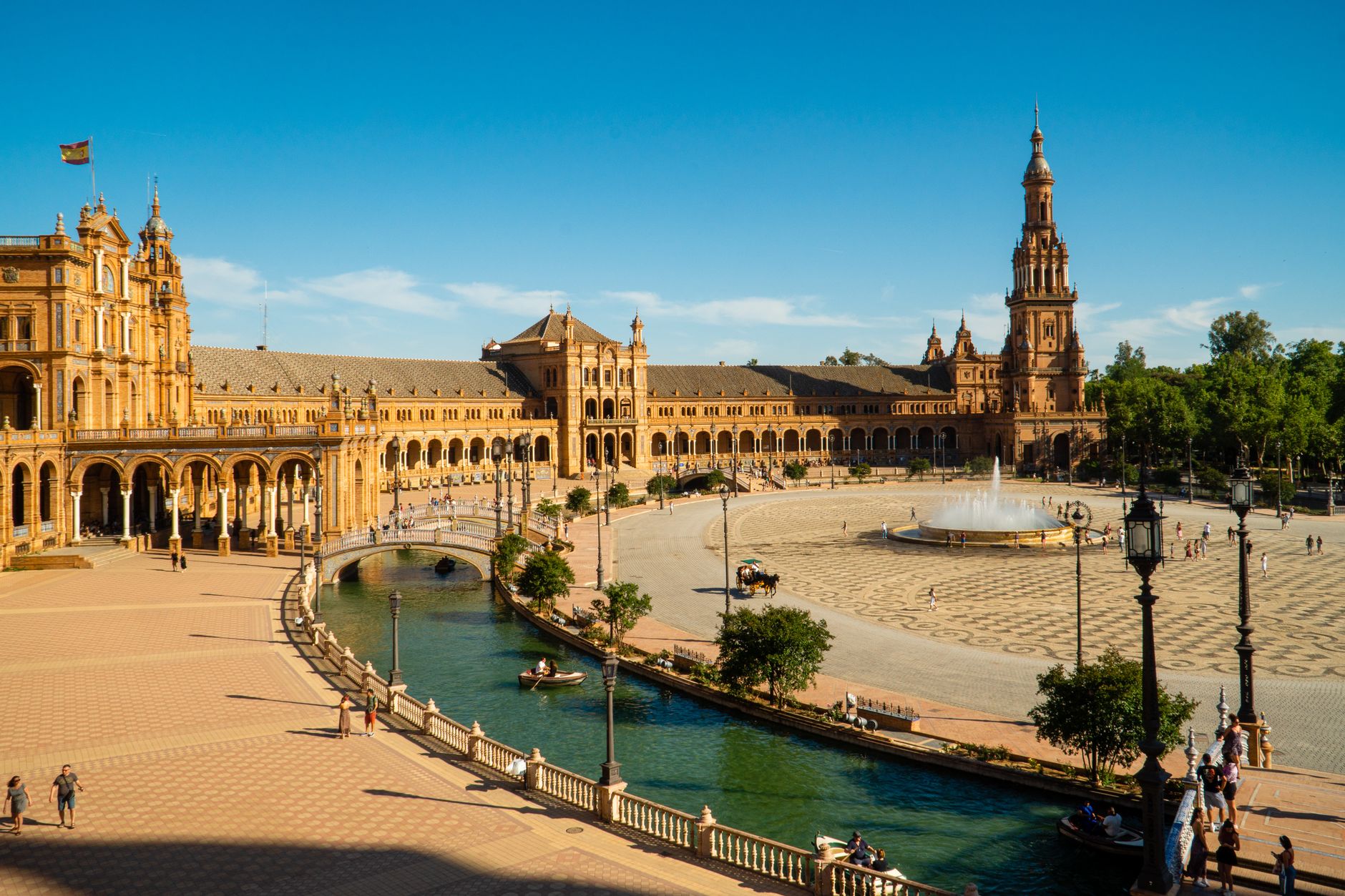
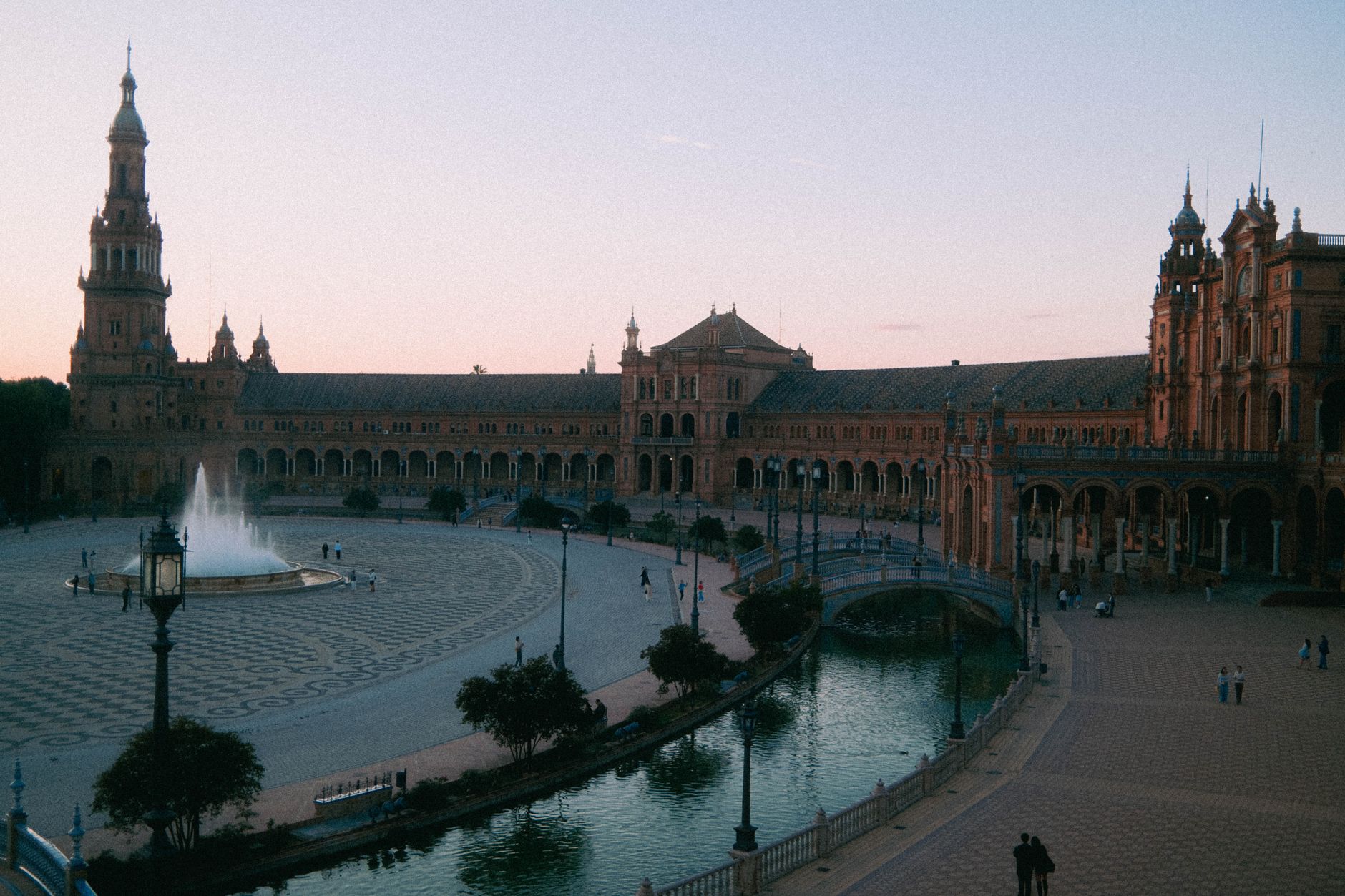
Built for the Ibero-American Exposition of 1929, the Plaza de España is a sweeping, semi-circular brick palace of monumental proportions. Designed by local architect Aníbal González, it combines elements of Renaissance Revival and Neo-Mudéjar styles. A continuous, 500-meter canal follows the curve of the facade, spanned by four ornate bridges representing the ancient kingdoms of Spain. Along the base of the palace wall are 48 tiled alcoves, each dedicated to a Spanish province, decorated with hand-painted ceramic maps and historical scenes. The plaza is surrounded by the lush Maria Luisa Park, making it a perfect spot for a leisurely stroll. You can rent a small rowboat to paddle along the canal, listen to the talented street musicians who regularly perform flamenco under the grand arches, or simply sit on one of the tiled benches and watch the horse-drawn carriages clatter past.

8:00 AM - 10:00 PM daily (Closes at midnight in summer)
Admission: Free
Insider Tip: Visit during the late afternoon to see the sunlight hit the tiles, or return at night when the entire palace is brilliantly illuminated and the crowds have thinned.
Metropol Parasol (Las Setas)
attraction
4.6

Metropol Parasol (Las Setas)

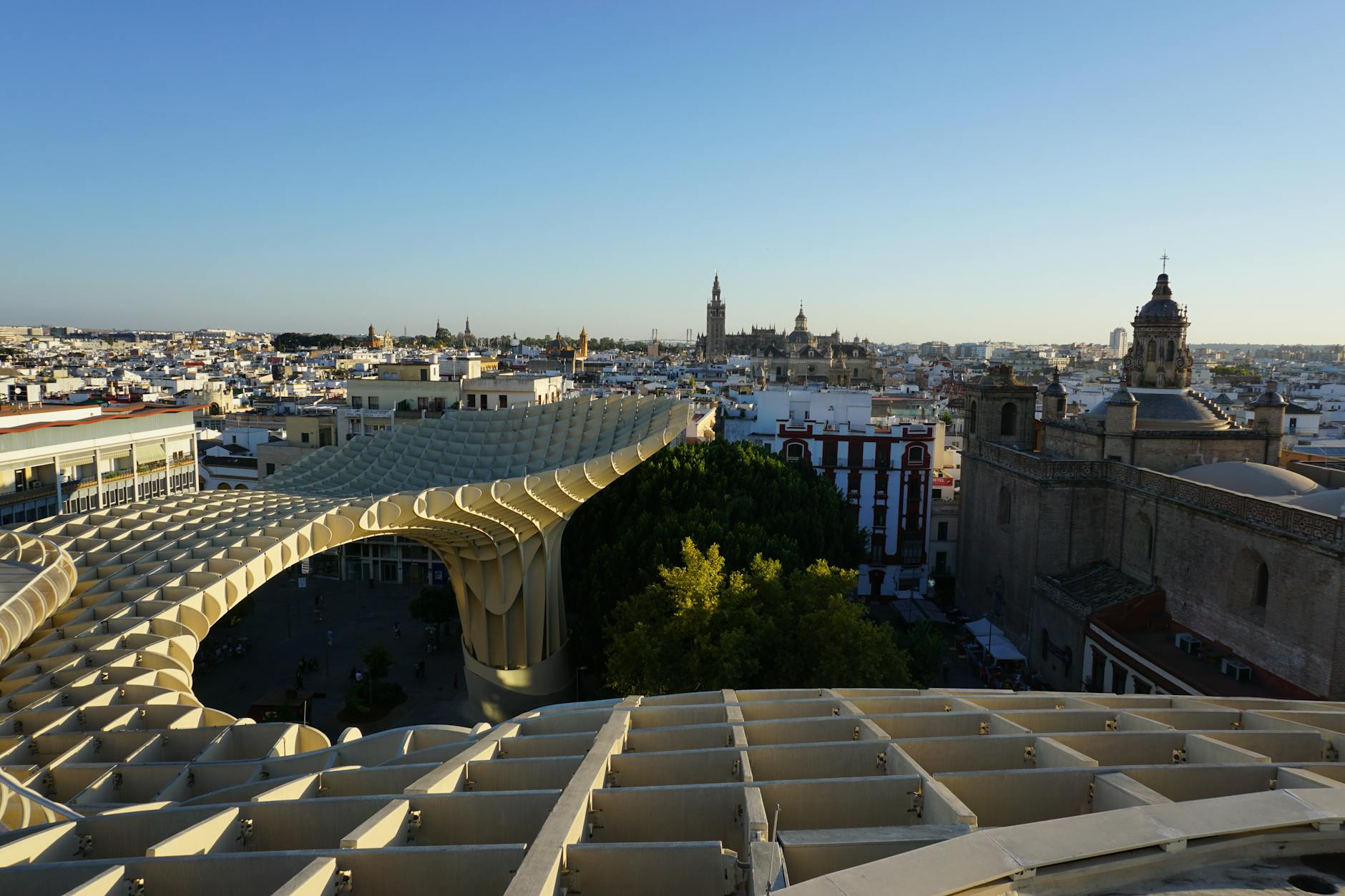
Locally known as 'Las Setas' (The Mushrooms) due to its unique organic shape, the Metropol Parasol is the largest wooden structure in the world. Designed by German architect Jürgen Mayer and completed in 2011, this ultra-modern, honeycombed canopy of birch wood rises dramatically above the traditional Plaza de la Encarnación. It serves as a brilliant community hub, housing a lively food market on the ground floor and the Antiquarium museum in the basement, which showcases Roman and Moorish ruins discovered during construction. The true highlight of Las Setas is the winding panoramic walkway on the roof. Accessible via an elevator, the walkway snakes across the top of the wooden umbrellas, offering spectacular, unobstructed views of Seville's historic skyline, contrasting the ancient church steeples with the bold, contemporary curves of the timber structure.

9:30 AM - Midnight daily
Admission: €15.00 (includes evening light show)
Insider Tip: Book a ticket for just before sunset. The price includes access to 'Feeling Sevilla,' an immersive 15-minute sensory show, and the evening 'Aurora' light show, which illuminates the wooden structure in sync with your footsteps.
Area Guide

Where to Stay & Best Neighborhoods

Barrio Santa Cruz

Best for: First-time visitors, photographers, and history enthusiasts.

Vibe: Romantic, labyrinthine, historic, and undeniably charming.

Formerly the medieval Jewish quarter, Santa Cruz is a maze of narrow, cobblestone alleys, whitewashed houses, and hidden plazas shaded by orange trees. Walking through this neighborhood feels like stepping back in time; the streets were designed to be deliberately winding and narrow to create natural shade and breeze during the hot summer months. It is home to the Cathedral and the Alcázar, making it highly touristy but absolutely essential to explore, especially in the quiet early mornings or late at night.

Triana

Best for: Flamenco lovers, foodies, and ceramic art collectors.

Vibe: Bohemian, fiercely independent, authentic, and rich in folklore.

Located across the Guadalquivir River, Triana is not just a neighborhood; it is a state of mind. Historically inhabited by sailors, potters, and gitano (Gypsy) families, Triana has a distinct identity separate from the rest of Seville. Stroll down Calle San Jacinto for lively local life, visit the Mercado de Triana built over the ruins of an Inquisition castle, and explore the ceramic workshops on Calle Alfarería. At night, Calle Betis offers stunning waterfront views of the illuminated city center.

El Arenal

Best for: Opera fans, riverside strolls, and upscale dining.

Vibe: Elegant, maritime, buzzing, and culturally rich.

Stretching along the banks of the Guadalquivir River, El Arenal was once Seville's bustling port district during the Golden Age of shipping. Today, it is an elegant neighborhood characterized by grand 18th-century architecture, the historic Maestranza Bullring, and the iconic Torre del Oro. It is a fantastic area for dining, offering a sophisticated mix of traditional seafood taverns and trendy, contemporary restaurants, all within easy walking distance of the main historic sights.

Food & Drink Scene

What to Eat in Seville

Salmorejo

A thick, velvety cold soup originating from nearby Córdoba but perfected in Seville. Made from ripe tomatoes, bread, garlic, and extra virgin olive oil blended into a rich emulsion, it is served chilled and traditionally garnished with hard-boiled egg and crispy bits of jamón ibérico.

🍴 Top spot: Taberna Álvaro Peregil, a tiny, historic tavern famous for its orange wine and exceptional traditional tapas.

Solomillo al Whisky

A quintessential Sevillano bar staple consisting of tender pork tenderloin medallions seared and smothered in a rich, garlicky sauce made with whisky (or occasionally cognac), olive oil, and lemon. It is almost always served over a bed of freshly fried, hand-cut potatoes.

🍴 Top spot: Bodega Santa Cruz (Las Columnas), a chaotic, high-energy bar where the food is fast, cheap, and incredibly delicious.

Espinacas con Garbanzos

A comforting, Moorish-influenced dish of spinach and chickpeas sautéed with garlic, cumin, sweet pimentón (paprika), and fried bread crumbs, which are ground into a paste to thicken the stew. It represents the perfect fusion of Seville's Christian and Islamic culinary history.

🍴 Top spot: El Rinconcillo, where they have been serving this exact recipe to locals and travelers for over three centuries.
Excursions

Best Day Trips from Seville

The Mezquita of Córdoba

45 minutes by high-speed AVE train

Travel to Córdoba to witness one of the world's greatest architectural wonders: the Mezquita-Catedral. This breathtaking building features a forest of over 800 red-and-white striped arches from its Islamic golden age, with a Renaissance cathedral nave seamlessly constructed right in the center. Afterward, wander the flower-filled patios of the Jewish Quarter.

The Clifftop Drama of Ronda

1 hour 45 minutes by car or bus

Perched precariously atop the deep El Tajo gorge, Ronda is one of Andalusia's most dramatic white villages (Pueblos Blancos). Walk across the jaw-dropping Puente Nuevo bridge spanning the 120-meter drop, explore the historic bullring, and enjoy spectacular views of the surrounding serranía mountain range.

When to Go

Best Time to Visit & Seasonality

Editor’s Pick: The absolute best time to visit Seville is during the spring months of March to May. During this window, the city is at its most magical: the extreme heat of the Andalusian summer has not yet arrived, the streets are lined with fragrant blooming orange trees, and the city's two most famous festivals, Semana Santa and the Feria de Abril, take place. Late autumn (October to November) is also highly recommended, offering warm, sunny days, fewer crowds, and pleasant evening temperatures perfect for outdoor dining.

Spring Overview

(March - May)
Peak Crowds
Average Temperature & Climate15°C - 26°C (59°F - 79°F)

Warm, sunny, and exceptionally pleasant with occasional light showers.

Crowd & Travel ConditionsPeak Tourist Traffic

Book hotels 3-6 months ahead.

✨ Seasonal Highlights:Witnessing the breathtaking spectacles of Semana Santa and the vibrant, week-long party of the Feria de Abril when the entire city dresses in traditional attire.
Travel Smarter

Practical Travel Essentials

CurrencyEUR (€)
LanguageSpanish
Time ZoneCentral European Time (CET/CEST)

Visa & Entry

Spain is a member of the Schengen Area. Citizens of the US, Canada, Australia, New Zealand, and the UK do not require a visa for tourist stays of up to 90 days within a 180-day period.

Getting Around & Transit

Seville is an incredibly walkable city, and the best way to explore its historic core is on foot. For longer distances, the city offers a highly efficient public bus network, a single-line metro, and 'Sevici', a fantastic public bike-sharing program with stations located throughout the city.

Daily Budget Expectation

€80 - €150 per day (covers mid-range accommodation, plenty of tapas, drinks, and entry fees to major attractions).

Safety & Health

Seville is generally a very safe city for travelers. However, pickpocketing is common in crowded tourist hubs, particularly around the Cathedral, Santa Cruz, and on public transit. Keep belongings secure and be wary of anyone offering you rosemary sprigs or trying to read your palm.

Local Etiquette & Customs

Sevillanos eat late: lunch typically starts around 2:30 PM, and dinner is rarely served before 9:00 PM or 10:00 PM. Tipping is not mandatory; leaving 5-10% of the bill for excellent service at a sit-down restaurant is appreciated, while rounding up to the nearest euro is standard at casual tapas bars.

Questions & Answers

Frequently Asked Questions about Seville

For a first-time visitor, 3 days is the perfect amount of time. This allows you to explore the major sights (Alcázar, Cathedral, Plaza de España) without rushing, enjoy several tapas crawls, experience a flamenco show, and wander through the historic neighborhoods of Santa Cruz and Triana.