🌟 Best in Travel 2026 is here!
Yellowstone National Park
regionNorth America
4.96 / 5.0

Yellowstone National Park

Where ancient geothermal fire meets untamed wilderness across a volcanic super-plateau.

Editorial Guide

About Yellowstone National Park

Established in 1872 as the world's first national park, Yellowstone represents a staggering monument to the raw, untamed power of the American West. Spanning nearly 3,500 square miles across Wyoming, Montana, and Idaho, this magnificent biosphere sits atop a colossal volcanic caldera, fueling over half of the world's active geysers and thousands of hydrothermal features. The landscape is a breathtaking tableau of bubbling paint pots, steaming mineral terraces, and plunging canyons carved by ancient rivers, all anchored by the expansive blue waters of Yellowstone Lake.

Culturally and historically, the park is deeply intertwined with the heritage of numerous Indigenous American tribes who have hunted, fished, and gathered plants in this mountainous sanctuary for over 11,000 years. From the early fur trappers and intrepid explorers of the Washburn expedition to the modern conservationists who champion its preservation, Yellowstone has long inspired a profound sense of awe and reverence. The human footprint here remains remarkably light, ensuring that the ancient rhythms of nature continue uninterrupted across vast alpine tundras and dense pine forests.

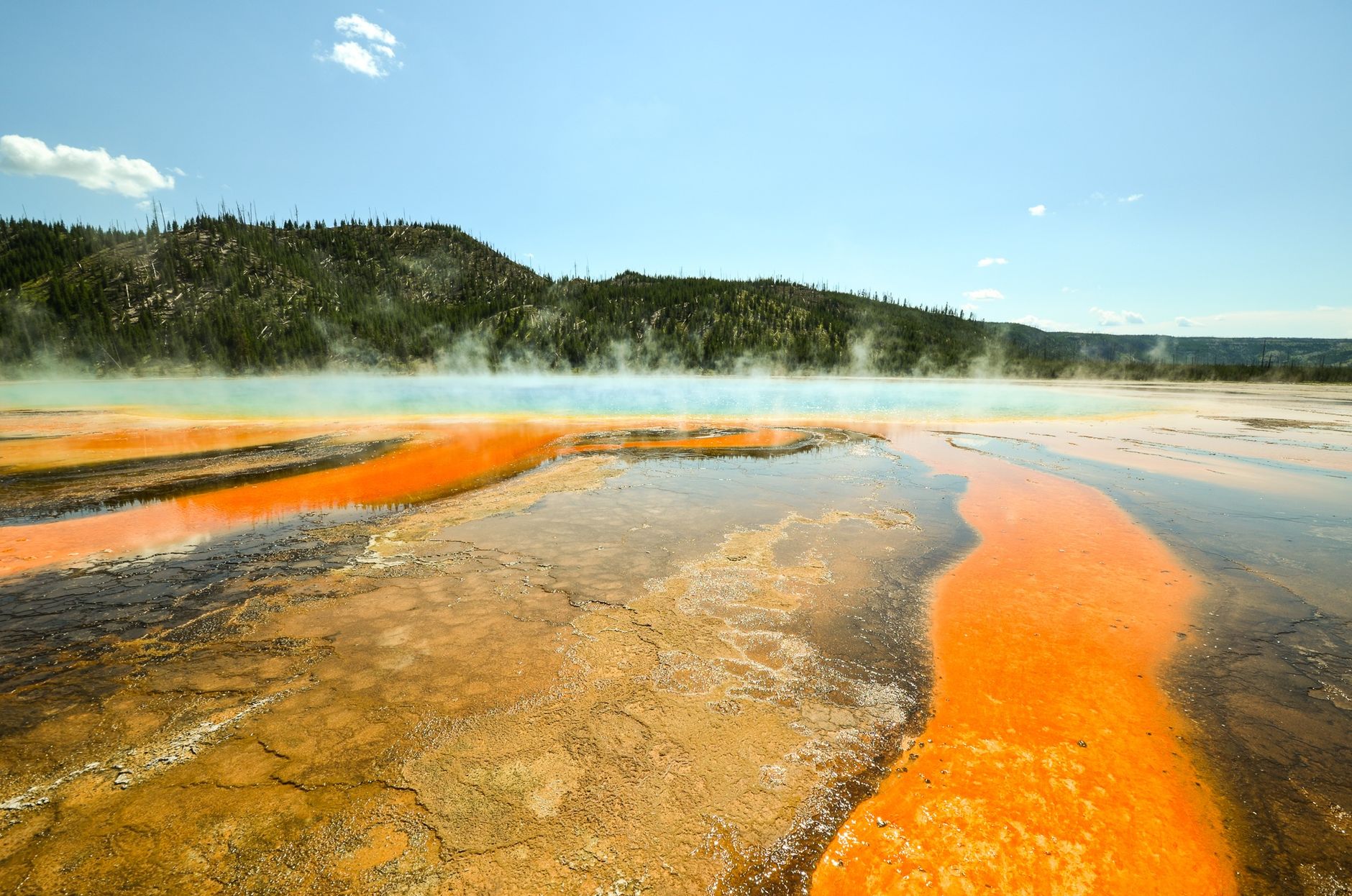
The atmosphere within Yellowstone shifts dramatically depending on the hour and the season. Misty mornings in the Hayden Valley often reveal the haunting bugle of bull elk and the lumbering silhouettes of massive bison herds, echoing an era before European settlement. As sunlight pierces the dense steam rising from the earth, vivid cyan, amber, and emerald hues emerge from mineral-rich hot springs like the Grand Prismatic. This is a place where every sensory detail—from the earthy sulfur scent hanging in the air to the distant roar of the Yellowstone River tumbling over the Lower Falls—reminds visitors of the dynamic, living Earth beneath their boots.

Geographically, the park operates as the biological heart of the Greater Yellowstone Ecosystem, one of the last remaining intact temperate ecosystems on the planet. Its complex topography ranges from high-altitude plateaus to deep river gorges, creating a diverse matrix of microclimates that support a staggering array of wildlife. Grizzly bears, wolves, lynx, pronghorn, and bald eagles roam freely across this protected expanse, offering travelers a rare glimpse into a truly wild frontier where ecological balance remains preserved.

Life in and around the park is shaped by the rhythms of the natural world and the ebb and flow of global travelers. Gateway towns like Gardiner, West Yellowstone, and Cody pulse with western hospitality, outfitting adventurers with everything from fly-fishing gear to snowmobiles. Local life celebrates outdoor stewardship, deep-rooted ranching traditions, and an enduring passion for wildlife photography and conservation. Whether you are seeking solitude along a backcountry trail or marveling at Old Faithful alongside global wanderers, Yellowstone offers an unforgettable pilgrimage into the wild.

Visual Impressions & Moments
Yellowstone National Park photo 1
Yellowstone National Park photo 2
Yellowstone National Park photo 3
Yellowstone National Park photo 4
Yellowstone National Park photo 5
Yellowstone National Park photo 6
Unmissable Moments

Top Things to Do in Yellowstone National Park

Must-Do

Witness the Eruption of Old Faithful at Sunrise

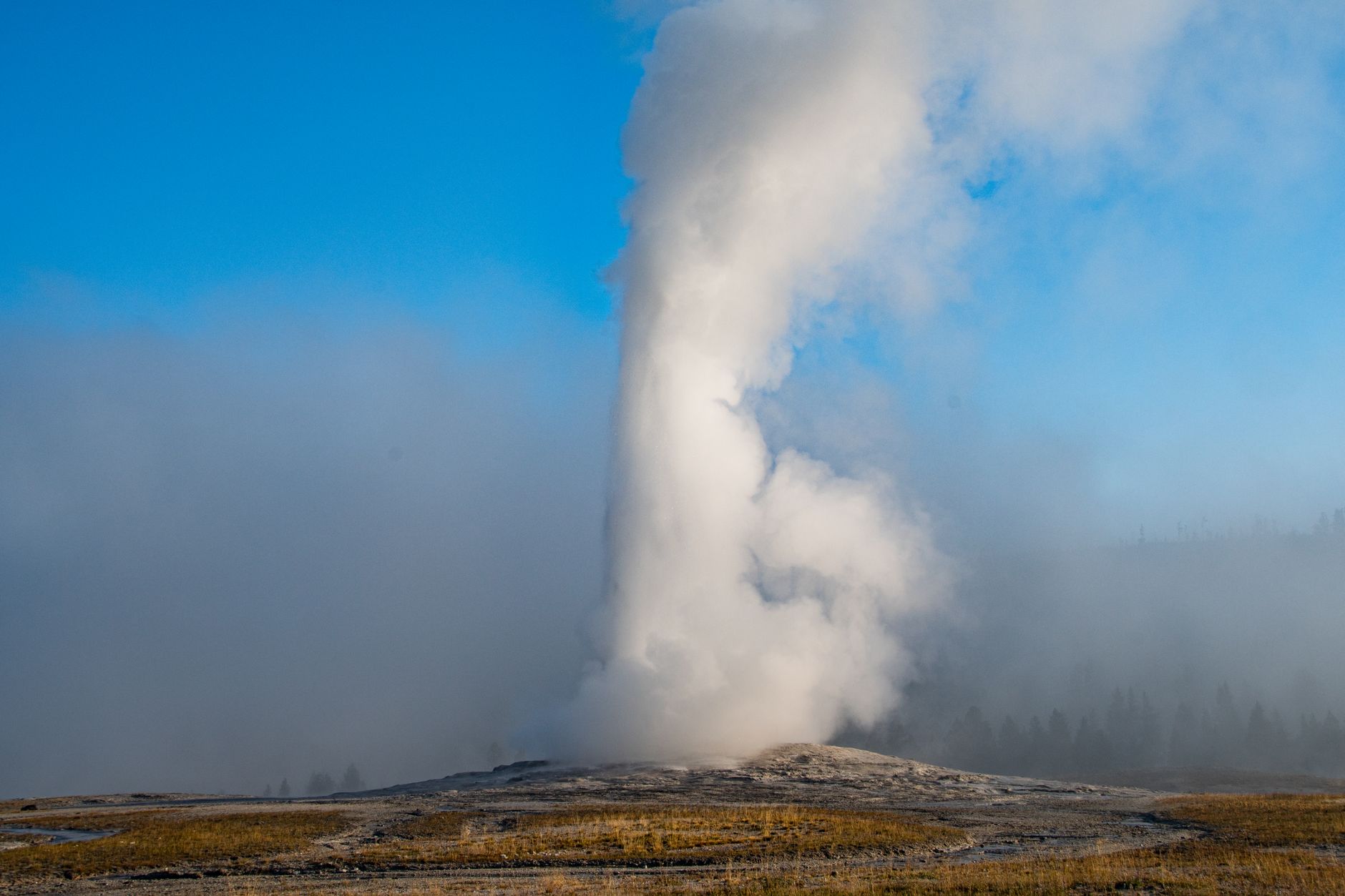
Experience the world's most famous geyser before the tour buses arrive. Arriving just before dawn allows you to hear the pressurized rumble and watch the colossal column of boiling water shoot over 130 feet into the crisp morning air against a pink-tinted sky. Insider tip: Walk the elevated boardwalk behind Old Faithful toward Observation Point for a breathtaking panoramic vantage point of the entire Upper Geyser Basin.

Adventure

Track Wolves and Grizzlies in Lamar Valley

Often referred to as America's Serengeti, the Lamar Valley in the park's northeastern corner is a premier global destination for wildlife viewing. At dawn and dusk, set up a spotting scope to watch roaming wolf packs, lumbering grizzly bears, and massive herds of bison navigating the river meadows. Insider tip: Rent high-powered spotting scopes from gateway outfitters in Cooke City before heading out to catch expert naturalists sharing their tracking insights.

Scenic

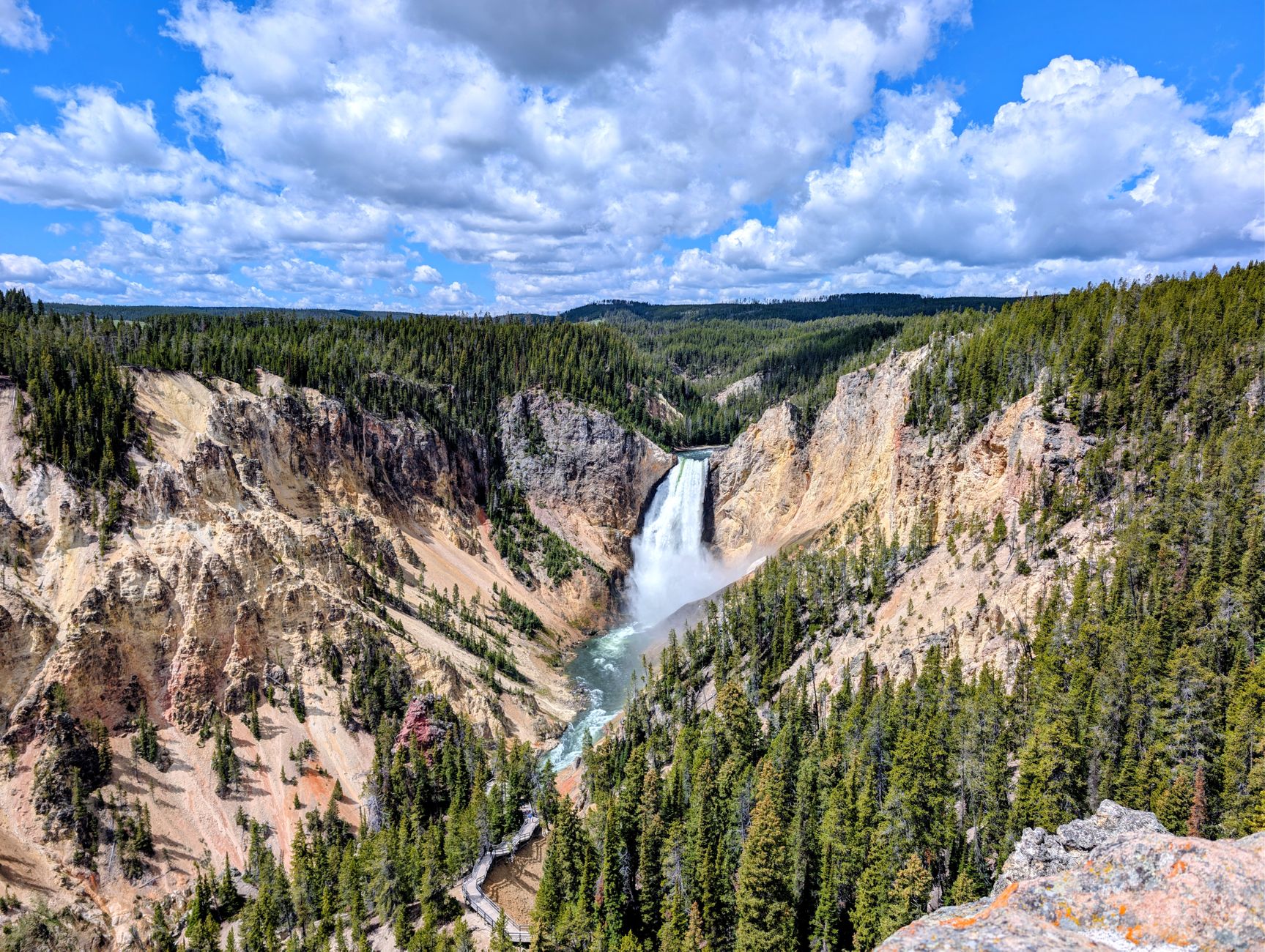
Hike the Brink of the Lower Falls in the Grand Canyon of Yellowstone

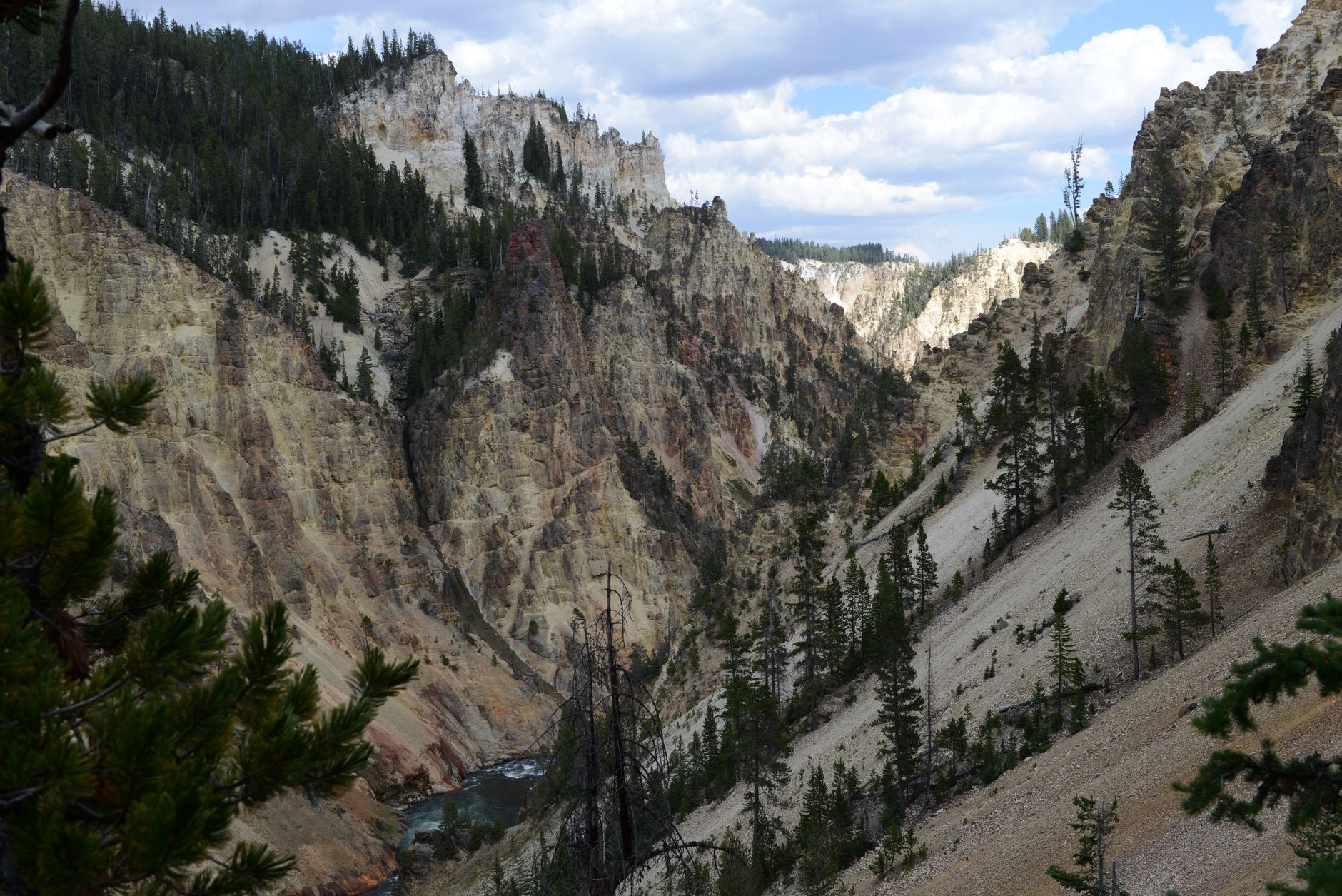
Feel the earth tremble beneath your feet as you descend 600 feet down a steep, switchback trail to the precipice where the Yellowstone River plunges 308 feet into the breathtaking canyon below. The deafening roar and the mist on your face offer an intensely visceral encounter with the park's dramatic hydrology. Insider tip: Hike down in the late morning when sunlight strikes the canyon walls, creating vivid ochre and yellow reflections in the roaring mist.

Must-Do

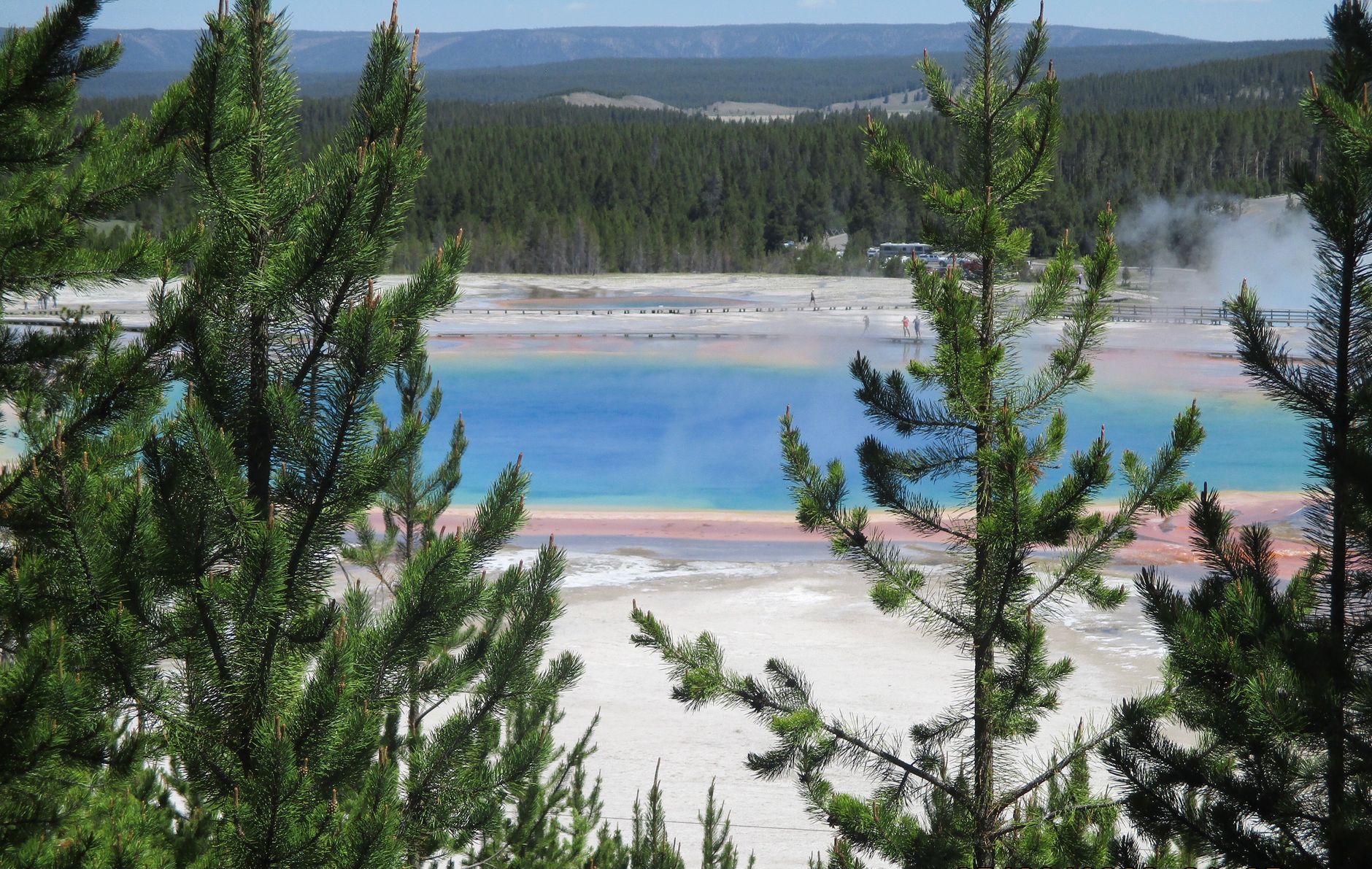
Soak in the Thermal Majesty of the Grand Prismatic Spring

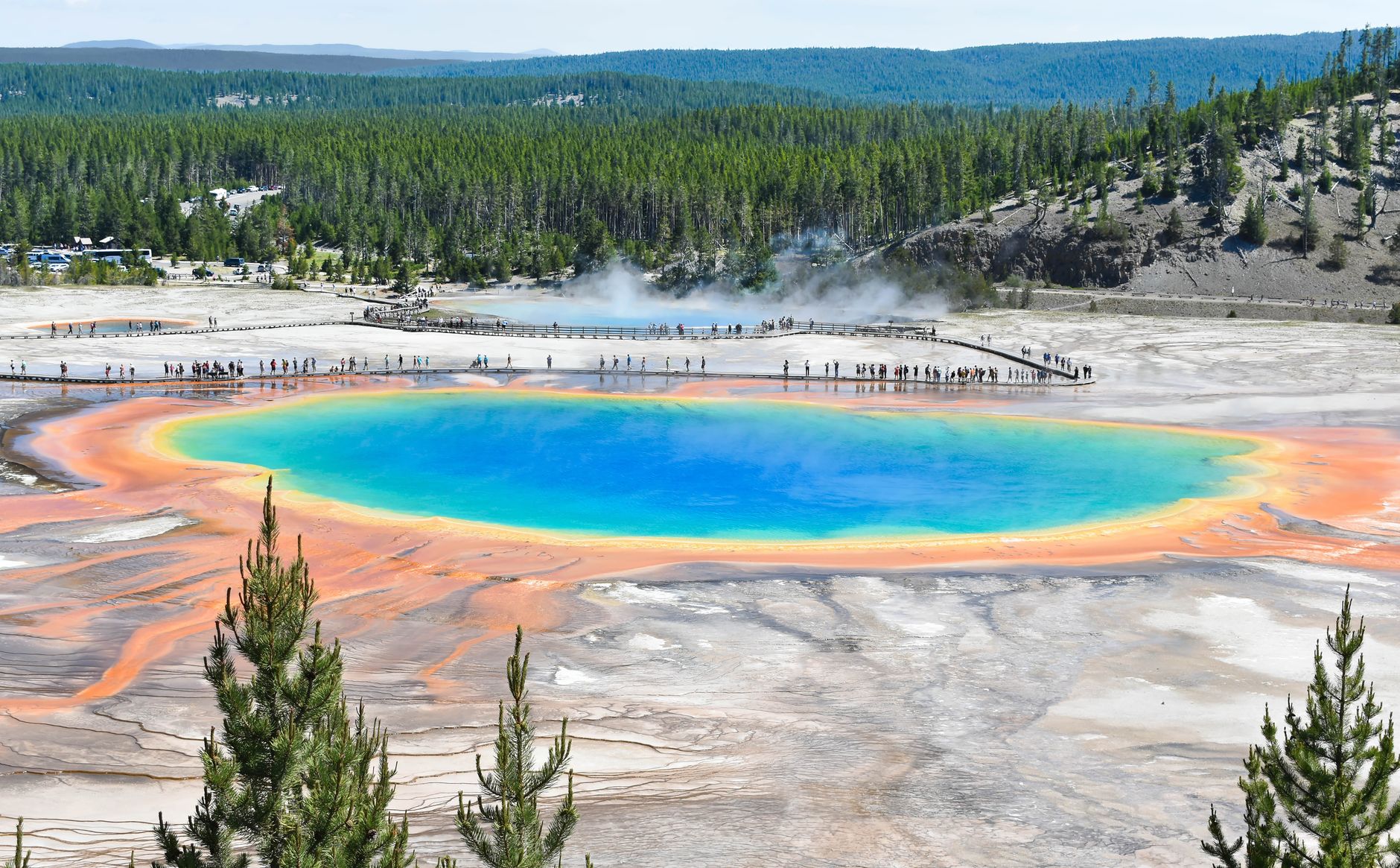
Marvel at the largest hot spring in the United States, famous for its blindingly vivid rings of orange, yellow, green, and deep blue created by thermophilic bacteria. Strolling the boardwalk hugs the edge of this steaming aquatic giant, offering an otherworldly encounter with hydrothermal chemistry. Insider tip: Skip the crowded boardwalk parking and hike the Fairy Falls trail up to the official overlook for the iconic, bird's-eye photographic angle.

Must-See Highlights

Top Places & Things to Do in Yellowstone National Park

Curated attractions and cultural landmarks with local insider advice.

Grand Prismatic Spring
nature
4.9

Grand Prismatic Spring

The Grand Prismatic Spring is the largest hot spring in the United States and the third largest in the world, measuring approximately 370 feet in diameter and plunging over 120 feet deep. Water issues from the center of the spring at a scalding 160°F, creating a mesmerizing aquatic canvas defined by rings of brilliant orange, yellow, and green caused by pigmented thermophilic bacteria thriving in the mineral-rich runoff. Strolling the wooden boardwalks that flank the spring offers an up-close perspective of the boiling turquoise waters and the gentle wisps of steam rising into the mountain air. For an entirely different perspective, the nearby Fairy Falls trailhead leads to an elevated hillside overlook that reveals the spring's astonishing bullseye symmetry, making it one of the most photographed geological wonders on Earth.

Open 24/7 (Best light midday)
Admission: Park Pass Required
Insider Tip: Visit during mid-afternoon when the summer sun is directly overhead to minimize steam and maximize the vivid coloration of the bacterial mats.
Old Faithful Geyser
nature
4.8

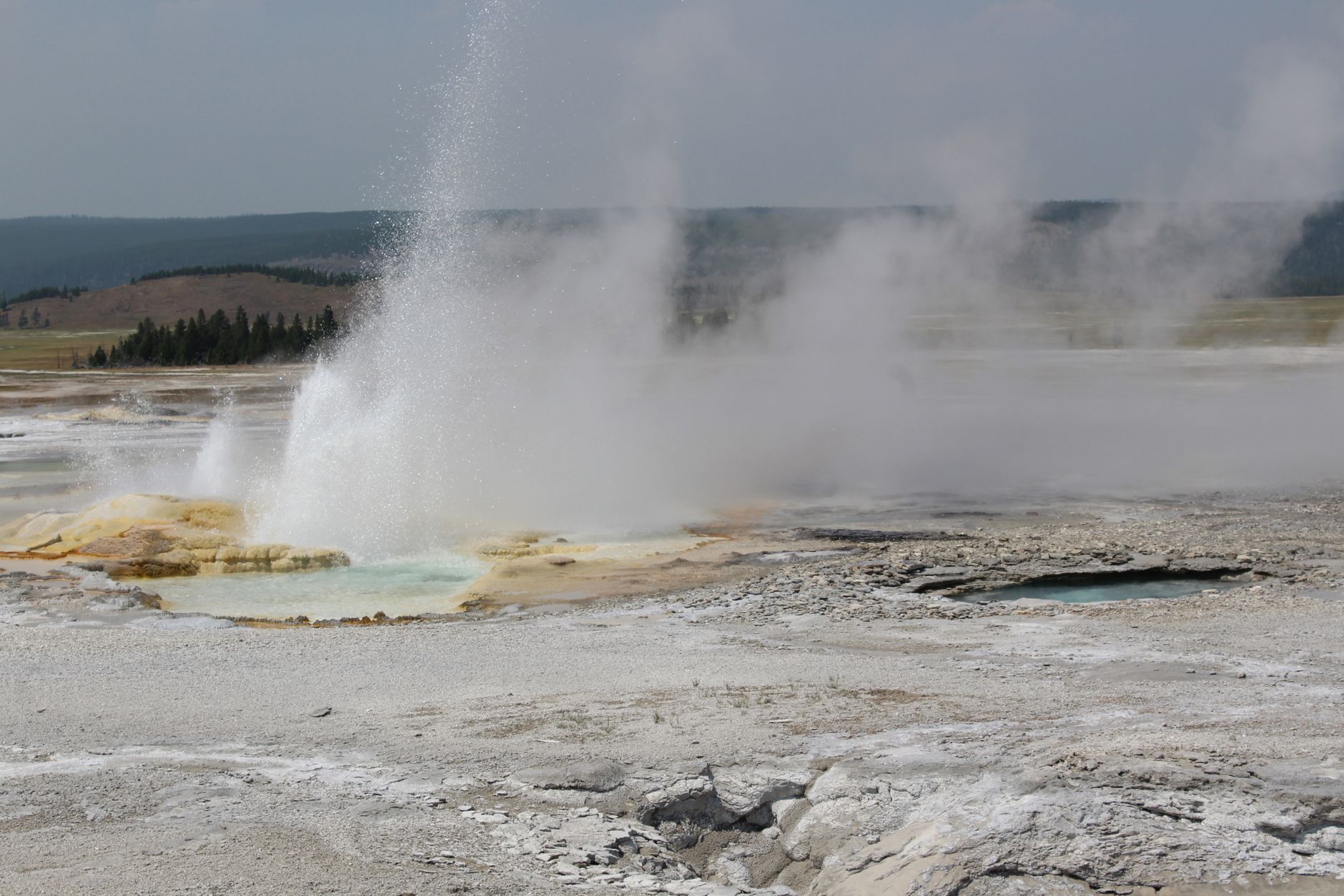
Old Faithful Geyser

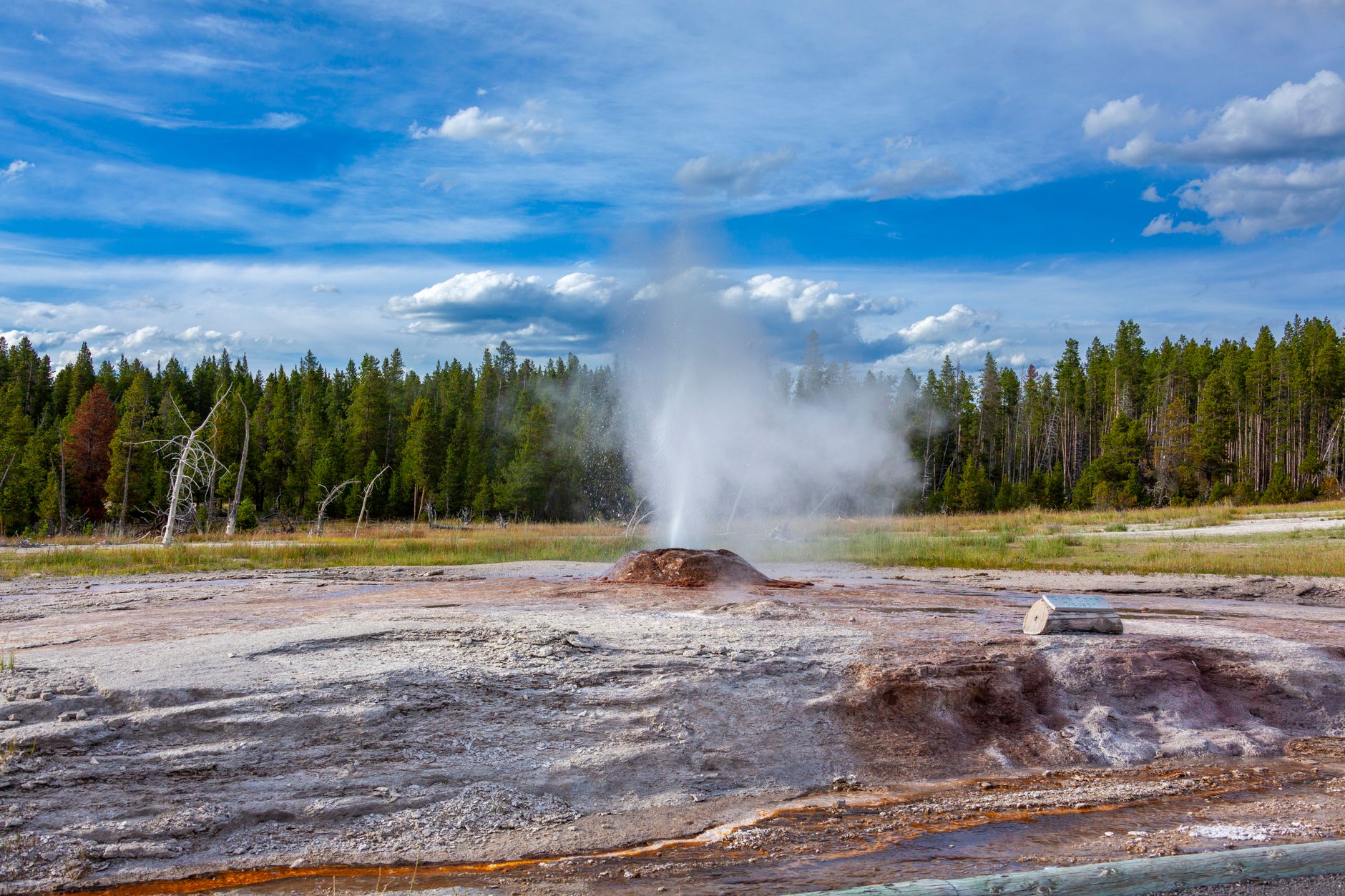
Old Faithful is arguably the world's most famous thermal feature, celebrated not for its size or height, but for its remarkable frequency and predictability of eruptions. Erupting roughly every 60 to 90 minutes, it shoots between 3,700 and 8,400 gallons of boiling water to heights ranging from 100 to 180 feet, putting on an unforgettable spectacle that lasts between one and five minutes. The surrounding Upper Geyser Basin features tiered wooden walkways winding past hundreds of other lesser-known geysers, fumaroles, and bubbling hot pools. The iconic Old Faithful Visitor Education Center provides real-time eruption predictions and deeply engaging interactive exhibits detailing the volcanic super-caldera fueling the region.

Open 24/7 (Visitor center 9:00 AM - 6:00 PM)
Admission: Park Pass Required
Insider Tip: Check the visitor center or official app for eruption predictions, and arrive 15 minutes early to secure a front-row seat on the amphitheater benches.
Grand Canyon of the Yellowstone
nature
4.95

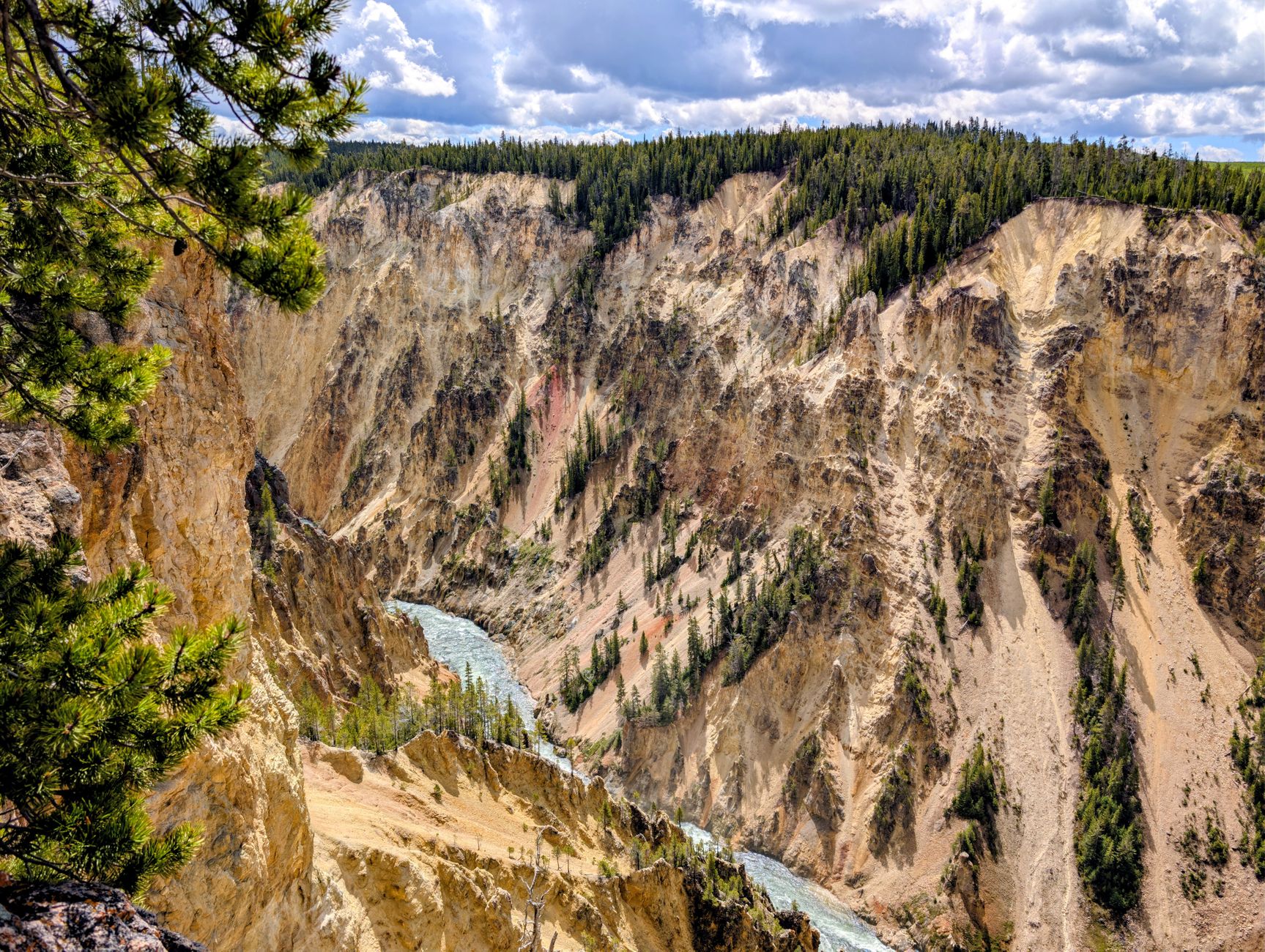
Grand Canyon of the Yellowstone

Carved by ancient glaciers and relentless hydrothermal erosion, the Grand Canyon of the Yellowstone stretches for roughly 20 miles, reaching depths of up to 1,200 feet and widths of 4,000 feet. The canyon walls display a striking palette of vibrant yellows, oranges, and pinks, created by iron compounds undergoing hydrothermal alteration in the rhyolite rock. Two magnificent waterfalls anchor the canyon's dramatic geography: the Crystal Falls, the Upper Falls, and the roaring Lower Falls, which plunges 308 feet into the abyss. Numerous rim overlooks—including Artist Point and Inspiration Point—offer classic landscape vistas that inspired the Hudson River School painters and helped convince Congress to establish the national park in 1872.

Open 24/7
Admission: Park Pass Required
Insider Tip: Visit Artist Point in the late afternoon for optimal lighting on the canyon walls and the plunging Lower Falls.
Mammoth Hot Springs Terraces
nature
4.75

Mammoth Hot Springs Terraces

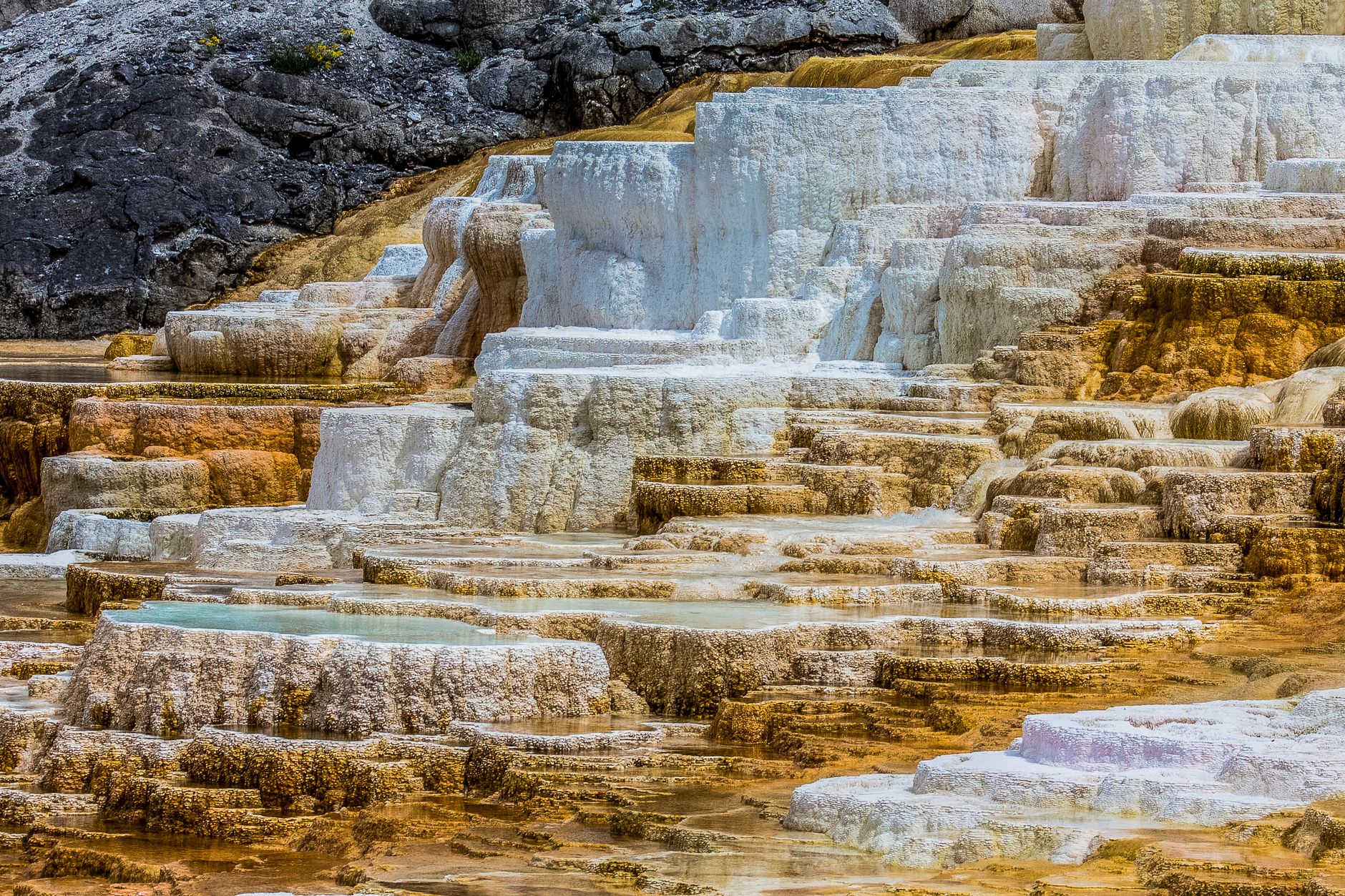
Mammoth Hot Springs is a sprawling complex of hot springs on a hill of travertine limestone situated just outside the park's historic northern entrance. Unlike most thermal areas in Yellowstone that sit inside the volcanic caldera, Mammoth's waters travel through deep limestone deposits, dissolving calcium carbonate and depositing it rapidly upon reaching the surface to create cascading, frozen-looking white terraces. The travertine formations shift constantly as mineral-rich waters clog old vents and forge new pathways, resulting in an evolving landscape of stark white steps, steaming pools, and skeletal ghost trees encased in mineral crusts. A network of elevated boardwalks guides visitors through the Lower and Upper Terraces, offering a fascinating look at subterranean geology in action.

Open 24/7
Admission: Park Pass Required
Insider Tip: Drive the Upper Terrace loop by car if walking uphill is difficult, but ensure you walk the Lower Terrace boardwalks for the most dramatic photography angles.
Area Guide

Where to Stay & Best Neighborhoods

Old Faithful & Upper Geyser Basin

Best for: First-time visitors, photography enthusiasts, and iconic geyser sightseeing.

Vibe: Active thermal wonderland, historic architecture, and bustling visitor hubs.

This central hub pulses with thermal energy, featuring the highest concentration of geysers in the world. Dominated by the historic, log-built Old Faithful Inn, the area is crisscrossed by accessible boardwalks weaving past boiling springs, mud volcanoes, and roaring steam vents. It balances high tourist energy with profound geological wonder.

Mammoth Hot Springs & Northern Range

Best for: Wildlife watchers, history buffs, and year-round park access.

Vibe: Dramatic travertine terraces, historic military outpost charm, and abundant wildlife.

Located near the park's northern entrance, Mammoth Hot Springs showcases cascading white limestone terraces formed by thermal waters dissolving underground limestone. The adjacent historic Fort Yellowstone echoes the late 19th-century military administration of the park, while the surrounding hills offer premier year-round viewing for elk, bison, and pronghorn.

Canyon Village & Lake Yellowstone

Best for: Hikers, landscape photographers, and tranquil lakeside reflection.

Vibe: Alpine serenity, dramatic river canyons, and vast high-altitude aquatic expanses.

Anchored around the breathtaking Grand Canyon of the Yellowstone and the sapphire-blue expanse of Yellowstone Lake, this region offers cooler alpine breezes and deep pine forests. It serves as a quieter retreat from the southern geyser basins, offering stellar trail access, wildlife meadows, and historic lodge hospitality.

Food & Drink Scene

What to Eat in Yellowstone National Park

Montana Bison Ribeye Steak

Lean, exceptionally tender, and rich in natural flavor, bison is a staple gourmet offering in the Greater Yellowstone region. Sourced from local ranches, the ribeye is typically grilled over open flames and served with seasonal huckleberry reduction.

🍴 Top spot: The Dining Room at Old Faithful Inn

Wild Huckleberry Pie

Foraged by hand from the surrounding mountain forests during late summer, wild huckleberries possess a sweet-tart profile distinct from cultivated blueberries. Encased in a buttery, flaky pie crust, it is the quintessential dessert of the Northern Rockies.

🍴 Top spot: Mammoth Hot Springs Dining Room

Elk Medallions with Juniper Berry Glaze

A classic game dish celebrating the rugged terroir of the region. Tender elk medallions are pan-seared and paired with a rich reduction of wild juniper berries, red wine, and local root vegetables.

🍴 Top spot: Lake Yellowstone Hotel Dining Room
Excursions

Best Day Trips from Yellowstone National Park

Grand Teton National Park & Jackson Hole

1 hour south of West Thumb

Journey south through the John D. Rockefeller, Jr. Memorial Parkway to witness the jagged, glacier-carved peaks of the Teton Range rising sharply above the flat valley floor of Jackson Hole. Explore Jenny Lake, spot moose along the Snake River, and enjoy the cowboy-chic ambiance of historic downtown Jackson.

Beartooth Highway & Cooke City

45 mins northeast of Lamar Valley

Drive one of America's most breathtaking scenic byways, climbing past alpine lakes, permanent snowfields, and plunging switchbacks up to Beartooth Pass at 10,947 feet. The panoramic vistas span endless mountain ranges across Montana and Wyoming.

When to Go

Best Time to Visit & Seasonality

Editor’s Pick: June through August offers warm weather and full access to all roads and facilities, though September and October provide vibrant autumn foliage, crisp mountain air, and significantly smaller crowds while wildlife remains highly active.

Spring Overview

(April - May)
Quiet / Low Season
Average Temperature & Climate30°F to 60°F (-1°C to 15°C)

Unpredictable, shifting rapidly between brilliant sunshine, heavy snowstorms, and muddy trails.

Crowd & Travel ConditionsLow Tourist Traffic

Fewer lines and better deals.

✨ Seasonal Highlights:Bison calving, newborn grizzly bear cubs emerging from dens, roaring waterfalls fueled by snowmelt, and very few tourists.
Travel Smarter

Practical Travel Essentials

CurrencyUSD ($)
LanguageEnglish
Time ZoneMountain Time (MST/MDT)

Visa & Entry

Standard US entry visa or ESTA required for international visitors. Park entrance fee is $35 per private vehicle for a 7-day pass, or recommended purchase of the $80 'America the Beautiful' Annual National Parks Pass.

Getting Around & Transit

A private or rental car is essential for navigating the park's grand loop road system. Public transit inside the park is extremely limited. Note that interior park roads are completely closed to regular cars from November through April, accessible only via guided snowcoach or snowmobile tours.

Daily Budget Expectation

$200 - $450 USD per day for mid-range travelers, covering park lodge accommodations, dining, fuel, and park admission fees.

Safety & Health

Very safe regarding crime, but high risk regarding wildlife and geothermal features. Always maintain a minimum distance of 100 yards from bears and wolves, and 25 yards from bison and elk. Never step off designated boardwalks, as the ground crust can conceal boiling water.

Local Etiquette & Customs

Practice Leave No Trace principles: pack out all trash, respect wildlife viewing distance rules using telephoto lenses, and yield to pedestrians and wildlife on park roads.

Questions & Answers

Frequently Asked Questions about Yellowstone National Park

Ideally, plan for 4 to 5 full days. Because the park is massive with a figure-eight road network spanning thousands of square miles, extra days prevent driving fatigue and allow ample time for wildlife watching and hiking.