A packing checklist climate framework is the foundational blueprint of every successful journey across the globe. Whether you are embarking on a sub-zero winter expedition through northern latitudes, stepping onto the humid streets of Southeast Asia, or preparing for an extended multi-month odyssey across varying landscapes, bringing the right gear makes or breaks your travel experience. Too many travelers carry excess weight due to fear of the unknown, while others find themselves shivering on high mountain passes or soaked through during monsoon downpours. By breaking down your luggage requirements systematically by atmospheric conditions and trip length, you can eliminate anxiety, minimize baggage fees, and travel with supreme efficiency. Before embarking on your next journey, leverage our custom interactive voyage planner to curate your itinerary while following the precise packing methodology outlined below.
Understanding the Core Philosophy: Pack for the Process, Not the Scenarios
To master travel gear organization, you must shift your mindset away from 'what if' scenarios toward a functional laundry cycle. Most novice travelers pack for every hypothetical situation—formal dinners, unexpected torrential storms, or unexpected arctic blasts—resulting in overweight suitcases filled with unworn garments. Experienced expedition planners follow a minimalist rule: pack for a seven-day laundry cycle regardless of whether your trip lasts two weeks or six months.
"The weight of your backpack is directly proportional to your travel anxiety. Pack half of what you think you need and bring twice as much currency or flexible planning time." — Voyage Roams Field Team
When you pack for seven days maximum, you rely on regular wash cycles—either using hotel services, local laundromats, or quick-drying sink washes in your accommodation. This strategy keeps your luggage weight consistent whether you are traveling for eight days or eighty. The variable factor should never be the volume of clothing; rather, it should be the technical fabric choices dictated by climate and destination topography.
The Math of Minimalist Packing
To understand the mechanics of duration-based planning, consider the fundamental ratio of wear-to-wash:
- 1Undergarments & Base Layers: 5 to 7 pairs maximum (merino wool or quick-dry synthetics).
- 2Tops & Shirts: 4 to 5 versatile tops that layer seamlessly over each other.
- 3Bottoms: 2 to 3 durable trousers, jeans, or weather-tailored shorts.
- 4Outerwear: 1 primary weather-proof shell plus 1 insulation layer.
- 5Footwear: Maximum of 2 to 3 pairs (one worn on transit days, two packed).
If you are planning an extended trip through varied terrain, such as a multi-stop Southeast Asia itinerary, relying on lightweight materials with fast dry times guarantees you can wash items in your bathroom sink and have them ready by morning.
Climate-Specific Packing Matrices: From Polar Tundras to Tropical Humidity
Climate dictates fabric choice, insulation depth, and technical gear requirements. Below are the precise technical matrices broken down by four primary climate zones.
Cold & Polar Climates (Sub-Zero to 10°C / 50°F)
Cold weather requires a three-layer insulation system that traps warm air while wicking away perspiration. Never wear cotton in freezing environments, as it retains moisture and induces hypothermia.
- Base Layer (Wicking): Heavyweight 200g+ Merino wool tops and thermal leggings.
- Mid-Layer (Insulation): 800-fill power down jacket or 200-weight fleece sweater.
- Outer Shell (Protection): Waterproof, windproof Gore-Tex hard shell with adjustable hood.
- Accessories: Thermal gloves, fleece-lined beanie, wool socks (3 pairs), wind-resistant neck gaiter.
For extreme arctic environments, such as an winter trek in Iceland or Scandinavia, read our specialized guide to an Icelandic winter adventure to understand vehicle safety and cold-weather survival gear.
"Cotton is the enemy of cold-weather travel. Merino wool and synthetic microfibers are essential for thermo-regulation and odor suppression."
Hot & Humid Tropical Climates (25°C to 40°C / 77°F to 104°F)
Tropical travel demands high breathability, active ventilation, and UV protection. High humidity prevents heavy fabrics from drying, so ultra-light synthetics and linen dominate this category.
- Tops: Sun-protective UPF 50+ long-sleeve shirts, lightweight linen blouses, technical polyester tees.
- Bottoms: Quick-dry nylon shorts, breathable wide-leg trousers, lightweight rain pants.
- Rain Protection: Packable 2.5-layer breathable rain jacket or heavy-duty travel poncho.
- Footwear: Breathable trail runners and water-resistant sandals with arch support.
For specialized gear recommendations when navigating jungle dampness, consult our guide on rainforest packing protocols.
Arid & Desert Climates (High Thermal Fluctuation)
Deserts feature extreme temperature shifts—blistering heat during daylight followed by freezing desert winds after sunset. Layering adaptability is crucial.
- Daytime Cover: Loose-fitting, light-colored cotton or linen garments covering arms and legs to reflect heat and mitigate sun exposure.
- Nighttime Warmth: Lightweight down jacket or heavy fleece sweater for rapid post-sunset drops in temperature.
- Hydration & Sun Gear: UV-blocking sunglasses, wide-brimmed safari hat, and a 2-liter insulated water reservoir.
Temperate & Mediterranean Climates (12°C to 25°C / 54°F to 77°F)
Temperate zones offer the most flexibility, allowing stylish city wear mixed with active apparel. The primary challenge here is managing light rainfall and breeze variations.
- Wardrobe: Smart denim, tailored trousers, casual cotton tees, versatile button-down shirts, stylish trench coat or lightweight windbreaker.
- Footwear: Comfortable leather sneakers suitable for walking on cobblestones.
Duration-Based Gear Formulas: Weekend Getaways vs. Multi-Month Expeditions
How long you travel determines your bag size and organizational structure rather than multiplying the quantity of clothing.
Weekend Getaway (2 to 4 Days)
- Luggage Type: 25L to 35L Carry-On Backpack or Weekender Duffel.
- Strategy: No laundry required. Wear your bulkiest shoes and jacket on the flight. Pack exactly 1 outfit per day plus one extra pair of underwear.
Medium-Length Trip (1 to 2 Weeks)
- Luggage Type: 40L International Carry-On or 55L Checked Suitcase.
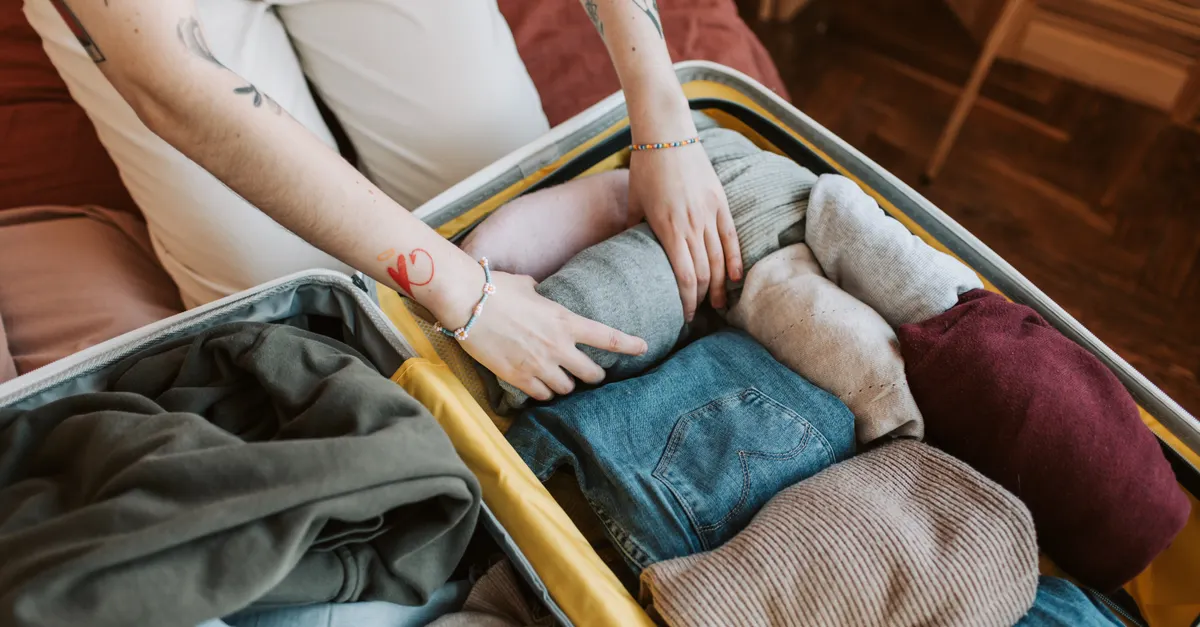
- Strategy: Pack for 7 days maximum using compression packing cubes. Schedule one laundry drop-off midway through the itinerary. Explore more wilderness gear options in our Adventure Travel Stories repository.
Extended Expedition (1 Month to Unlimited)
- Luggage Type: 50L to 65L Ergonomic Travel Backpack.
- Strategy: Strict adherence to the 7-day laundry rule. Focus on multi-functional gear (e.g., zip-off pants, merino wool shirts that can be worn three times without washing, modular electronics chargers).
"Compression packing cubes do not reduce weight, but they revolutionize space management by organizing your kit into modular, climate-ready compartments."
Essential Fabrics and Capsule Wardrobe Engineering
Building a high-performance travel wardrobe relies on choosing technical textiles. Understanding material science helps you pack lighter without sacrificing comfort.
The Material Matrix
- 1Merino Wool: The undisputed king of travel fabrics. Highly odor-resistant, naturally temperature-regulating, and soft against the skin. Can be worn for days without retaining body odor.
- 2Tencel / Modal: Sustainable wood-pulp textiles that excel in hot climates due to superior breathability and drape.
- 3Polyester / Nylon Synthetics: Fast-drying, highly durable, and abrasion-resistant. Ideal for active adventure sports and wet environments.
- 4Linen: Maximum airflow for dry heat, though prone to severe wrinkling.
To see how these fabrics perform in real-world rugged conditions, check out our field-tested reports across varied terrains.
Frequently Asked Questions
How do I pack light for a trip with multiple microclimates?
Packing for multi-climate trips requires a modular layering system rather than packing separate wardrobes for hot and cold weather. Focus on lightweight base layers, such as merino wool long-sleeve tops and leggings, which take up minimal space but offer high insulation when paired together. Layer these under a mid-tier insulating jacket and a waterproof outer shell. For warmer segments of your trip, wear the base layers individually or pack a pair of ultralight shorts and linen shirts. Always wear your heaviest shoes and thickest jacket during transit days to keep bag weight down.
What is the 5-4-3-2-1 packing rule and does it work for long trips?
The 5-4-3-2-1 packing rule is a popular capsule wardrobe strategy designed to limit excess clothing for one- to two-week trips. It recommends packing 5 sets of socks and underwear, 4 tops, 3 bottoms, 2 pairs of shoes, and 1 hat/accessory set. While highly effective for short temperate vacations, long-term travelers should adapt the framework by ensuring all tops match all bottoms. For multi-month or extreme climate expeditions, supplement this rule with a technical shell and dedicated merino base layers to handle weather swings without ballooning your bag size.
How many days of clothes should I pack for a one-month trip?
For a one-month trip, you should pack clothes for exactly seven days. Carrying 30 days' worth of clothing leads to oversized, unmanageable luggage and excessive checked bag fees. By packing a seven-day capsule wardrobe and committing to washing your clothes once a week—either at self-service laundromats, hotel facilities, or in your room sink with travel laundry sheets—you maintain total mobility. This seven-day rule applies whether your expedition lasts four weeks or six months.
How do I prevent clothing from smelling during humid tropical trips?
To prevent clothing from developing mildew or stubborn body odor in humid tropical climates, choose antimicrobial natural fibers like lightweight merino wool or technical synthetic fabrics treated with silver ions. Avoid packing heavy cotton items, which absorb moisture, dry slowly, and encourage bacterial growth. Keep dirty or damp clothes separated from your clean wardrobe using a breathable mesh laundry bag or a waterproof dry bag rather than sealed plastic bags, and hang damp items to air dry overnight whenever possible.
Final Thoughts
Mastering your personal packing checklist by climate and duration is an evolving skill that transforms the way you move through the world. By focusing on technical fabrics, modular layering strategies, and strict adherence to a seven-day laundry threshold, you eliminate physical baggage and mental strain. Pack light, plan smart, and step out into your next adventure with absolute confidence.